
Posts
2972Following
697Followers
1545
 repeated

stf
stf@chaos.social
just released liboprf-0.9.3
liboprf is a library implementing the OPRF from https://www.rfc-editor.org/rfc/rfc9497.html and in addition it also provides a threshold variant (tOPRF) and a distributed key generation (DKG) protocol for the tOPRF shared secret, as well as a key update protocol for the tOPRF shared secret. it comes with a high level python frontend that supports servers on TLS, USB and Bluetooth LE
 0
1
0
1
 0
repeated
0
repeated

Millie
millie@infosec.exchangeWe need to normalize declaring software as finished. Not everything needs continouos updates to function. In fact, a minority of software needs this. Most software works as it is written. The code does not run out of date. I want more projects that are actually just finished, without the need to be continuously mutated and complexified ad infinitum.
11
17
2
repeated
 repeated
daniel:// stenberg://
bagder@mastodon.socialMicrosoft will pay bug bounties even for 3rd party components:
https://www.theregister.com/2025/12/12/microsoft_more_bug_payouts
1
1
0
repeated

cynicalsecurity 
cynicalsecurity@bsd.network
Does anyone have a copy of the following paper:
https://doi.org/10.1016/0167-4048(82)90003-7
Robert H. Courtney, Jr., "A systematic approach to data security", in Computers & Security Volume 1, Issue 2, June 1982 (pgs. 99-112)
I have tried Sci-Hub and Anna's but no luck 
(it is paywalled at https://www.sciencedirect.com/science/article/abs/pii/0167404882900037 for $30 which seems criminal)
2
1
0
repeated

 repeated

sean butler
seanbutler@hachyderm.iomake a programming language and then make a game in it.
https://itch.io/jam/langjamgamejam
https://langjamgamejam.com/
#langjam #gamejam #langjamgamejam
 0
6
0
0
6
0
 repeated


buherator
buherator
1
0
3
buherator
buheratorLearn how things work and write it down. We're accelerating to stupid.
1
11
56
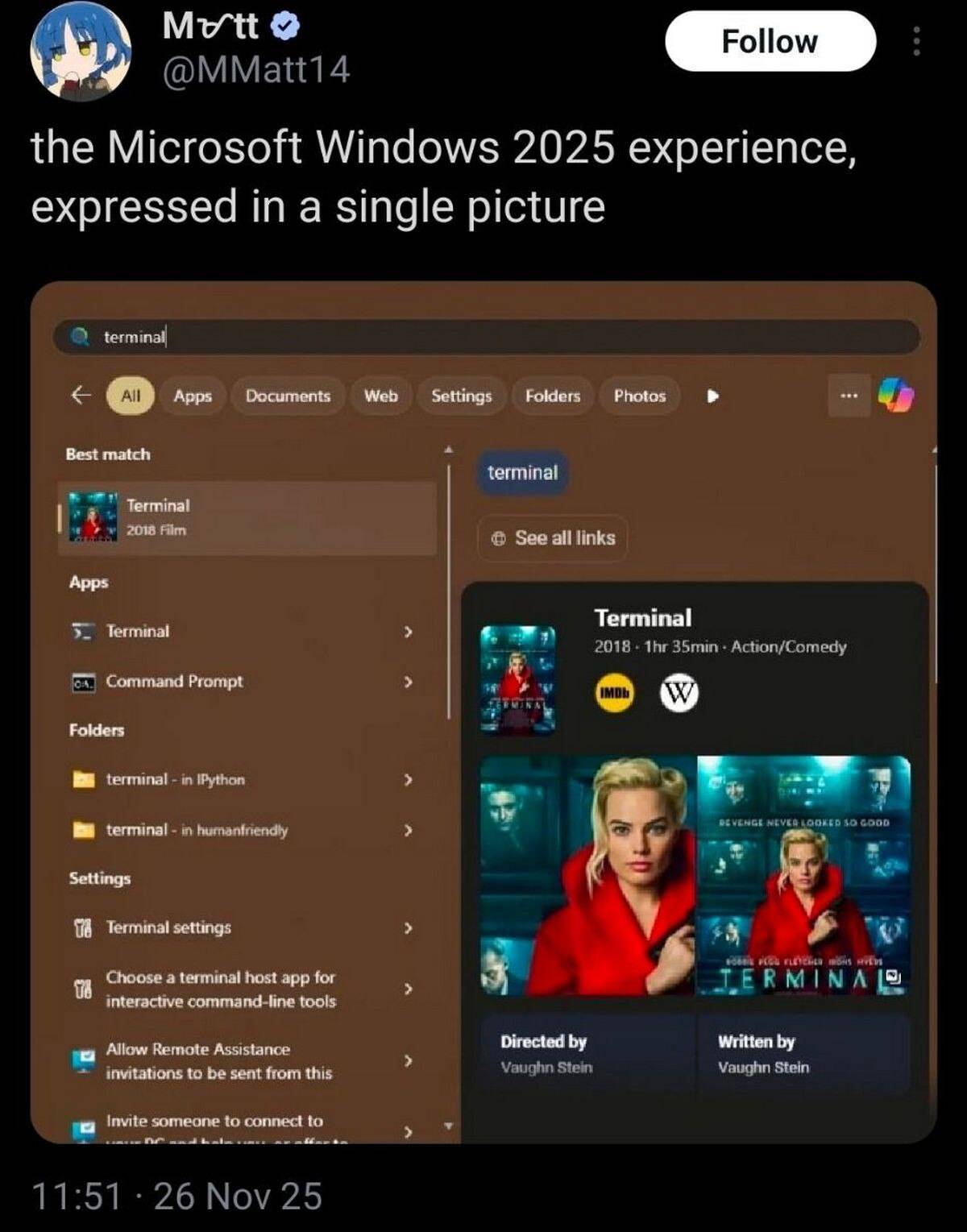
buherator
buheratorhttps://beta.ideas.lego.com/product-ideas/10a3239f-4562-4d23-ba8e-f4fc94eef5c7
3
7
12
repeated

absolutely losing it. My mom received a spam call that got picked up by Google call screening on her phone, and it ended up responding with one of the more unhinged Asterisk voice recordings before hanging up LMAO
 2
11
1
repeated
2
11
1
repeated

Thorsten Leemhuis (acct. 1/4)
kernellogger@hachyderm.ioAnalyzing CVE-2025-2296 [Un-verified #kernel bypass #SecureBoot mechanism in direct boot mode]
https://www.kraxel.org/blog/2025/12/analyzing-cve-2025-2296/
Gerd Hoffmann aka kraxel writes: ""[…] So, if secure boot is enabled attempts to boot via 'EFI stub' will fail, the firmware rejects the binary due to the signature check failing. OVMF will fallback to the legacy 'EFI handover protocol' loader. The legacy loader does not do secure boot verification, which is the core of CVE-2025-2296. And this was essentially unfixable (in the firmware alone) because there simply is no valid secure boot signature due to the patching qemu is doing. Nevertheless there are some use cases which expect direct kernel boot with secure boot enabled to work. Catch 22. […]
Secure boot bypass sounds scary, but is it really? […] So, the actual impact is quite limited. […]""
 0
3
0
0
3
0
buherator
buherator#ShowerThought
0
0
3
repeated

Attacker Friction
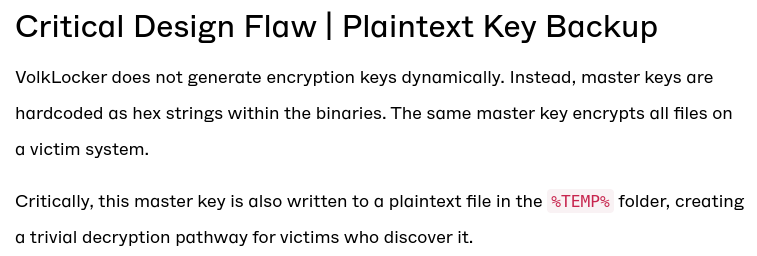
attackerfriction@infosec.exchangeTurns out your outsourced dev team vibe-coded the encryption routine of your #ransomware.
 0
3
0
0
3
0