
Posts
3124Following
708Followers
1551
 repeated

Alex
0xax@bird.makeup
I've updated the first chapter of linux-insides on the Linux kernel booting process to reflect modern 6.16+ kernels - https://github.com/0xAX/linux-insides/blob/master/Booting/linux-bootstrap-1.md
 0
3
0
3
 0
repeated
0
repeated


The thing I like about writing blogposts is that I need to verify everything I say, so I usually find a few small errors and learn a couple of new things in the process. A lot of work but a very good learning exercise.
2
6
1
repeated

daniel:// stenberg://
bagder@mastodon.socialThe slides from my keynote yesterday at the Open Source Summit Europe: https://www.slideshare.net/slideshow/giants-standing-on-the-shoulders-of-by-daniel-stenberg/282693094
"giants, standing on the shoulders of"
While waiting for the video to become available. I have no idea when that will happen.
0
3
0
repeated

 repeated

John Hammond
JohnHammond@infosec.exchangeI FINALLY got a chance to chat with James Kettle @albinowax and hear about his latest research, with a cool caption "HTTP/1.1 Must Die" 😎 Mind-blowing work including desync attacks and critical vulnerabilities affecting websites & CDNs... and a demo! https://youtu.be/n3Bw8CASnHE
 1
4
0
repeated
1
4
0
repeated

 repeated

raptor 
raptor@infosec.exchange
2
3
1
buherator
buheratorhttps://msrc.microsoft.com/blog/2025/08/postmessaged-and-compromised/
"a deep dive into the risks of misconfigured postMessage handlers""
0
0
2
repeated

Baldur Bjarnason
baldur@toot.cafe“Stack Overflow data reveals the hidden productivity tax of 'almost right' AI code | VentureBeat”
> AI tools don’t just produce obviously broken code. They generate plausible solutions that require significant developer intervention to become production-ready. This creates a particularly insidious productivity problem.
::sighs::
2
9
0
buherator
buheratorhttps://github.com/google/security-research/security
Is there a way to clone this data as a #Git repository (from a service named after the aforementioned SCM system)?
0
0
2
buherator
buheratorhttps://medium.com/@renwa/when-ctf-meets-bug-bounty-a-critical-uxss-in-opera-browser-ee16f389e555?source=rss-3f8ae70e3957------2
0
0
1
buherator
buheratorhttps://github.com/google/security-research/security/advisories/GHSA-qj7j-3jp8-8ccv
CVE-2025-6965
0
0
1
buherator
buheratorUntil then, it's worth to check out the latest image parser bugs:
https://talosintelligence.com/vulnerability_reports/
0
0
1
repeated

Dr. Zalka Csenge Virág
TarkabarkaHolgy@ohai.socialHungarian folktale opening formula:
"There was a tall poplar tree with 77 branches, on each branch it had 77 crow nests, in each nest 77 crows.
Whoever doesn't listen to my tale, may the crows blind them. Whoever does listen, may they never see Heaven.
I'm going to start the story now, and you can all consider which one you'd choose."
... Hungarian folk tellers had no chill. 😆
2
2
0
repeated


 repeated
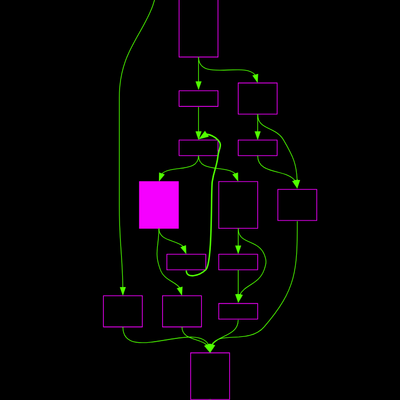
CFG Bot 🤖
cfgbot@mastodon.socialProject: openssl-static-gcc-dwarf 3.4.0
File: openssl
Address: 00660540
asid_validate_path_internal
SVG:
dark https://tmr232.github.io/function-graph-overview/render/?graph=https%3A%2F%2Fraw.githubusercontent.com%2Fv-p-b%2Fghidra-function-graph-datasets%2Frefs%2Fheads%2Fmain%2F%2Fopenssl-static-gcc-dwarf%2F00660540.json&colors=dark
light https://tmr232.github.io/function-graph-overview/render/?graph=https%3A%2F%2Fraw.githubusercontent.com%2Fv-p-b%2Fghidra-function-graph-datasets%2Frefs%2Fheads%2Fmain%2F%2Fopenssl-static-gcc-dwarf%2F00660540.json&colors=light

 0
1
0
repeated
0
1
0
repeated

bitsavers.org
bitsavers@oldbytes.spaceRefreshing to hear of a boss not being a lemming
https://www.theregister.com/2025/08/21/aws_ceo_entry_level_jobs_opinion/
0
2
0
repeated

Nina Kalinina
nina_kali_nina@tech.lgbtI love computing history, but I often find computer museums and history books focusing a lot on super early computers and then almost skipping to the microcomputer boom. I guess having a working NES, BBC Micro and C64 in a museum will attract more visitors than an operational Burroughs or Ferranti.
In this aspect, I really appreciate all the awesome machines in TNMOC (e.g. WITCH) and CHM (IBM 1401). I feel like I need to make friends at TNMOC and ask them for an in-deep tour they don't offer to casual visitors. :D
I understand that very few computers of the first, second and third generations of computers did not survive, but I feel this era of computing history criminally underappreciated. Early user interfaces, graphic tablets, vector graphics, 3D, all sorts of quirky data storage and processing hardware, dawn of the machine learning, and a massive, massive gap between governments, corporations and regular hobbyists...
5
1
0