
Posts
2866Following
689Followers
1510
 repeated

hermit
alive@interlace.space
hey fedi does anyone know much about reverse engineering fpga bitstreams? is that something that is doable? what tools do people use for this?
looking at a xilinx chip specifically, haven't identified the specific model yet, but it's one that's at least 20 years old
 0
2
0
2
 0
0
buherator
buheratorhttps://www.synacktiv.com/en/publications/breaking-the-beestation-inside-our-pwn2own-2025-exploit-journey.html
0
3
1
repeated

Ooops, I just loaded it in IDA :P Because fuck the software licenses :PPPP
0
1
0
buherator
buherator
1
0
2
repeated

Julia Evans
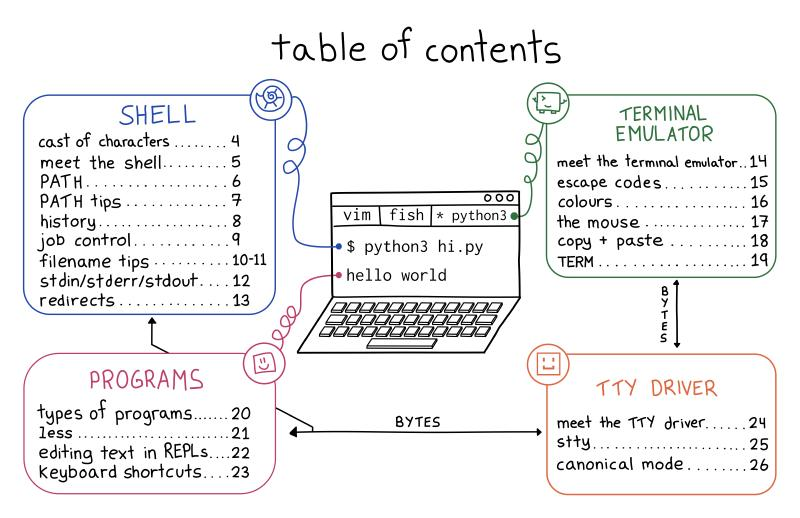
b0rk@jvns.cafirst: my newest zine, The Secret Rules of the Terminal!
This has all the gnarly details about the Unix terminal that I wish I knew when I started using it. It's weird and kind of wonderful (I talk about why you can use your mouse in the terminal!)
https://wizardzines.com/zines/terminal/
(2/16)

 1
3
0
repeated
repeated
1
3
0
repeated
repeated

kirakira
kirakira@furry.engineerpython, the official language of "well i could just use python"
 1
2
0
repeated
1
2
0
repeated

bitsavers.org
bitsavers@oldbytes.spaceColossal blunder on my part this afternoon.
Pulled the drives from an areca raid array and
forgot what order they have to go back in
so now the array isn't recognized and RESCUE doesn't see it.
Has anyone documented the magic parameter sectors that describe this anywhere?
2
3
0
buherator
buheratorhttps://blog.talosintelligence.com/dell-controlvault-lasso-gl-inet-vulnerabilities/
0
0
0
buherator
buheratorhttps://blog.mantrainfosec.com/blog/18/prepared-statements-prepared-to-be-vulnerable
#nodejs
0
6
3

buherator
buheratorShow content
Undefined Behavior :D
https://soundcloud.com/burninnoise/undefined-behavior-vs-altruism-perception-box
1
0
3
buherator
buherator
0
0
0
repeated


buherator
buheratorhttps://kagi.com/search?q=firefox+disable+tab+mute&r=no_region&sh=sz8XiYwKHp4PD09ExTXGuw
0
0
1
repeated
 repeated

Kevin Beaumont
GossiTheDog@cyberplace.socialReally big scoop (I don't think @briankrebs knows how big yet) here - he's tracked down somebody who says they are Rey from Lapsus$.
I don't wanna say why yet as I don't have all the pieces of the jigsaw, but I imagine this is going to turn into a long thread over time.
https://krebsonsecurity.com/2025/11/meet-rey-the-admin-of-scattered-lapsus-hunters/
2
6
0
repeated


well strlen() returns the amount of bytes so in this regard multibyte characters are not really an issue per see.
https://gitlab.gnome.org/GNOME/glib/-/blob/f28340ee62c655487972ad3c632d231ee098fb7f/glib/gconvert.c#L1318 defines a char array of acceptable (meaning ASCII) characters.
Then it iterates over the dynamically allocated buffer and keeps track of the amount of "unacceptable" characters.
unacceptable was a gint (https://docs.gtk.org/glib/types.html#gint) which could therefore overflow.
To me it does look like glib could use some refactoring.
https://gitlab.gnome.org/GNOME/glib/-/commit/f28340ee62c655487972ad3c632d231ee098fb7f
0
4
0