
Marcus Hutchins 
malwaretech@infosec.exchange

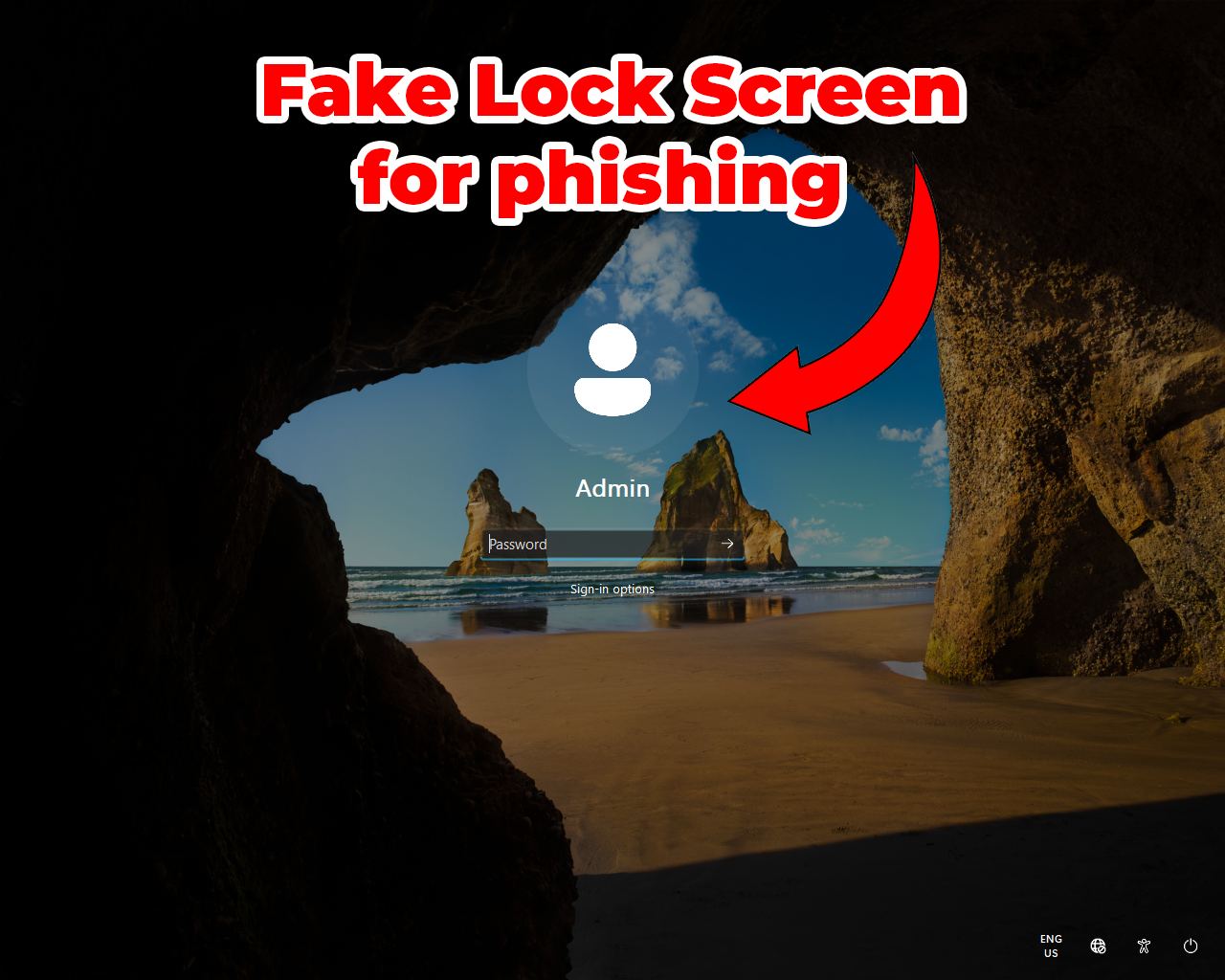
Found an interesting new malware loader which creates a fake Windows lock screen to phish the user's system login password. The fully-modular loader also bridges multitude different programming languages, including: Python, C#, C++, and PowerShell.
This extensive use of cross-language components, along with shipping an entire runtime environment, lead to us dubbing it SynkLoader (Sink Loader), because it brings everything but the kitchen sink.
While the original loader runs all of its modules in memory only, we were able to collect them by reverse engineering the command-and-control protocol, then building our own version of the loader which logs everything to disk.
Additionally, we were able to to lure the operator into thinking they had a reverse shell on our honeypot system. This allowed us to watch as they attempted to execute PowerShell commands, which were being printed to our system's console instead of being run.
Full analysis: https://expel.com/blog/synkloader-when-you-throw-in-everything-but-the-kitchen-sink/
 12
12
 11
11
 0
0

Himanshu Anand
N00b@infosec.exchange@malwaretech man behind the keyboard?
This looks interesting thanks for sharing.
0
0
0

Ray—Golden Retriever Whisperer—🔝Insights
zarchasmpgmr@infosec.exchange@malwaretech does it use the customized (or customised) lock screen or does it present the default one?
0
0
0

draeath
draeath@infosec.exchange@malwaretech isn't this shit the whole reason they did the CTRL-ALT-DEL to login thing?
Guess they probably should have kept that...
1
0
0

Lesley Carhart 
hacks4pancakes@infosec.exchange
@malwaretech I’m kind of pissed I didn’t think of that, honestly
2
0
0

WinterKnight 
winterknight1337@infosec.exchange
@hacks4pancakes @malwaretech same. It’s so good.
0
0
0

Eleanor Saitta
dymaxion@infosec.exchange
@malwaretech
It's like there was a reason for the secure attention key
0
0
0

Mike Sheward
SecureOwl@infosec.exchange@malwaretech was involved in a forensics case in the UK ~2009 where a kid in college had written a fake Windows XP login screen that caught creds and passed them through to target his teachers- he used Delphi to write it. Was genius, completely undetectable to users.
We tried to hire him but never did.
0
0
0

J. R. DePriest 
 :EA DATA. SF:
jrdepriest@infosec.exchange
In high school computer class around 1990, we put a fake logon screen on every system where it would send your user name and password to the one networked printer, print a fake error message to the screen and loop until you rebooted at which point you'd get the real logon screen.
Written in Turbo Pascal.
0
0
0

noplasticshower
noplasticshower@infosec.exchange@malwaretech I know a guy who is a provost at Cornell who wrote one of those at University of Richmond once...in the '80s
0
0
0


Will Dormann
wdormann@infosec.exchange@malwaretech
I remember when Windows required Ctrl-Alt-Del to be able to log in.
3
0
0


Buttered Jorts
ajn142@infosec.exchange@wdormann @malwaretech we still have a few groups with that implemented, and I still do it by reflex… not as much protection as I’d like, because folks aren’t conditioned to it now, and if they had to do Ctrl+Alt+Del every time and they saw this instead, they wouldn’t question the fact it was easier this time.
2
1
0
Buttered Jorts
ajn142@infosec.exchange@wdormann @malwaretech the real kicker is when my brain does Cmd+Opt+Fn+Del on my Mac.
0
1
0
Ineeeeeeeeeeeeeeeeeeeeeeeeeeee
ineemio@rivals.space@draeath @malwaretech thats a setting you can (and should) enable
1
0
0

@ineemio @draeath @malwaretech ha, I still hit ctrl+alt+del and I don't think it is enabled
0
1
0
Marcus Hutchins
malwaretech@infosec.exchange
@wdormann I've seen it on servers, but I don't remember it on desktop machines. Though if it was an XP thing, then I've probably long since forgotten about it
1
1
0

SomeVeganCheeseIsOk
SomeVeganCheeseIsOk@mastodon.social@malwaretech dude that is amazing work.
1
0
0

meadxmoon
meadxmoon@infosec.exchange@malwaretech thank fuck they let you write like you - awesome blueprint for a threat report h/t 🍻
0
1
0
Will Dormann
wdormann@infosec.exchange@malwaretech
I'm probably thinking of Windows 2000. 😂
1
1
0

Josh Bressers
joshbressers@infosec.exchange@malwaretech @wdormann I think I remember windows NT having this, but it’s been a while
2000 for sure used it
0
1
0

Kevin Mirsky
kevinmirsky@infosec.exchange
@ajn142 @wdormann @malwaretech ... wait, is Ctrl + Alt + Del not the norm for logins?
0
0
0
@malwaretech
This is exactly the kind of story I want to see told at #Botconf
0
0
0

James Forshaw
tiraniddo@infosec.exchange
@malwaretech @wdormann turning CTRL+ALT+DEL on for client machines is just a group policy away. I'm sure that'd be one way to confuse an entire enterprise :)
1
0
0

Steve Syfuhs
SteveSyfuhs@hachyderm.io@tiraniddo @malwaretech @wdormann SAS is default for all domain join machines with policy predating 2016. Most enterprises still have it on due to inertia.
1
0
0

Sass, David
sassdawe@infosec.exchange@SteveSyfuhs @tiraniddo @malwaretech @wdormann honestly I prefer that being enabled because I could press any keys to wake my machine without risking that I need to delete anything typed into the password field.
1
0
0
Steve Syfuhs
SteveSyfuhs@hachyderm.io@sassdawe @tiraniddo @malwaretech @wdormann y u no passwordless tho
1
0
0
Sass, David
sassdawe@infosec.exchange@SteveSyfuhs @tiraniddo @malwaretech @wdormann confused look at my smartcard
0
0
0