
Marcin Wichary
mwichary@mastodon.online
Once in a while I imagine how much more pleasant HTML would be to type if only different brackets were originally chosen.
[div]
[p]
[a href=‘’][/a]
[/p]
[/div]
No single Shift press was necessary here.
EDIT: Please stop responding with “only on some keyboards.” I am aware.
 17
17
 4
4
 0
0
';DROP TABLE foxes;--
DropTableFoxes@stackunderflow.com@mwichary ahh, so BBCode had it right?
1
0
0



Ernie Smith
ernie@writing.exchange@mwichary This absolutely sounds right. Make HTML bbcode again
1
0
0


Marcin Wichary
mwichary@mastodon.online@hesthamar Ha! Is it actually nice to type HTML on that layout? Feels very bottom left-y.
0
0
0
@mwichary you realise the ease of access of all these varies wildly depending on whether or not your keyboard is American right
1
0
1
Marcin Wichary
mwichary@mastodon.online@darkphoenix Always love the one random Masto know-it-all holier-than-thou passerby, keep it up! That’s what makes everyone love this network.
1
0
0



BITNACHT
bitnacht@bitbang.social@mwichary You most certainly are aware that on French keyboards (which are in use at CERN) < does not need shift (the key it is right next to/of shift) and [ and ] need Alt Gr and a weird hand movement.
(Another factor was that you cant get good aftermarket German keycaps, but I have stopped using German keyboards mainly because of [, ] and {, } and now I have to choose whether to struggle, when typing quotation marks or to use key combinations that aren’t uniform across software/systems.)
1
0
1
PulkoMandy
pulkomandy@mastodon.tetaneutral.net@bitnacht @mwichary what kind of keyboard did NeXT stations use? France still does not have a single keyboard layout, with Apple doing its own thing, so I wouldn't be surprised if NeXT also did things differently. That is, assuming they bothered to do an azerty layout at all, and that CERN would use it, knowing that they are partially in switzerland and a very international thing anyways.
Also, the <> date back from SGML of which HTML is a subset, so that's not the right keyboards to look at
1
0
0
BITNACHT
bitnacht@bitbang.social@pulkomandy @mwichary Hmm, I didn't think about SGML. You have a point there. I remember seeing a NeXT azerty-keyboard (maybe I even owned one for a while). I also doubt the NeXT at CERN had a French keyboard. But it certainly was a design goal, to make all people working at CERN happy with the WWW.
1
0
0
Marcin Wichary
mwichary@mastodon.onlineNow curious exactly why SGML chose angle brackets! Would love to see a written statement. This is the closest I got to an answer, but it’s not really an answer.
https://www.xml.com/pub/a/w3j/s3.connolly.html
 6
1
0
6
1
0

mhd
mhd@tilde.zone@mwichary EBCDIC only has regular parentheses and angle brackets in its base encoding page, and IBM was pretty big into SGML.
1
0
0
Marcin Wichary
mwichary@mastodon.online@mhd Now I’m curious what were the most common IBM systems for those, and what are their keyboards like.
1
0
0

buherator
buherator(slightly related: I recently learned that C syntax differs so wildly from Pascal, because the former was designed by US keyboard users while the latter was from EU)
2
0
1
Marcin Wichary
mwichary@mastodon.online@buherator It was the tone of this one that bothered me.
1
0
0
@buherator @mwichary oh that’s *fascinating - I kinda wanna know more about this now, heh. Makes sense tho - a bunch of these brackets, particularly [] and {}, are a lot more easily accessible on a US layout than, say, a German one where umlauts take up those spaces and you need to contort yourself to alt-gr for that one
1
0
0
Marcin Wichary
mwichary@mastodon.online@darkphoenix @buherator A bit of a progress in figuring it out here, but not much yet: https://tilde.zone/@mhd/114715005404149186
Ironically, I wonder if the answer is even online.
2
0
0
Marcin Wichary
mwichary@mastodon.onlineThis is from the standard, which I found online here: https://nvlpubs.nist.gov/nistpubs/Legacy/FIPS/fipspub152.pdf
(That footnote is prescient.)
There are references to an 1980 draft, but wonder if that would be explained there. There probably also also working group notes…

 1
0
0
1
0
0

@mwichary Having grown up on a TI Explorer LispM keyboard, for a *very* long time I remapped my "[{" and "]}" keys to "([" and ")]" and put {} on F10/F11.
I eventually gave up because it meant I couldn't type on anyone else's keyboard nor they mine.
1
0
0
Marcin Wichary
mwichary@mastodon.online@jwz Yeah, I went through the same thought process once. If key remapping was easier on common operating systems, that would be more of an option…
0
0
0

Erik Ableson
erik@infrageeks.social
1
0
0
mhd
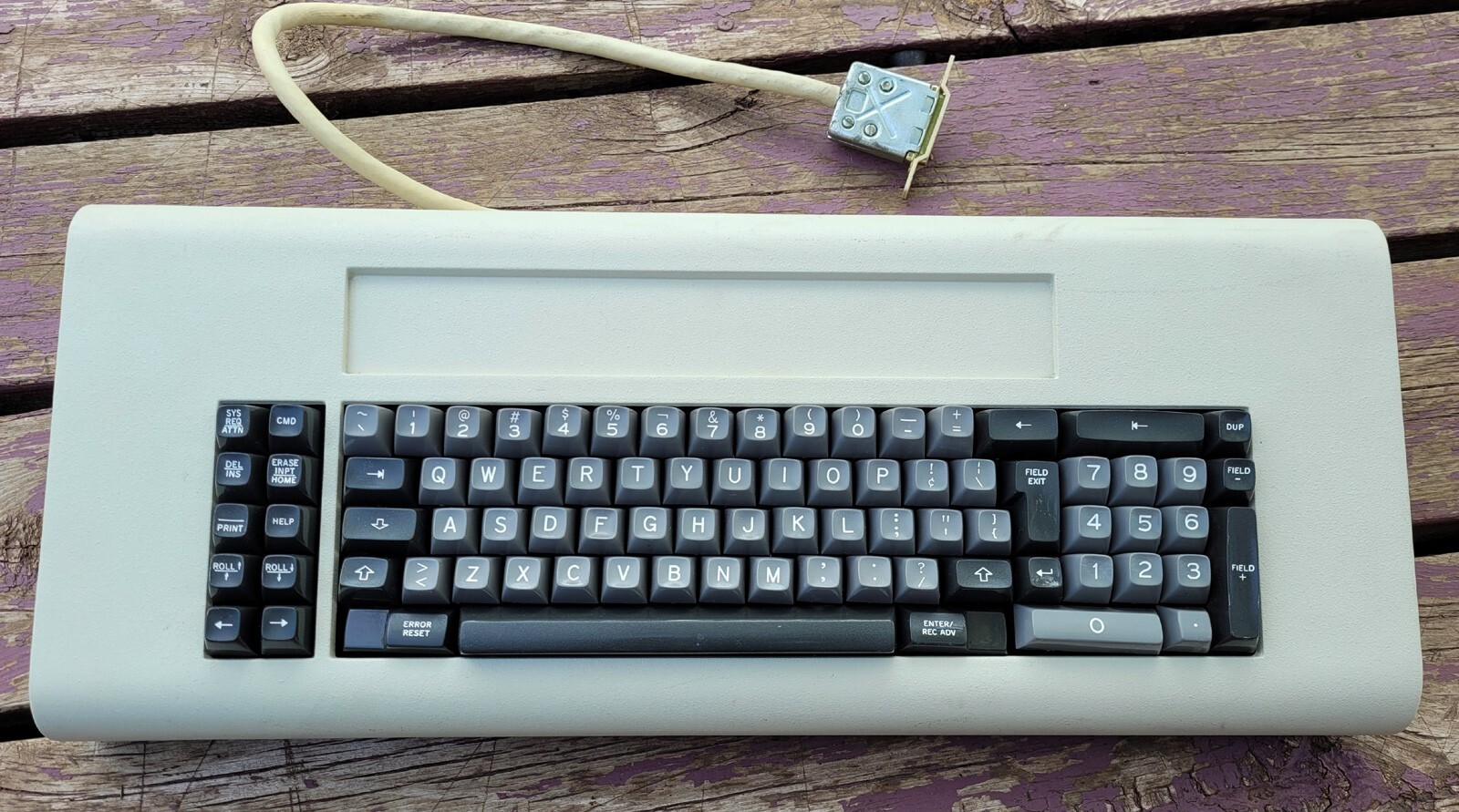
mhd@tilde.zone@mwichary One of the more important items in the timeline here was the LEXX editor (for lexicographers), and that was commonly access width IBM 3270 type terminals. That means a lot of Model F keyboards, so plenty of keys.
It's just that angle "brackets" are the least common denominator. I'm also reminded of the C "trigraphs" where you could write ??< instead of {.
Internationally, those brackets aren't as ubiquitous or easy to reach, as that place is often taken by other letters or accented forms.
1
0
0
Marcin Wichary
mwichary@mastodon.online@mhd Interestingly, on the 5251 both <> and {} are similarly accessible.
 0
0
0
0
0
0
Marcin Wichary
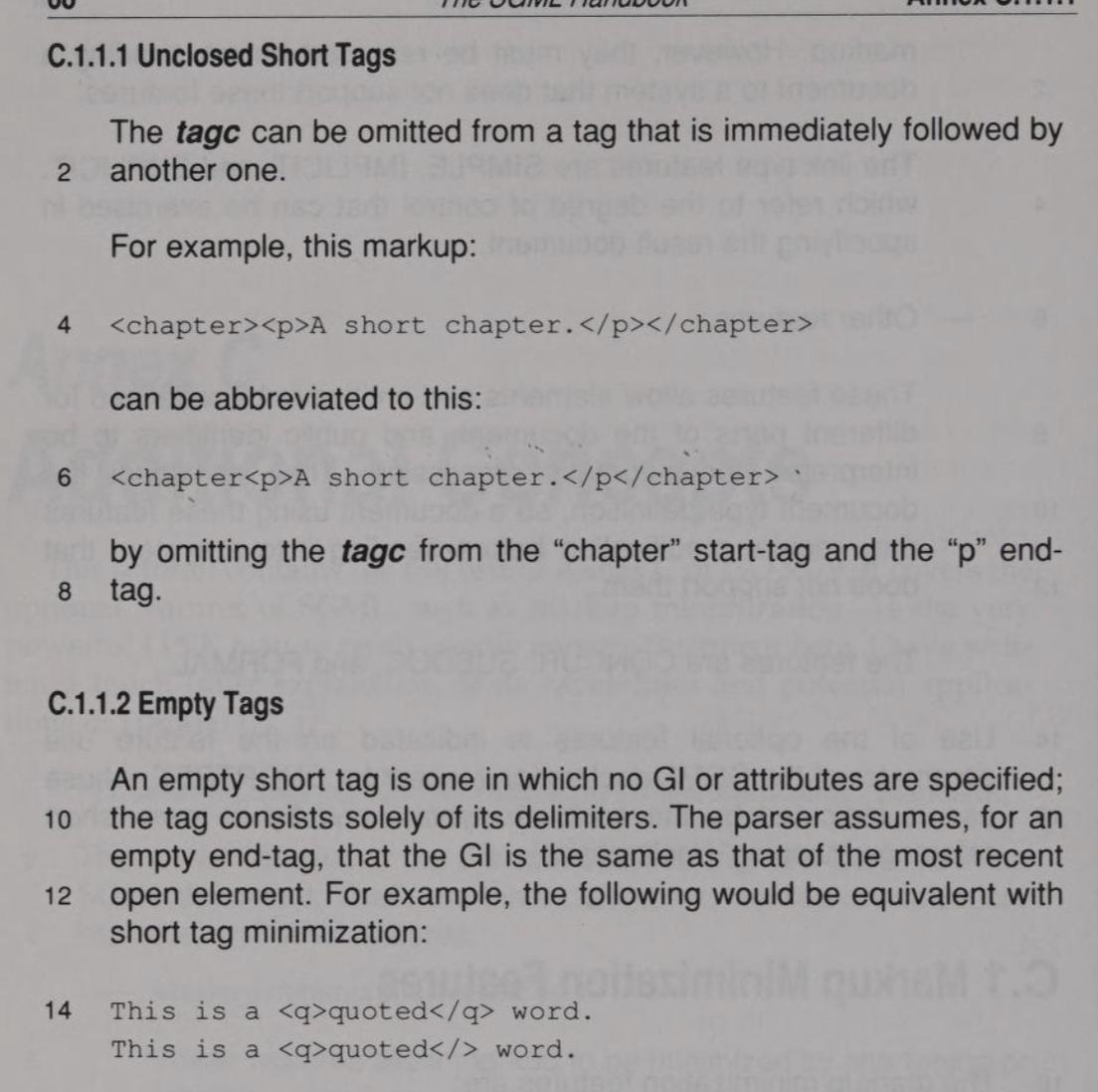
mwichary@mastodon.onlinePoring over SGML Handbook from Goldfarb himself (Goldfarb is the “G” in GML).
SGML had some wild features!
https://archive.org/details/sgmlhandbook0000gold/
 3
1
0
3
1
0
Marcin Wichary
mwichary@mastodon.onlineVery interesting! https://jtc1info.org/sd-2-history/jtc1-subcommittees/sc-34/
Not sure those are available online…
 2
0
0
2
0
0
Marcin Wichary
mwichary@mastodon.onlineI sent some emails, but I am not sure if this is going to go anywhere. It’s wild that there isn’t an authoritative answer online, given how much of modern “online” uses HTML and angle brackets.
1
0
0

Norm Tovey-Walsh
ndw@toot.wales@mwichary See also, stupid SGML tricks: https://www.balisage.net/Proceedings/vol17/html/Walsh01/BalisageVol17-Walsh01.html#roadnottaken
1
0
0
Marcin Wichary
mwichary@mastodon.online@ndw The author is one of the people I’m trying to reach! (If they’re still around. They published another paper at the same conference in 2019.)
2
0
0

Michael Piotrowski
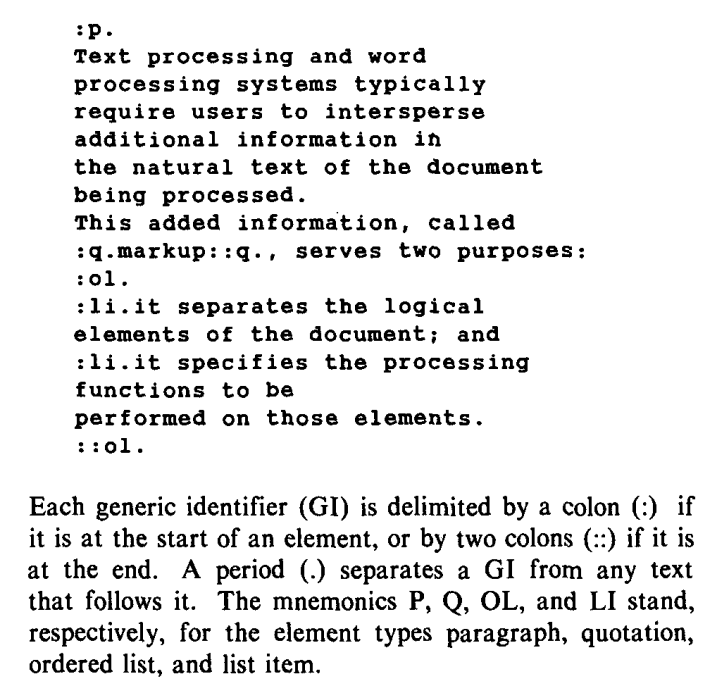
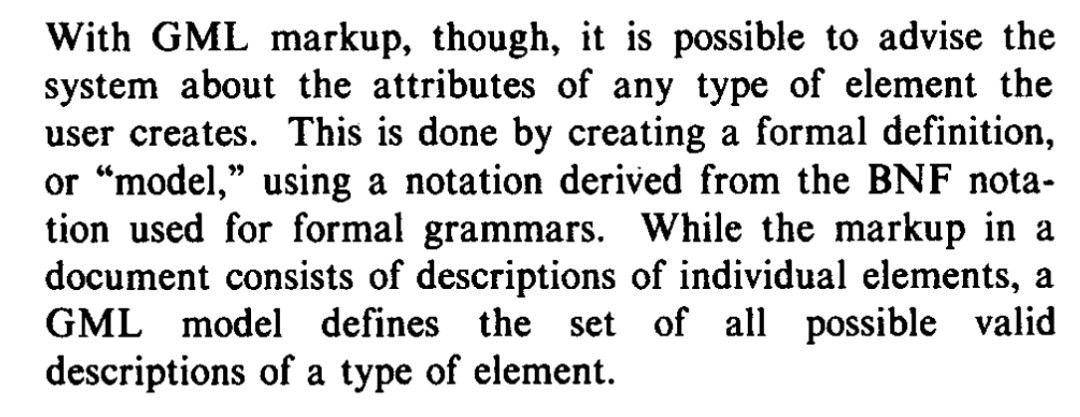
mxp@mastodon.acm.org@mwichary SGML descended from GML, which descended from SCRIBE, which descended from ROFF. As described in “A Generalized Approach to Document Markup,” (1981) https://doi.org/10.1145/800209.806456, GML used colon and period as delimiters.
 2
0
0
2
0
0
Marcin Wichary
mwichary@mastodon.online@mxp Yes, but this is not getting us closer to the <> answer, and this is alas not the “chicken scratches” as mentioned above.
1
0
0
Michael Piotrowski
mxp@mastodon.acm.org@mwichary I explicitly do not discuss the Concrete Reference Syntax (i.e., the angle brackets) in this paper, but some other historical idiosyncrasies:
Michael Piotrowski (2019). “History and the future of markup”. In: Proceedings of XML Prague 2019 (Prague, Feb. 7–9, 2019). Ed. by Jiří Kosek, pp. 323–333. URL: http://archive.xmlprague.cz/2019/files/xmlprague-2019-proceedings.pdf#page=335
1
0
0
Michael Piotrowski
mxp@mastodon.acm.org@mwichary No, it doesn’t, but it shows that the decision to go with <> must have been taken later.
1
0
0
Marcin Wichary
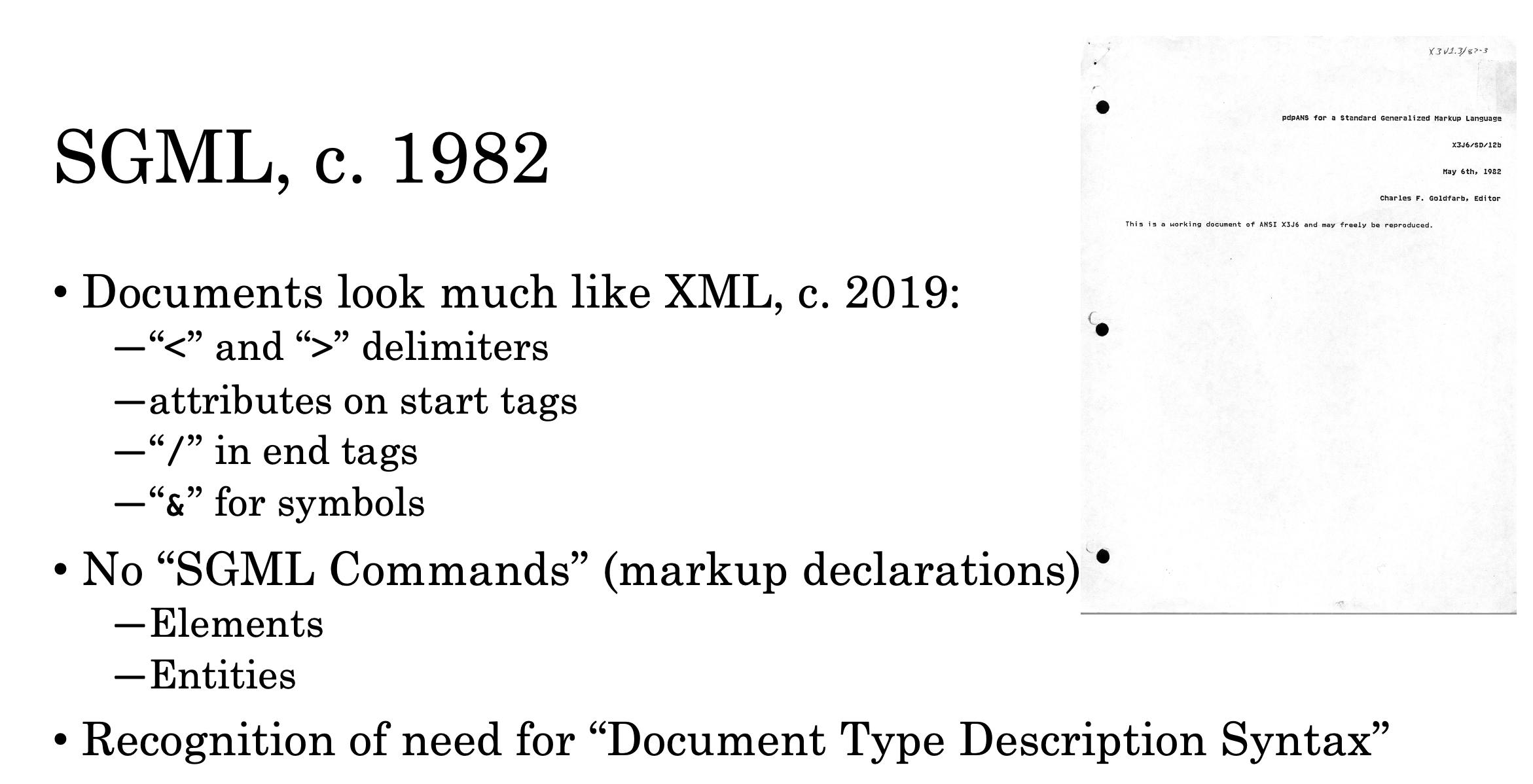
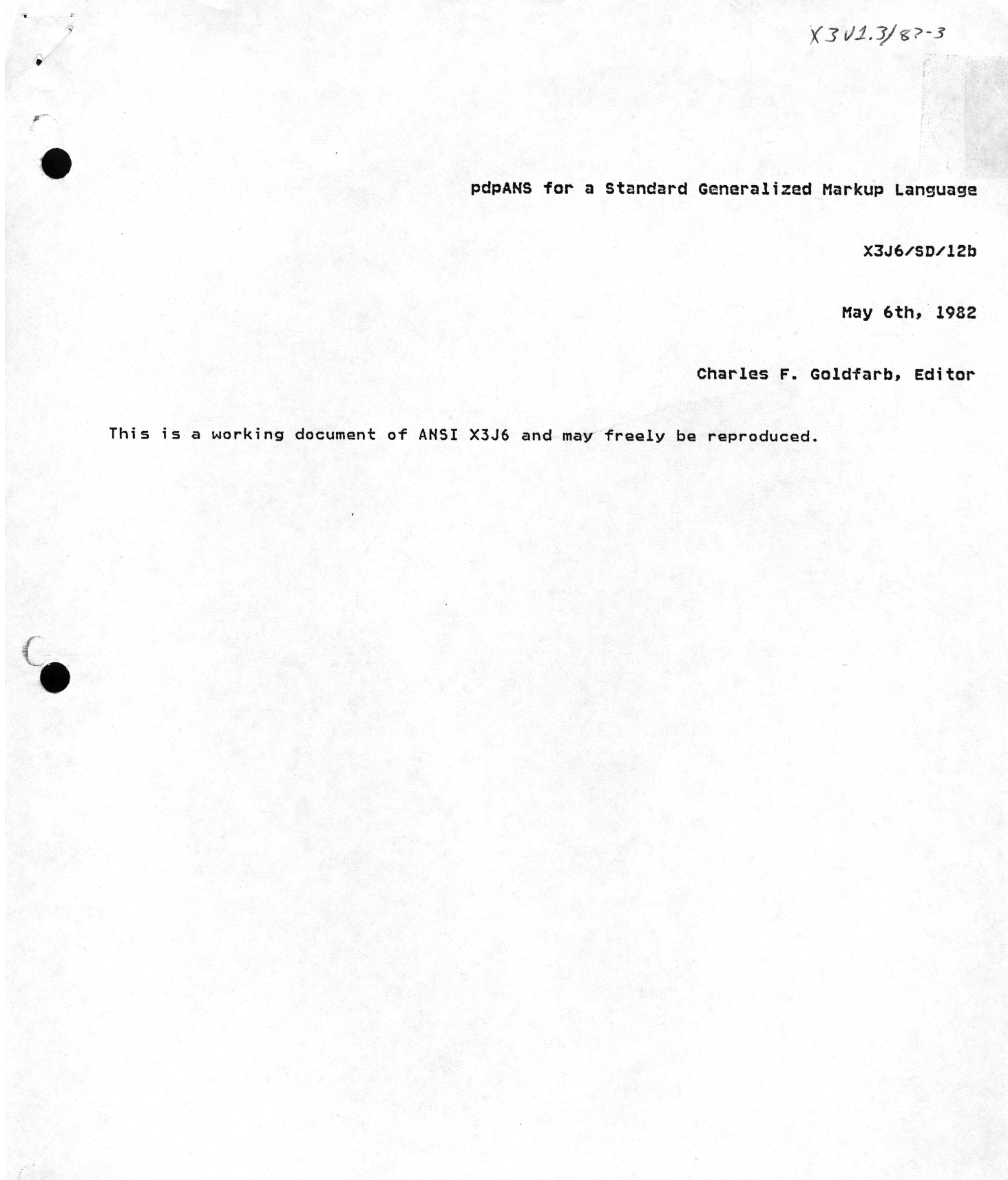
mwichary@mastodon.onlineMore from the same person writing about “chicken scratches.” Includes a tantalizing cover page of a working document.
https://www.balisage.net/Proceedings/vol23/html/Mason01/BalisageVol23-Mason01.html
 1
0
0
1
0
0

Ysegrim
ysegrim@furry.engineer@mwichary You are aware that, as opposed to <>, {}[] are not even available with Shift key on non-US keyboards? So we need to use AltGr + some unlabeled keycap every time?
1
0
0
Marcin Wichary
mwichary@mastodon.online@ysegrim I am. I wrote a little Mastodon post. I’m not trying to solve all of international keyboard problems.
0
0
0
ppk 🇪🇺
ppk@front-end.social@mwichary My theory is that <> were chosen because they were the only type of brackets that do not have special meaning in regexp.
But I could easily be wrong.
1
0
0
Marcin Wichary
mwichary@mastodon.online@ppk Yeah, I’d love just to see the considerations spelled out.
1
0
0
Michael Piotrowski
mxp@mastodon.acm.org@mwichary Later than the 1981 paper. Given that the first working draft standard was published in 1980, the “chicken scratches” are thus likely to refer to a later draft; given the year 1983, presumably the 6th working draft, which was published as GCA industry standard, as mentioned in the SGML Handbook, p. 569.
Note also that Annex A of the Standard (p. 5 in the Handbook) is an SGMLized version of the 1981 paper.
1
0
0
Marcin Wichary
mwichary@mastodon.online@mxp Sorry, not sure I follow the logic – the paper is from 1981, but talks about something much older. It’s entirely possible SGML already had <> then, but a) the paper was not about SGML, and b) it might have not been advisable to talk about work in progress anyway.
1
0
0
Marcin Wichary
mwichary@mastodon.online@mxp This puts it no later than 1982. I just wish it was possible to see those working drafts… https://mastodon.online/@mwichary/114715537112186412
0
0
0

adamrice
adamrice@c.im@mwichary Once in a while, I wonder what it would be like if the guys who created ASCII had built in “format-shift-in” and “format-shift-out” codes.
1
0
0
Norm Tovey-Walsh
ndw@toot.wales@mwichary Well, if you mean the author of the stupid SGML tricks paper, that'd be, uh, looks around nervously, me. Who else are you looking for?
1
0
0
Marcin Wichary
mwichary@mastodon.online@ndw Sorry, got the papers mixed up! Mostly just trying to figure out how SGML got its brackets. https://mastodon.online/@mwichary/114715424372809982
1
0
0

Jeremy Keith
adactio@mastodon.social@mwichary @ppk Tim Berners-Lee was just copying the angle brackets from SGML …and that was a version of GML.
In GML you could specify the characters you wanted to use for the tags.
So a decision was taken sometime between GML and SGML to use angle brackets.
Time to track down Charles Goldfarb and ask him about it!
1
0
0
Norm Tovey-Walsh
ndw@toot.wales@mwichary No problem. I know a couple of old time SGMLers. I've asked around and if I get any interesting responses, I'll let you know.
1
0
0
Marcin Wichary
mwichary@mastodon.online@ndw Or, if anyone has records of the proceedings or working docs!
0
0
0

Jon Bosak
bosak@flx.masto.host@timbray @erik @mwichary The angle brackets come from SGML, which became an ISO standard in 1986. But they were just there as an example; SGML allows you declare any delimiter you like for this role. Or to eliminate visible delimiters by writing the DTD to make their existence necessarily implied. It was features like these that made SGML so f*cking hard to implement, and XML was created by eliminating them.
1
0
0
Marcin Wichary
mwichary@mastodon.online
0
0
0
Marcin Wichary
mwichary@mastodon.onlineStill digging.
“To encourage acceptance, the authors of the SGML specification followed other design objectives: the ability to enter text and markup on "the millions of existing text entry devices"; no character set dependency; no national language bias; and markup usable by both humans and programs.”
https://www.loc.gov/preservation/digital/formats/fdd/fdd000465.shtml
4
0
0

Stewart Russell
scruss@xoxo.zone@mwichary I worked at a publishing shop that generated SGML, but had the < and > defined the other way around. So tags looked like >this<ewww ...>/this<
I really miss the </> close last tag. HoTMeTaL, IIRC, used to support it
1
0
0
Marcin Wichary
mwichary@mastodon.online@scruss Some text editors allow you to use it and then auto expand.
0
0
0

Glenn Fleishman
glennf@zeppelin.flights@mwichary have you come across the predecessor? I was typesetting on a 1970s CompuGraphic in the 1980s and it was similar to SGML syntax particularly with surrounding stuff with <tag>. Someone told me years ago that CompuGraphic had borrowed or developed a spec that fed into SGML.
2
0
0
Marcin Wichary
mwichary@mastodon.online@glennf I think technically SGML comes from GML but indeed I found some other surrounding codenames. Will investigate!
0
0
0
Marcin Wichary
mwichary@mastodon.online@glennf You might be onto something – I just got a solid lead pointing to at most 1979 and Graphic Communications Association (GCA) GenCode, not GML. I wonder if it is connected with CompuGraphic. If only we knew someone with a museum filled with info about that kinda stuff…
0
0
0
Marcin Wichary
mwichary@mastodon.onlineThanks to my emails but also people who were participating today, I got an email from one of the key players that sent me some great leads and info to investigate! (Including a PDF of the report I was salivating over earlier.)
It turns out the angle brackets are at most from 1979, if not earlier. More to research!
2
0
0
Marcin Wichary
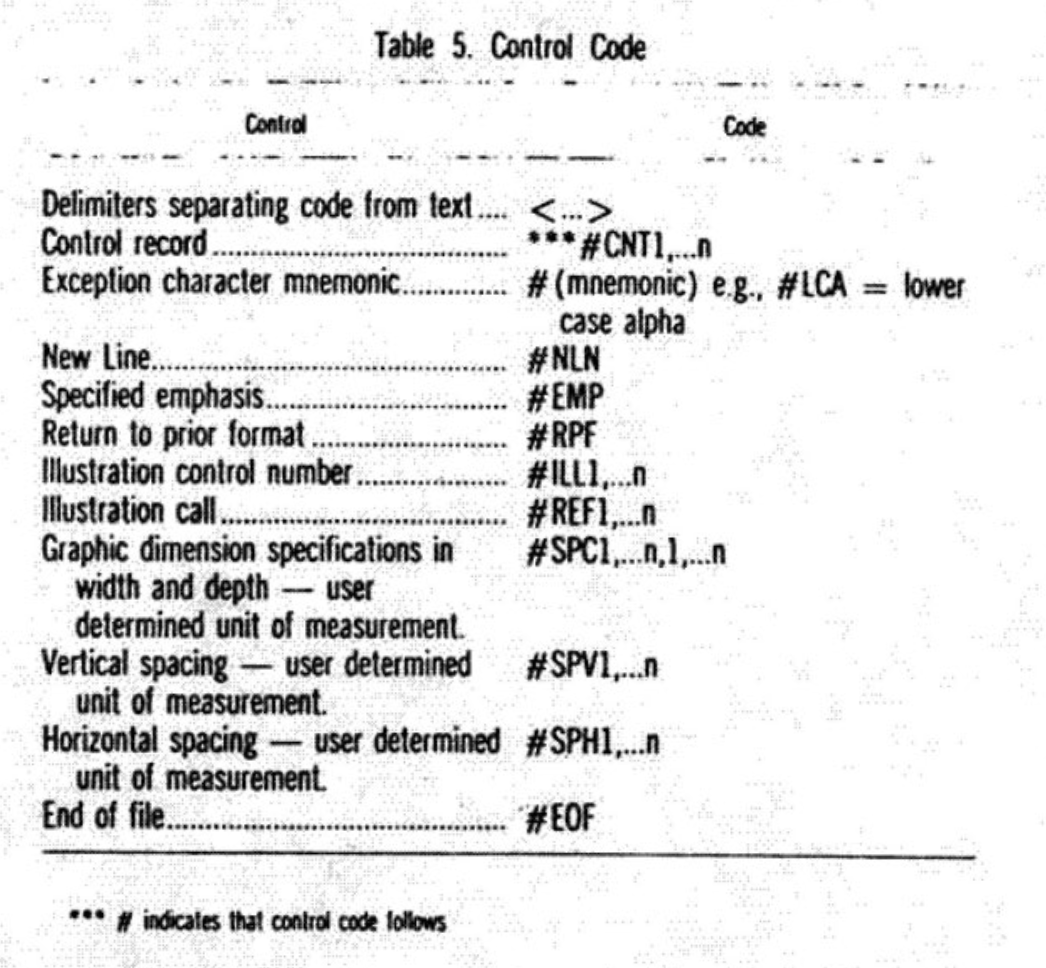
mwichary@mastodon.onlineThis is the earliest appearance of < > I know of today, from 1979.
This thread might slow down, as next step will be some interlibrary requests!
 2
0
0
2
0
0
Marcin Wichary
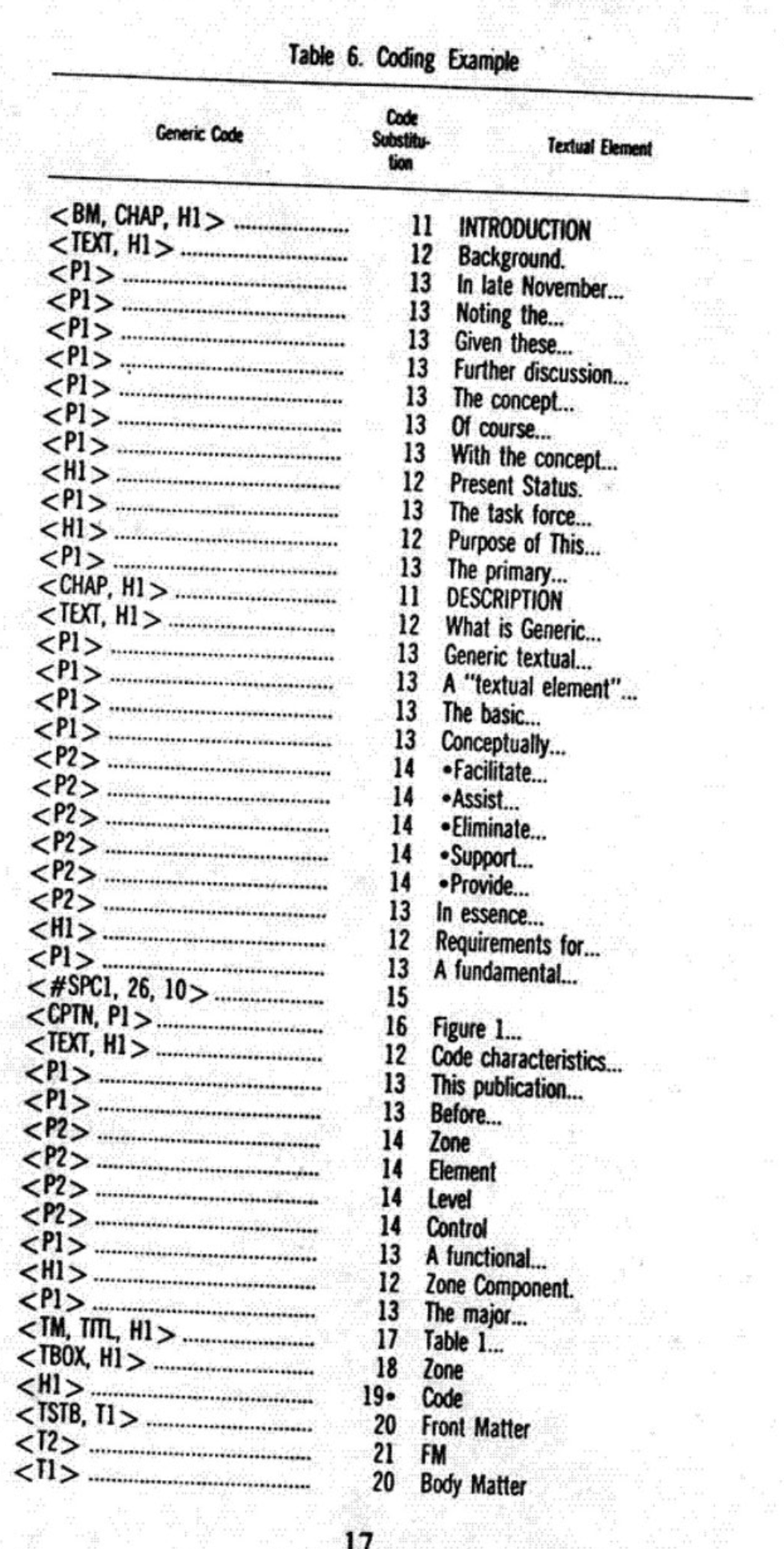
mwichary@mastodon.onlineThis might be more interesting. <P1> and <P2>! <#> for styling! Excited to dig and learn more.
 1
0
0
1
0
0

Geoff Coffey
gwcoffey@bookstodon.com@mwichary I feel like the answer here is going to end up being that angle brackets are balanced, and less likely to appear in the kinds of documents they envisioned being marked up than square brackets or parentheses, thus requiring less escaping. But this is very much a guess.
1
0
0
Marcin Wichary
mwichary@mastodon.online@gwcoffey Yeah, I think we all suspect the answer. I just wanna *see* it.
0
0
0
Marcin Wichary
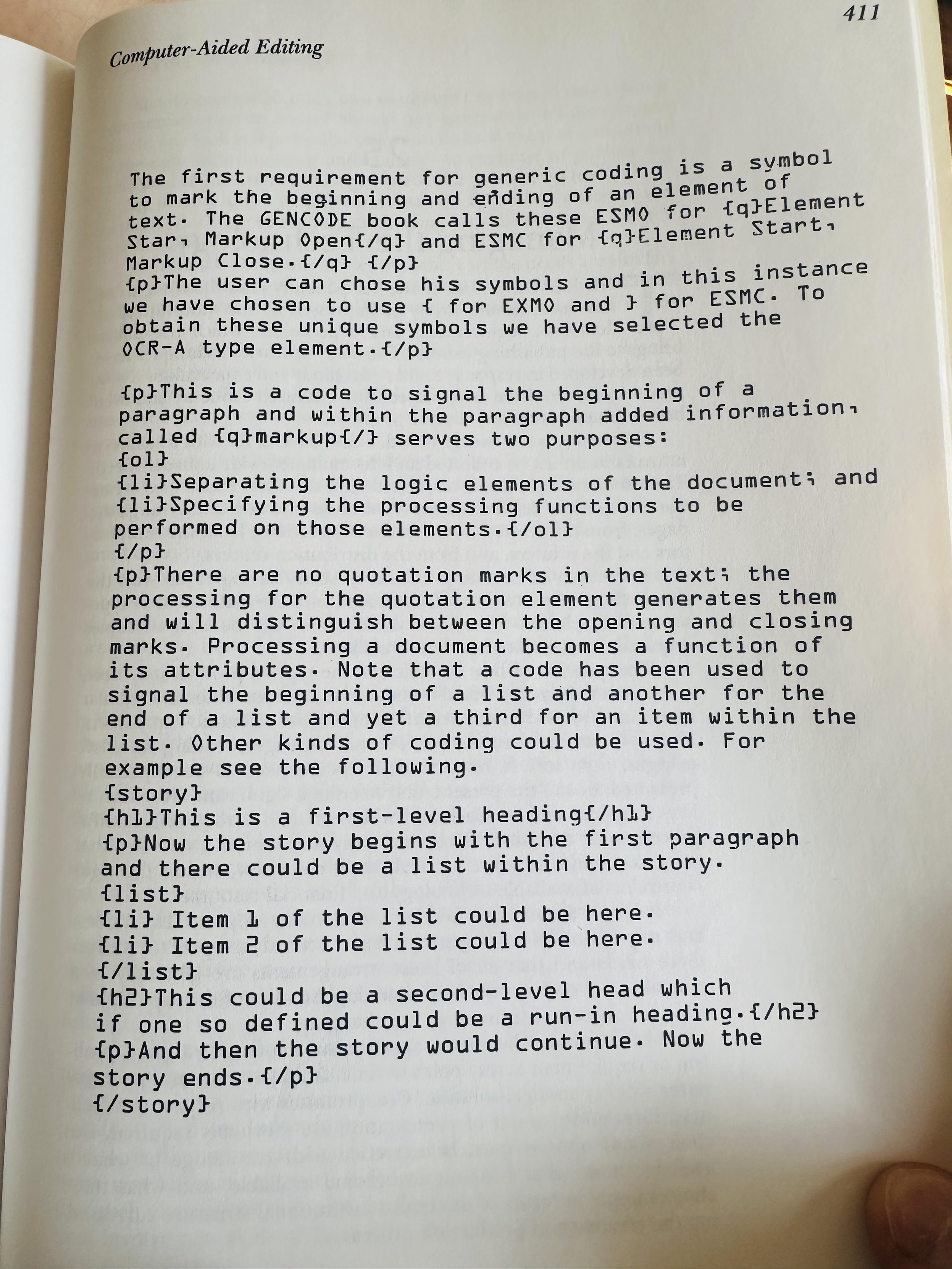
mwichary@mastodon.onlineThey are *killing me*. In the old article about the history of it that I just discovered, they are using… square brackets.
 3
0
0
3
0
0
sayrer
sayrer@mastodon.social@mwichary I bet the Balisage folks will know. @ndw is on here, but another guy named James David Mason seems to have been there. https://www.balisage.net/Proceedings/vol23/html/Mason01/BalisageVol23-Mason01.html
1
0
0
sayrer
sayrer@mastodon.social
1
0
0
Marcin Wichary
mwichary@mastodon.online
0
0
0

chris@strafpla.net
chris@strafpla.net@mwichary The pain! What problem does this abomination of a rule solve?
0
0
0

alex.tm
alextm@mstdn.ca@mwichary I think the readability suffers a bit using square brackets instead of angled. It wouldn’t be much of a problem in a code editor with a colour theme though I guess.
0
1
0

kwaktrap
kwaktrap@mastodon.social@mwichary "no character set dependency; no national language bias" might have made [] and {} unpopular choices in an international context at the time; there were non-US ASCII variants which didn't have these characters. (Strictly ISO 646 variants I suppose..)
The standardized form of the C language had a grim workaround for this: https://en.wikipedia.org/wiki/Digraphs_and_trigraphs_(programming)#C
1
0
0
Marcin Wichary
mwichary@mastodon.online@kwaktrap That’s very interesting! I don’t think I knew about this.
0
0
0

cos
cos@aus.social@mwichary Now I’m wondering where WordPerfect was inspired to use square brackets…
1
0
0

Jonas Downey
jonasdowney@mastodon.social@mwichary if the next example uses (h1)parentheses(/h1), then we can be certain you’re being trolled
1
0
0
Marcin Wichary
mwichary@mastodon.online@jonasdowney I’m worried that it will all amount to a big fat nothing… but we’ll see.
0
0
0
Marcin Wichary
mwichary@mastodon.onlineIs this going to go anywhere? Unclear. But I like this part.
 1
0
0
1
0
0
Marcin Wichary
mwichary@mastodon.onlineI like scanning and putting up interlibrary stuff on Internet Archive.
This is the first one I got. Not sure yet if it’s going to help with the HTML bracket investigation, but maybe it’ll help someone else! https://archive.org/details/gca-standard-101-1983
1
1
0
Marcin Wichary
mwichary@mastodon.onlineBelieve it or not, I’m still figuring out where HTML got its angle brackets.
But despite grabbing a lot of interlibrary items, I am not sure I’m getting any closer. I still have some ideas, but one involves going to a museum in Maine, which might take a while.
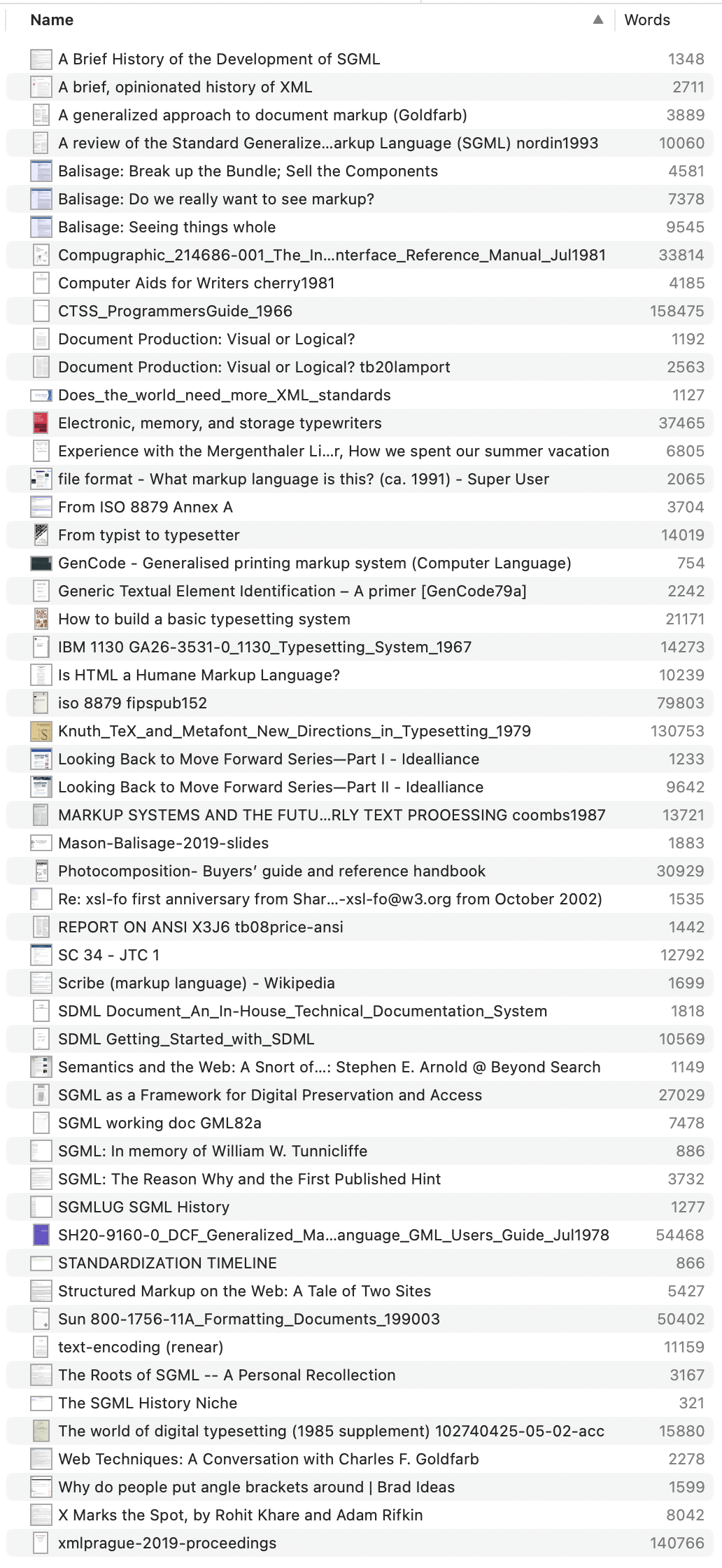
However, good news (for someone?): There are now over 40 papers and books I scanned that deal with history of markup. Enjoy!
https://archive.org/details/wicharytypewriter?tab=collection&query=subject%3A%22markup%22
14
5
0

Daniel Carosone
uep@timeloop.cafe@mwichary I .. didn't think this was a mystery, the simple answer is from SGML, clearly and explicitly at the time. I assume you're digging past that and trying to trace it back to earlier origins via there? I'd love to see where that hole goes.
1
0
0

(Vita)soy Boy
secretasianman@types.pl@mwichary that's a good Q because SGML (1986) has angle brackets but IBM's GML doesn't
1
0
0
Marcin Wichary
mwichary@mastodon.online@secretasianman Mhmmm. All signs point to the GenCode side of SGML but how *that* came to be angle brackets is shrouded in some mystery.
2
0
0
Marcin Wichary
mwichary@mastodon.online@secretasianman It’s kind of interesting to see people debating markup and other stuff as it was happening! A lot of it too smart/nerdy/academic to me, but nonetheless fun.
1
0
0
(Vita)soy Boy
secretasianman@types.pl@mwichary I wouldn't be surprised if they just had to pick another delimiter that wasn't already used by an existing macro processor or compiler at IBM
1
0
0
Marcin Wichary
mwichary@mastodon.online@secretasianman My current lead is that it actually maybe came from the typesetting universe as a convention, not the computer side. But a lot of the typesetting stuff of that era is extremely not preserved online.
2
0
0
(Vita)soy Boy
secretasianman@types.pl@mwichary I think it's really important to know the evolution of the tools we use everyday. We are almost trained to accept the world as given, but like you know, decisions are made by people who have their own stories etc
1
0
0
Marcin Wichary
mwichary@mastodon.online@secretasianman Yeah, I was astonished that for as many of those HTML tags I wrote myself and as many as are floating around in the ether everyday (which would also be a fun thing to try to measure), there is no clear answer to “why angle brackets.”
0
0
0
(Vita)soy Boy
secretasianman@types.pl@mwichary it's too bad Carl Schlesinger isn't around but may Romano would know. I'm assuming you're talking about early electronic to photo setting
1
0
0
Marcin Wichary
mwichary@mastodon.online@secretasianman Romano is exactly the museum I need to visit, ha.
1
0
0
(Vita)soy Boy
secretasianman@types.pl@mwichary see if you can catch the last few minutes of farewell etaoin shrdlu and see how they formatted then!
1
0
0

Marcin Wichary
mwichary@mastodon.online@secretasianman It’s not HTML-like since it’s not semantic, but it was a lot of angle brackets floating around. I would love to understand more who started it or popularized it, etc.
2
0
0
BITNACHT
bitnacht@bitbang.social@mwichary @secretasianman So you are thinking that «name of thing» somehow became <METADATA>?
1
0
0
(Vita)soy Boy
secretasianman@types.pl@mwichary it's definitely not HTML, it's from 1980, it would be interesting to know who made all that equipment. The film shows a data general machine, a dec pdp11, and an IBM system 370 (I think)
1
0
0
Marcin Wichary
mwichary@mastodon.online@secretasianman Yeah, there were also industry-specific players like CompuGraphic (which is one of the bigger leads).
1
0
0
Marcin Wichary
mwichary@mastodon.online@secretasianman Sorry I didn’t mean it’s not HTML but not even HTML-like even since it might serve a different purpose. But that part is better documented. The angle brackets much less so.
1
0
0
Marcin Wichary
mwichary@mastodon.online@secretasianman I’d love to be able to write an essay about this. I have a bunch of ideas on how to make it fun, but I just don’t have the answers ha
0
0
0

@mwichary @secretasianman Maybe also look into the use of codes in angle brackets to denote a substitutable or otherwise "out of band" object in descriptions of syntax? That's in Backus's notation from 1959 and he may have got it from maths, but you can see it evolving into tags, at least the atomic ones
1
0
0
Marcin Wichary
mwichary@mastodon.online@drawkcab @secretasianman Yeah, some people pointed it out in these threads. It’s very attractive because it’s just so similar!
0
0
0

Marcin Wichary
mwichary@mastodon.online@europlus Tim’s part is I believe well understood! The decisions came before his involvement.
0
0
0
josch
josch@rivals.space@mwichary maybe it's because {} and [] where just not widely available? see e.g. ISO 646 https://en.wikipedia.org/wiki/ISO/IEC_646#Variant_comparison_chart
1
0
0
josch
josch@rivals.space@mwichary this also points to that: http://sgmljs.sgml.net/docs/sgmlrefman.html#basic-sgml-declaration
nice quest(ion)!
1
0
0
Marcin Wichary
mwichary@mastodon.online@josch Yeah! That’s close to where I started this journey.
I just would love to see it spelled out somewhere, you know?
1
0
0
BITNACHT
bitnacht@bitbang.social@mwichary @secretasianman Tracing back the history of ideas is difficult. Sometimes the questions we ask are obscuring what was obvious to the persons of the time. Sometimes a solution became dominant at many disconnected places, simply because they were good enough and needed no alternative. I see a semantic shift here (markup vs. quotation/placeholder), not primarily a typographical one (<, [, <<, «) , but maybe this is the wrong way to look at it.
1
0
0
Marcin Wichary
mwichary@mastodon.online@bitnacht Yeah, I’m well aware there might be no smoking gun. I would just want to understand it more given the popularity of HTML, and then write about it. The stylistic to semantic evolution is better understood in the papers I scanned and in other things already available online. But landing on these particular brackets is shrouded in mystery.
0
0
0
Marcin Wichary
mwichary@mastodon.online@josch (However, it’s also possible angle brackets happened “before” with only US considerations in mind, and then were sort of backported into SGML.)
1
0
0
Marcin Wichary
mwichary@mastodon.online@josch (Actually, checking my notes more carefully I have a quote from the person who was there (personal email) citing ISO/IEC 646 as specifically *not* being a consideration.)
0
0
0

Taylor “Tigt” Hunt
tigt@mastodon.social@mwichary @secretasianman Doesn’t EBCDIC have iffy support for []{}? The angle brackets might have been easier to use at IBM
1
0
0
Marcin Wichary
mwichary@mastodon.online@tigt @secretasianman Yeah! Just not sure if that’s relevant or not…
0
0
0

Tobias
krono@toot.berlin@mwichary On a US keyboard that is.
On a German keyboadt, its the opposite and mroe.
1
0
0
Marcin Wichary
mwichary@mastodon.online@krono You are responding to a post from June. Dozens of people wrote a comment like yours already, and I responded to that, too. Thanks for your contribution.
0
0
0
Tim Bray
timbray@cosocial.ca@mwichary You might find some pointers in https://en.wikipedia.org/wiki/Markup_language
2
0
0

Richard Penner
Arpie4Math@mathstodon.xyz@mwichary Table 3 on page 360 of "The SGML Handbook" by Charles F. Goldfarb has a table of the _standard_ assignments for #SGML delimiters which is configurable in the SYNTAX DELIM part of the declaration. STAGO (<), ETAGO (</), MDO (<!), PIO (<?) are closed with TAGC (>), MDC (>), and PIC (>). Curly braces, part of ASCII and Unicode 2.0, are not found.
So your search is for the authorship of the #standard for STAGO, ETAGO, and TAGC. Legacy systems still in use in 1980 used a wide variety of character sets. It is possible that a legacy 6-bit character set was used as a constraint as the bias to all-upper case and lack of curly brackets is consistent with that theory.
As you want history, not speculation, I will point out that #Goldfarb wanted the system to be visually distinct because this format (like GML) was designed for humans to be able to parse and this concern would have been common. But SGML was designed and adopted by a committee building off GML and committees have documents. Good luck!
1
0
0
Marcin Wichary
mwichary@mastodon.online@Arpie4Math Thanks! I already know from first sources that the tags came not from the GML side of the process, but from GenCode efforts that might originate more from the typesetting industry than anything else. Digging into that now, but it’s been hard.
0
0
0

Bogdan Baraskevic
bogdanb@mastodon.social@mwichary It’s just speculation, but could it be due to the impact on readability and the fact that these characters were relatively rare in texts? <P> vs [P] or {P}, especially in the days of monochrome monitors, could make a difference.
1
0
0

Carsten Bormann
cabo@discuss.systems[] and {} were not in the invariant set of EBCDIC (Charles Goldfarb worked for IBM).
<> were.
https://www.ibm.com/docs/en/i/7.1.0?topic=sets-invariant-character-set
1
0
0
Marcin Wichary
mwichary@mastodon.online
1
0
0
Carsten Bormann
cabo@discuss.systems@mwichary @bogdanb
When were the angle brackets adopted?
That must have been around 1974.
I'd expect that the practicality of fitting in EBCDIC may have been something that would be discussed inside IBM, not in the wider GenCode community.
(But then, the defaults in SGML include !, which isn't inside the invariant set either.)
1
0
0
Marcin Wichary
mwichary@mastodon.online@cabo @bogdanb Yeah, I’m pretty sure the practicality/portability would have been important at some point in time. But I also understand that this effort came more from the GenCode side and not GML, and I’m not yet fully sure how that came to be.
I can imagine one history flow where <> started as a proprietary thing that one manufacturer liked, and it just spread elsewhere by convention. And it just *happened* to work for portability/EBCDIC/SGML/etc.
1
0
0
Marcin Wichary
mwichary@mastodon.online@cabo Curious what’s making you think of 1974 in particular?
1
0
0
Carsten Bormann
cabo@discuss.systemsJust a guess, but https://history-computer.com/people/charles-goldfarb/ mentions that year as the start of work on SGML.
1
0
0
Ben Zanin
gnomon@mastodon.social@mwichary psst @mhoye , I think you'll enjoy this HTML/SGML/GML history spelunking thread 👀↑↑
(edit: courtesy of @feonixrift )
1
0
0
mhoye
mhoye@mastodon.socialNice! Marcin, thank you for this.
If it contributes anything to the cause, I found a number of citations back when I was trying to figure out why programmers start counting from zero, that talked about the credible rodeo keyboards and character sets were back in the larval stages of this industry, and how Dennis Ritchie picked square brackets for array notation in part because they were available on most of the keyboards nearby when he worked at Bell Labs.
1
0
0
Marcin Wichary
mwichary@mastodon.online@mhoye Ha – this is how it all started for me if you scroll up all the way up!
1
0
0

Mike McCaffrey
mikemccaffrey@drupal.community@mwichary Seems like it would be as simple as the fact that the characters were required on all keyboards for use as greater than and less than signs, but they could be repurposed as brackets, and weren't otherwise being used as brackets in everyday text.
1
1
0
Marcin Wichary
mwichary@mastodon.online@mikemccaffrey Yeah, but this is just one speculation among many.
0
0
0
mhoye
mhoye@mastodon.social@mwichary Amazing! You might enjoy this, as well: https://exple.tive.org/blarg/2020/11/26/punching-holes/
1
0
0
Marcin Wichary
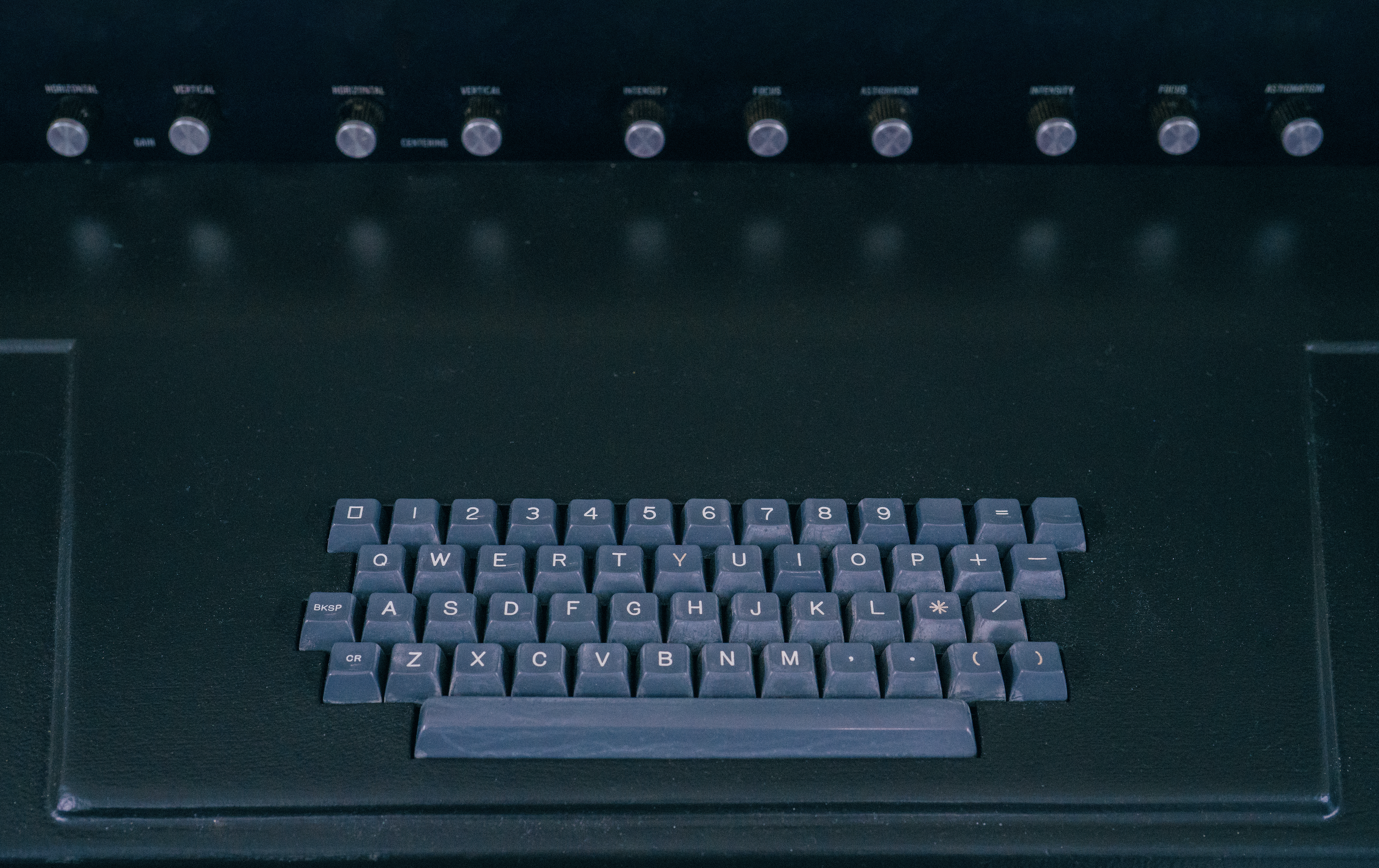
mwichary@mastodon.online@mhoye Thanks! Will check it out later. Reminds me of historical computer keyboards that had the zero on the “correct” side – and, mysteriously to me, modern keyboards in Hungary.
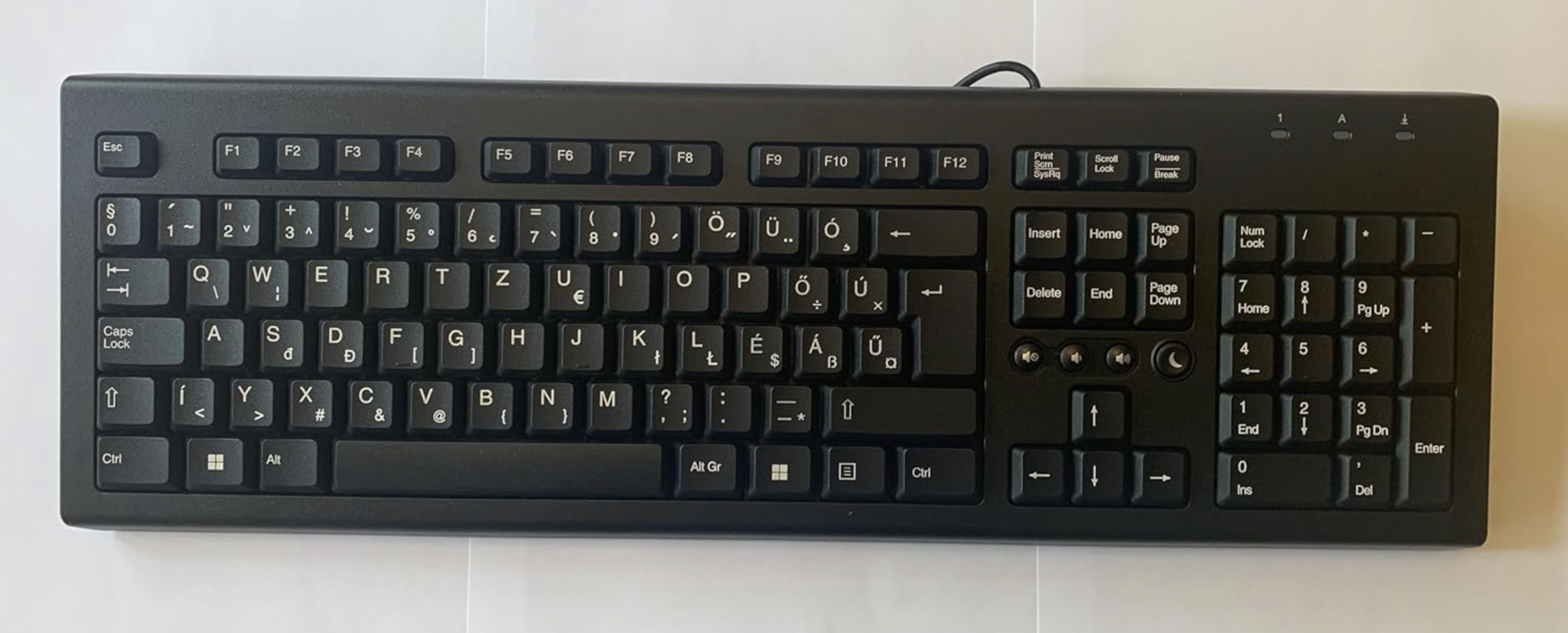 0
0
0
0
0
0
Jon Bosak
bosak@flx.masto.host@mwichary I was unaware of this thread. It's fun to see someone digging into SGML; I guess it's now entered the realm of archeology.
As you already know, in the beginning, the angle brackets were just by way of example. HTML is an SGML application, so if web browsers natively understood SGML, you could have a version that uses square brackets instead of angle brackets by just pinning a modified DTD to the beginning of every document instance.
1
0
0
Jon Bosak
bosak@flx.masto.host@mwichary The proximate cause of HTML's use of angle brackets is that they were used in the SGML Starter Set created by Anders Berglund as a teaching example for his fellow workers at CERN. One of them, Tim Berners-Lee, added the <A> tag to create HTML.
1
0
0
Marcin Wichary
mwichary@mastodon.online@bosak Do you have any experience/advice on how to find more information about GCA’s GenCode efforts? I understand this is what led to angle brackets in SGML, but the world of standards is a mystery to me.
1
0
0

Stylus
stylus@social.afront.org@mwichary @timbray did you find COCOA? http://www.chilton-computing.org.uk/acl/applications/cocoa/p001.htm (with a date of 1965 showing) has
<W SHAKESPEARE> <T HAMLET> <A 1> <S 1>
Marcin Wichary
mwichary@mastodon.online
0
0
0

LAHosken 🇺🇸👀
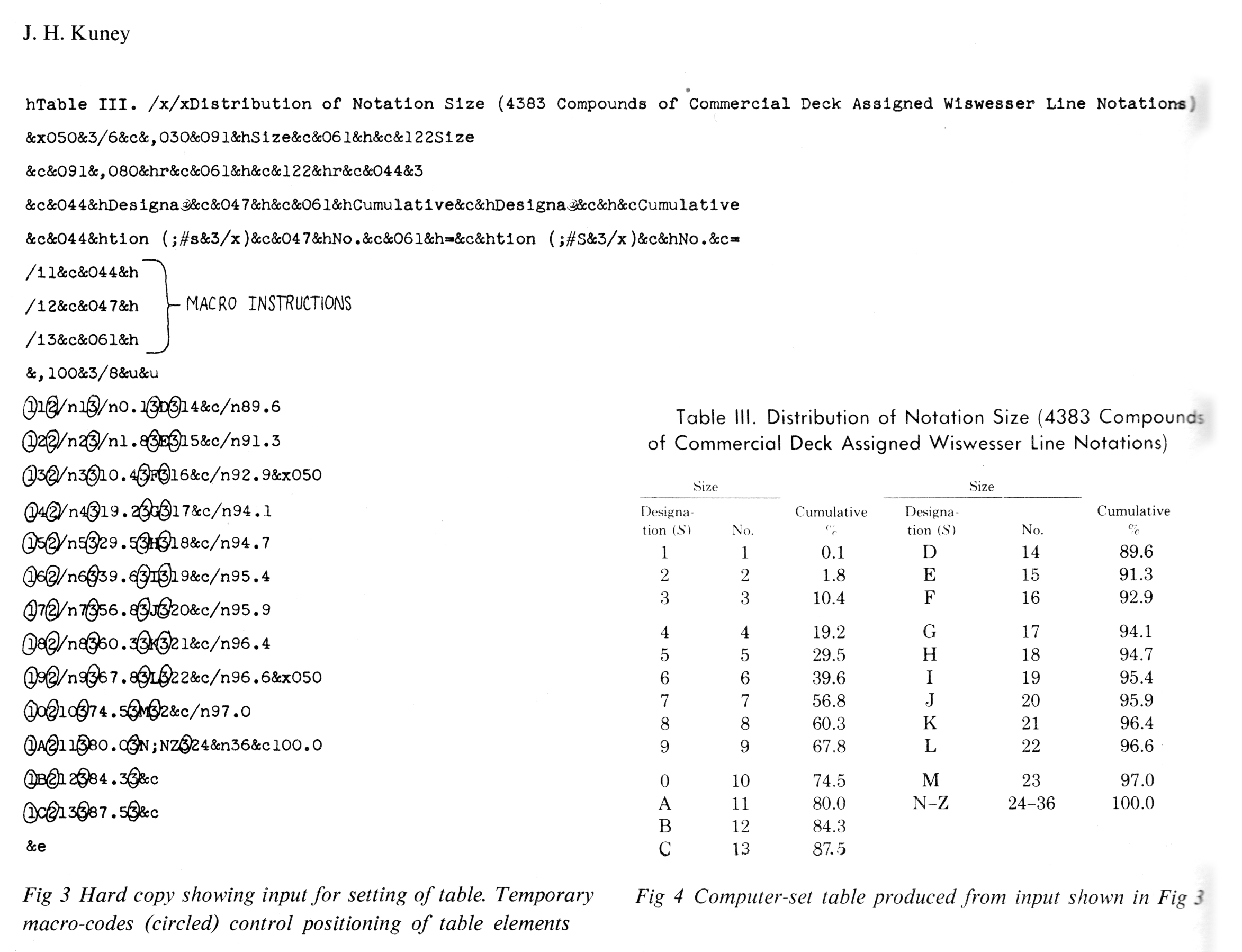
lahosken@hachyderm.io@mwichary Designa- ... Cumulative ... -tion ... No.
It's like the "Don't Dead Open Inside" of table formatting instructions, grrr
1
0
0

Charlie Stross
cstross@wandering.shop@mwichary @quixoticgeek HTML started as a drastically cut-down subset of SGML. SGML is the motherlode. (I was tracking HTML professionally from 1993-ish.)
1
0
0
Glenn Fleishman
glennf@zeppelin.flights@cstross @mwichary @quixoticgeek Before SGML, there was Compugraphic typesetting—when I first learned about HTML (and then backwards, about SGML), I was shocked to see relatively similar coding standards to what I used to type on the EditWriter 7500, a device still in wide use by the mid-1980s because it was a workhorse.
2
0
0
Jon Bosak
bosak@flx.masto.host@mwichary No, I joined the group responsible for SGML (ISO/IEC JTC1 SC18 WG8) in 1995, long after GenCode. My impression has always been that Goldfarb liked the angle brackets and that there was no more complicated reason for choosing them (there didn't have to be; Charles was complicated enough, and he made decisions for the group with an iron hand for his own arbitrary reasons), but I have no evidence for this. Maybe you'll turn up something more concrete.
1
0
0
Marcin Wichary
mwichary@mastodon.online@bosak Thanks! I likely won’t, but it’s been fun so far.
Of course there’d always be the underlying question of *why* did he like angle brackets, even if that is confirmed.
1
0
0

Jack
knapjack@gruntle.cchttps://en.wikipedia.org/wiki/Bracket
1
0
0
Marcin Wichary
mwichary@mastodon.online@knapjack Maybe! I am hoping to spend more time in that space and see what I learn.
0
0
0

geraint
geraint@mastodon.social@glennf @cstross @mwichary @quixoticgeek Before SGML there were WordPerfect control codes
1
0
0
Marcin Wichary
mwichary@mastodon.online@geraint @glennf @cstross @quixoticgeek I don’t think those used angle brackets?
0
0
0
barefootliam
barefootliam@floss.social@mwichary you could use [ and ] in SGML if you wanted, but SGML was complex and i think never fully implemented - one goal of XML was to make an SGML with a 30 page spec, not 300.
Early card punches and teletypes did not have { or }, and some did not have [ or] (EBCDIC lacked them).
At SoftQuad (SGML firm where i worked) 80% or support cost was from people mis-using shortcuts (minimization). We eliminated them from XML.
1/2
1
0
0
Marcin Wichary
mwichary@mastodon.online@barefootliam Yes, but that really doesn’t answer the question, I’m afraid: the flavour of brackets is not the only option. GML itself didn’t have them. Neither did TeX, CMS Script, Scribe…
1
0
0

Irving Reid
irvingreid@hachyderm.io
1
0
0
Tim Bray
timbray@cosocial.ca@irvingreid @mwichary Nope, the angle brackets were in place when I first encountered that kind of markup, which was in 1987. However, a couple of years ago I wrote a GML parser (see https://www.tbray.org/ongoing/When/202x/2021/02/14/Recent-Code) but that flavor of GML had tags that looked like:
:root tag=ANNOTATIONS.
:isContainer tag=sec grabAttribute=secNo endAt=trule.
:paraEnders endAt=sec.
:synonym tag=FLPAR treatAs=par.
:synonym tag=flpar treatAs=par.
1
0
0

roland
roland@devdilettante.com@timbray @irvingreid @mwichary lol i used GML to write my 1A work term report at Bell Northern Research in Spring of 1984.
1
0
0
roland
roland@devdilettante.com@timbray @irvingreid @mwichary yes no angle brackets IIRC but my memory is not the best :-)
1
0
0
Marcin Wichary
mwichary@mastodon.online@roland @timbray @irvingreid This quotation from a 1997 paper is killing me – cannot find what that could have been.
 1
0
0
1
0
0
Marcin Wichary
mwichary@mastodon.online@roland @timbray @irvingreid (Well, the authors of the paper might still be around – a long shot, but I’ll try.)
0
0
0
barefootliam
barefootliam@floss.social@mwichary alas, Charles died, but i could try emailing Sharon & Anders and asking where < > came from. I didn’t see them used for this before SGML either. Itś obvious why not [ ] or { } though (IBM).
1
0
0
Marcin Wichary
mwichary@mastodon.online@barefootliam That’d be great! What do you think about me making a quick doc with timelines and keywords to possibly jog their memory?
0
0
0

Csaba
senki@phpc.social@mwichary You know you can always ask 🤓
Do you remember SGML? The metaphysical precedent of Markdown? It meant to be read by humans, not just computers. The idea is that parentheses and square brackets are present in normal writing. But angle brackets are not.
1
0
0
Marcin Wichary
mwichary@mastodon.online@senki What a condescending answer. Please catch up with the whole thread.
0
0
0
Norm Tovey-Walsh
ndw@toot.wales
1
0
0
Jon Bosak
bosak@flx.masto.host@ndw @mwichary BTW, in defense of Goldfarb (or whoever made the initial decision to use angle brackets), remember that SGML was designed for the management of massive collections of documents containing thousands of instances of square brackets as parts of the text, and if you decided to use square brackets for delimiters, you'd have to escape every one of the square brackets in the text with a character reference.
2
0
0

Maybe this has been mentioned already (super thread!) but I wonder if Goldfarb could have borrowed angle brackets from Backus Naur Form (BNF) which had used them since ~1959?
https://dl.acm.org/doi/pdf/10.1145/800209.806456
 1
0
0
1
0
0
Marcin Wichary
mwichary@mastodon.online@ink @bosak @ndw Thanks, yes! It’s one of the hypotheses. I just wrote out what I know so far: https://docs.google.com/document/d/16QNavHjds1OdkKsfqLYx6EF0ohA-Qh_dZc8OK9TFrQk/edit?tab=t.0
0
0
0
Marcin Wichary
mwichary@mastodon.online@timbray This doc is also good! https://hublog.hubmed.org/archives/002029
0
0
0

Dan Riley
dan131riley@federate.social@mwichary @darkphoenix @buherator IBM mainframe keyboards from the 80s often did not have square brackets at all, and square brackets are not in the invariant character set for EBCDIC or ISO/IEC 646—so they could be absent of localized keyboards as well.
Youngsters these days have no idea what a big deal EBCDIC compatibility used to be.
ref: https://sharktastica.co.uk/topics/3101-3270-5250-comparison
0
0
1
Marcin Wichary
mwichary@mastodon.onlineWrote down what I learned so far and open questions in this new doc: https://docs.google.com/document/d/16QNavHjds1OdkKsfqLYx6EF0ohA-Qh_dZc8OK9TFrQk/edit?tab=t.0#heading=h.z1r9lwho309s
…in case you are interested in seeing where I am and what are my next steps, and maybe have new ideas. Thanks in advance! The doc is free to comment, or you can always ping me here.
EDIT: Please do not tag/bother Tim Berners-Lee. Angle brackets happened many years before he started working on HTML.
6
4
0

alphabetter
alphabetter@mastodon.social@mwichary Maybe I don't understand the question, but isn't it just a personal choice of Tim Berners-Lee, maybe influenced by pre-existing protocols like SGML?
In any case, you may find the following useful if you haven't already seen them:
https://home.cern/science/computing/birth-web/short-history-web
https://www.loc.gov/preservation/digital/formats/fdd/fdd000476.shtml
1
0
0

Marcin Wichary
mwichary@mastodon.online@miramarmike Love your implicit assumption that Tim Berners-Lee’s time is less valuable than yours, given you haven’t even looked at the doc.
0
0
0

Jörn Franke
jornfranke@mastodon.online@mwichary According to @w3c Tim Barners-Lee @timbl wrote the first HTML version: https://www.w3.org/about/history/
Maybe they can shed some light on this topic?
1
0
0
Marcin Wichary
mwichary@mastodon.online@jornfranke @w3c @timbl HTML got its brackets from SGML, and I’m trying to figure out what happened on the way to SGML, which predates Tim’s involvement.
(I’m pretty sure Tim Berners-Lee would have not picked SGML if SGML wasn’t a great solution, but that feels beside the point.)
1
0
0

Wish the sun to stand still 🌞
tasket@infosec.exchange@mwichary @jornfranke @w3c @timbl From Perl, perhaps?
0
1
0
Marcin Wichary
mwichary@mastodon.online@bri7 This is wrong and/or speculation. This is not advancing the research. Please read the document.
0
0
0

felix (grayscale) 🐺
gray17@mastodon.social@mwichary here's Backus's 1959 paper, angle brackets on page 14
https://softwarepreservation.computerhistory.org/ALGOL/paper/Backus-Syntax_and_Semantics_of_Proposed_IAL.pdf
this predates typesetting/etc considerations. I don't know how to determine if this was Backus's invention or not. maybe it came from some earlier formal notation?
2
0
0
Marcin Wichary
mwichary@mastodon.online@gray17 Thanks! I haven’t seen that particular paper before.
I have no idea if the BNF has any relevance here, but at least it’s in the “vicinity of interest” – e.g. it comes up occasionally in papers.
0
0
0
Marcin Wichary
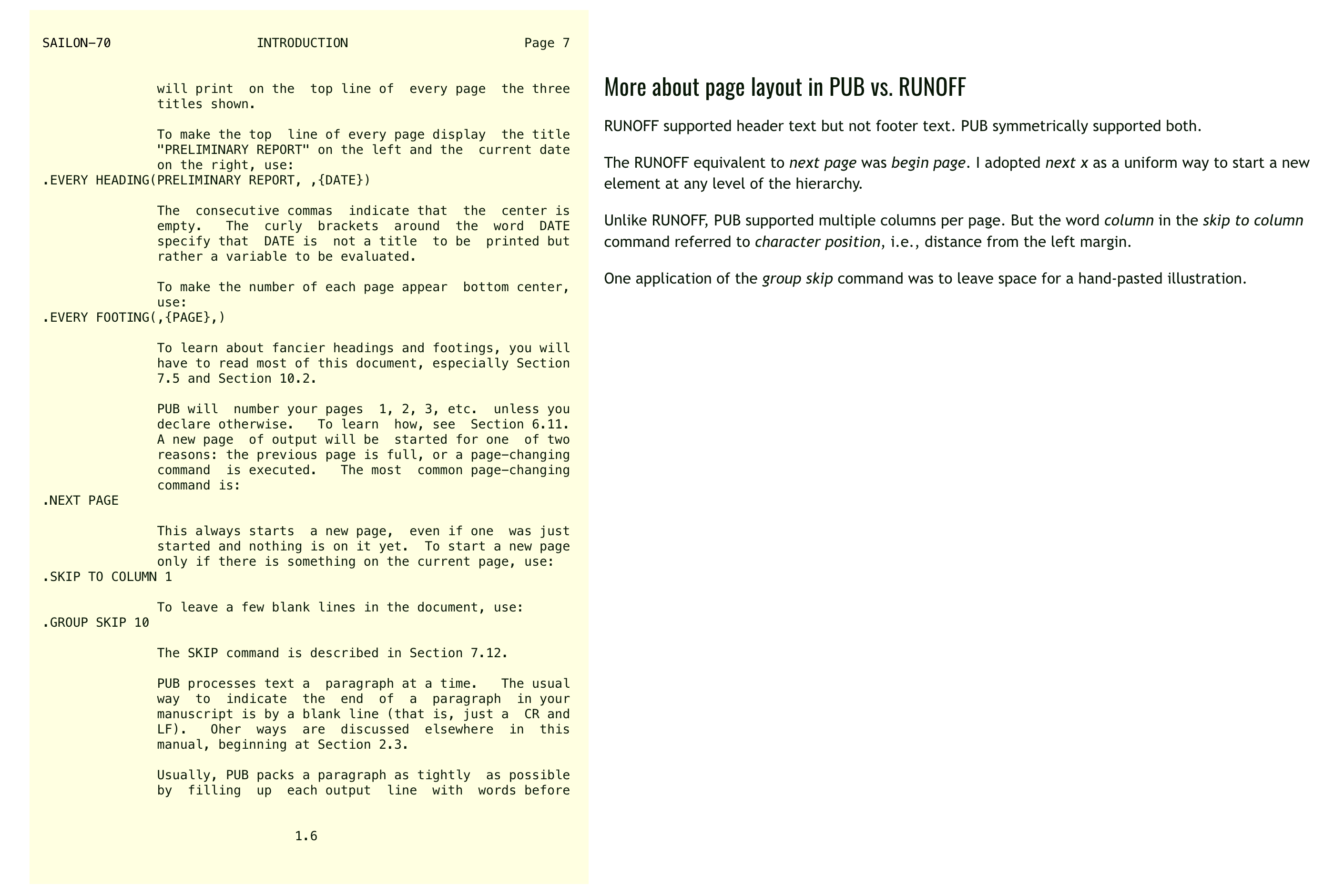
mwichary@mastodon.onlineI really like this way of annotating/commenting on an old document – in this case an old markup language called PUB, from Larry Tesler himself.
I just wish it worked on mobile as well. And, perhaps, that it would show the scanned pages rather than recreated ones. Something about that feels important to me.
https://www.nomodes.com/history/pub-manual
 2
0
0
2
0
0

Caleb Maclennan
alerque@mastodon.social@mwichary Are you sure those are actually recreations of scans? They look like they were generated that way as a way of typesetting — likely using roff or a macro package built thereon complete with pagination and all.
1
0
0
Marcin Wichary
mwichary@mastodon.online@alerque I mean, it’s extremely skeuomorphic so whether it’s recreating or gesturing toward something, it feels similar. There was a better way to do this whole page if this wasn’t a consideration – look at all that wasted space on the right!
0
0
0
@mwichary Any evidence that it's a negative reaction to Lisp parens? Because that would have been my guess.
1
0
0
Marcin Wichary
mwichary@mastodon.online@barefootliam @jwz It sort of explains it maybe if you assume no letters ever come glued to & naturally, which is mostly true I think?
0
0
0

Massimo
mfiorentino@mastodon.social@mwichary In his Frontend Masters lecture, Crockford gives this account: "Goldfarb looked at this and went: 'Angle brackets? I didn't know you could do angle brackets—that's great."", linking Brian Reid's Scribe system to SGML's angle bracket choice. https://frontendmasters.com/courses/good-parts-javascript-web/the-history-of-html/
1
0
0
Marcin Wichary
mwichary@mastodon.online@mfiorentino Thanks for sharing this! This story came up a few times although each time it’s even more colorful, ha.
0
0
0
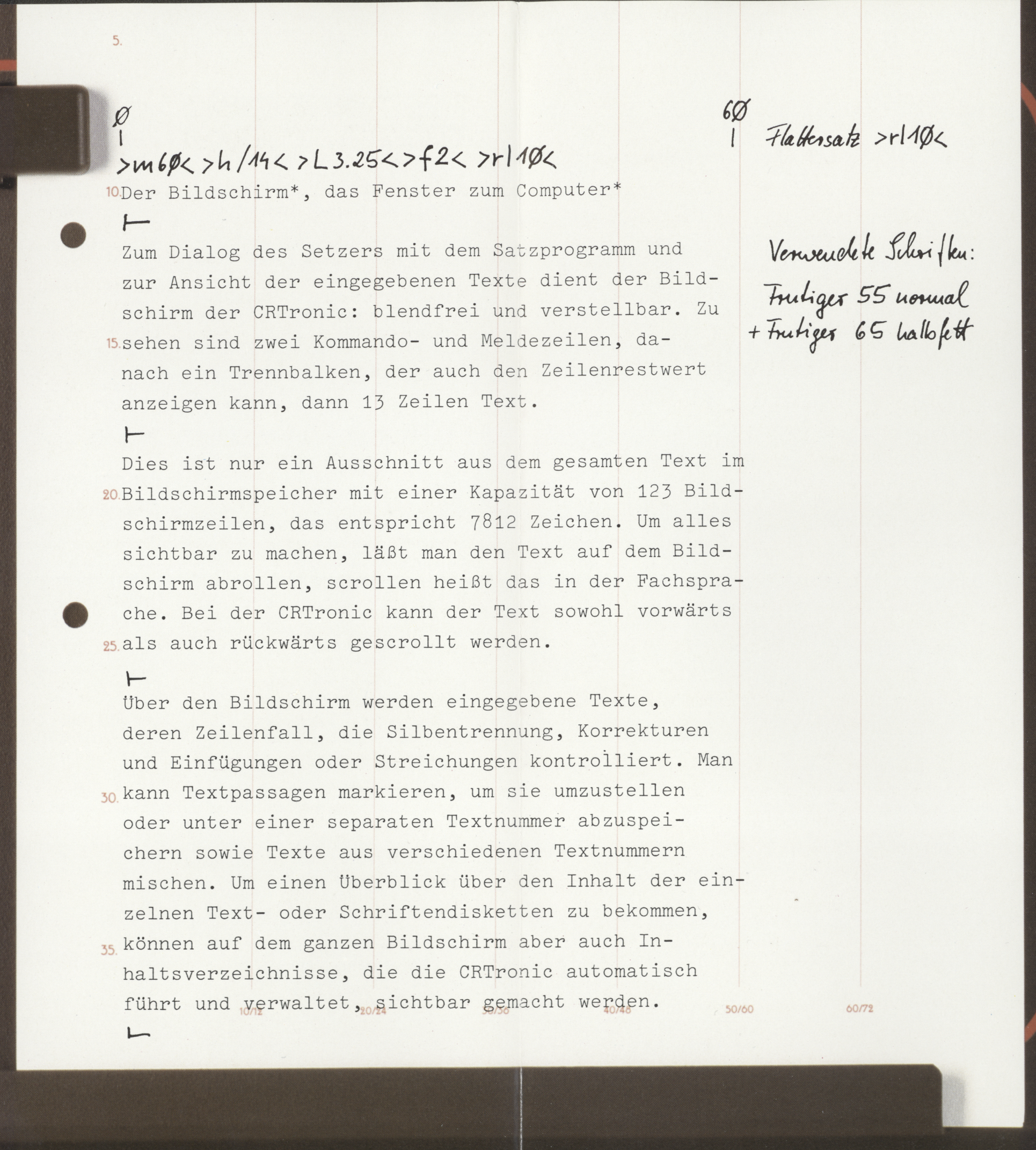
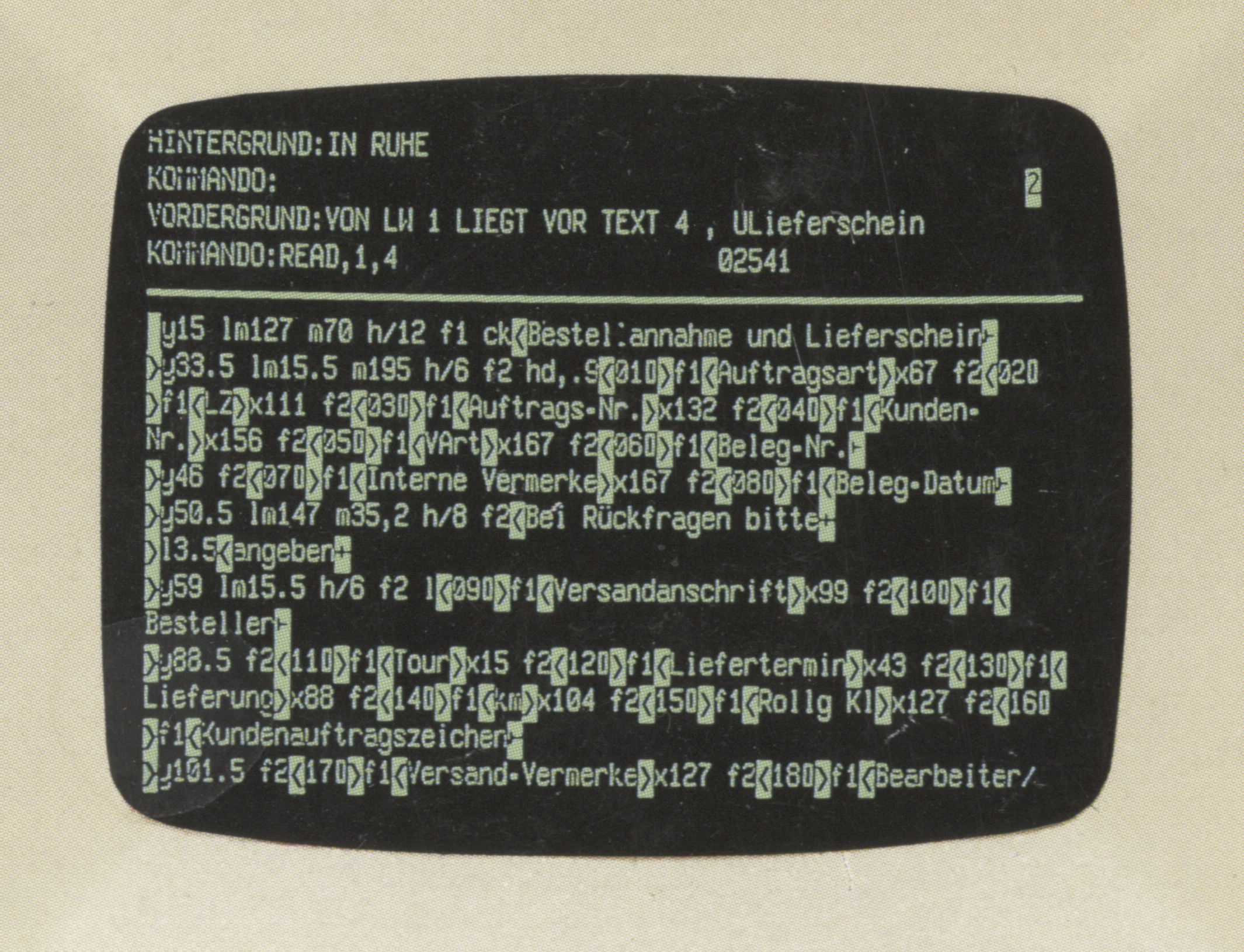
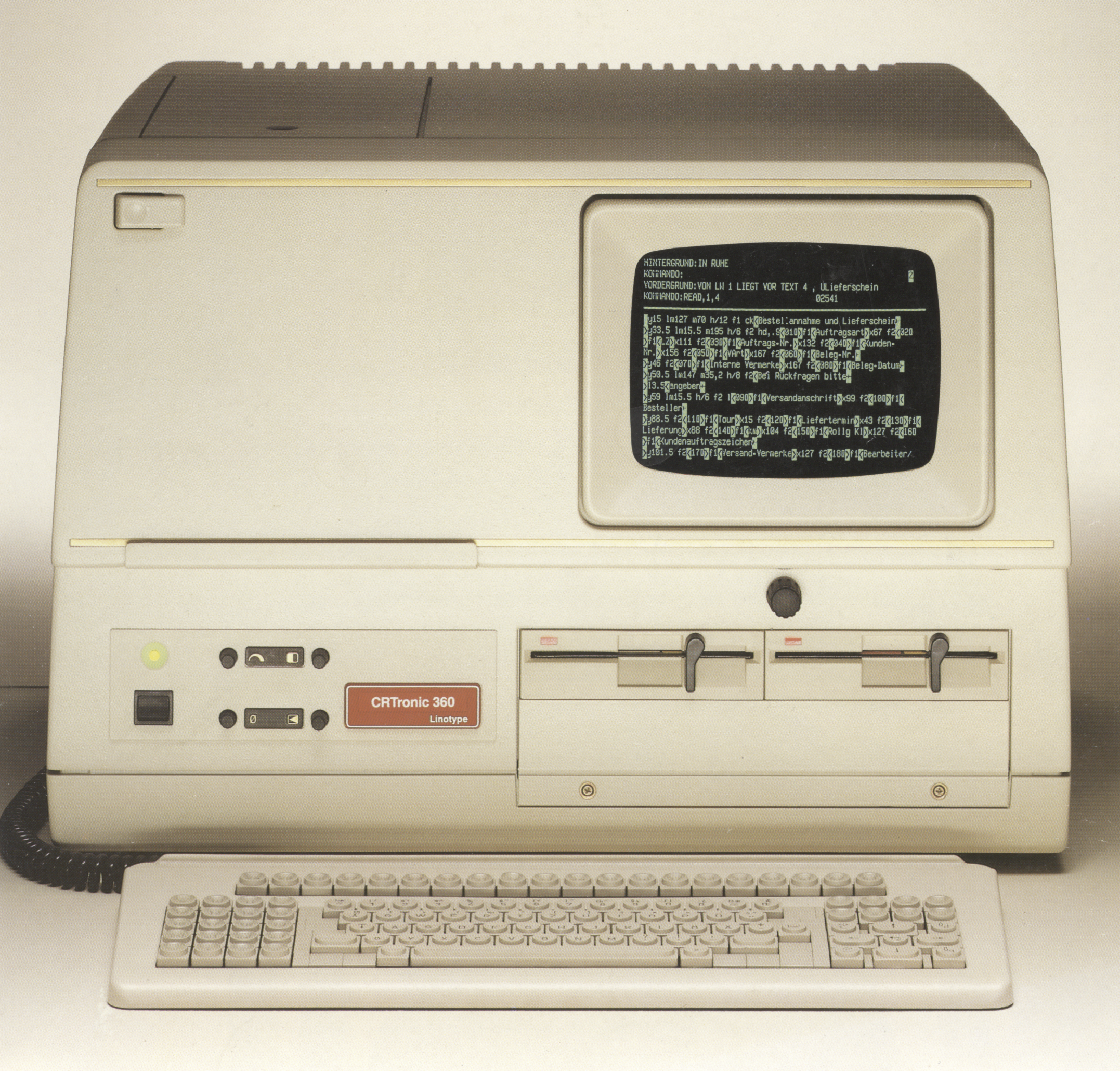
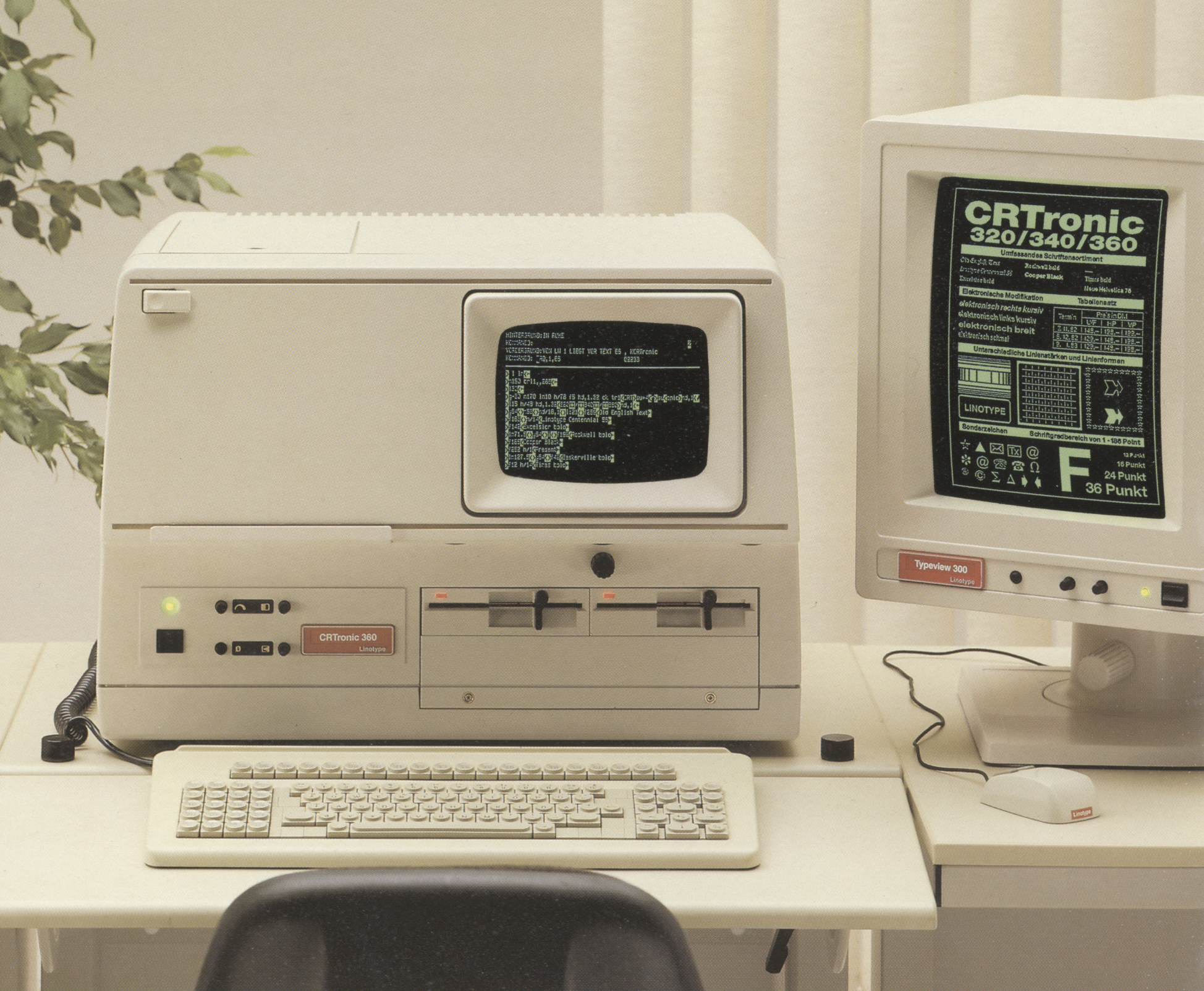
Marcin Wichary
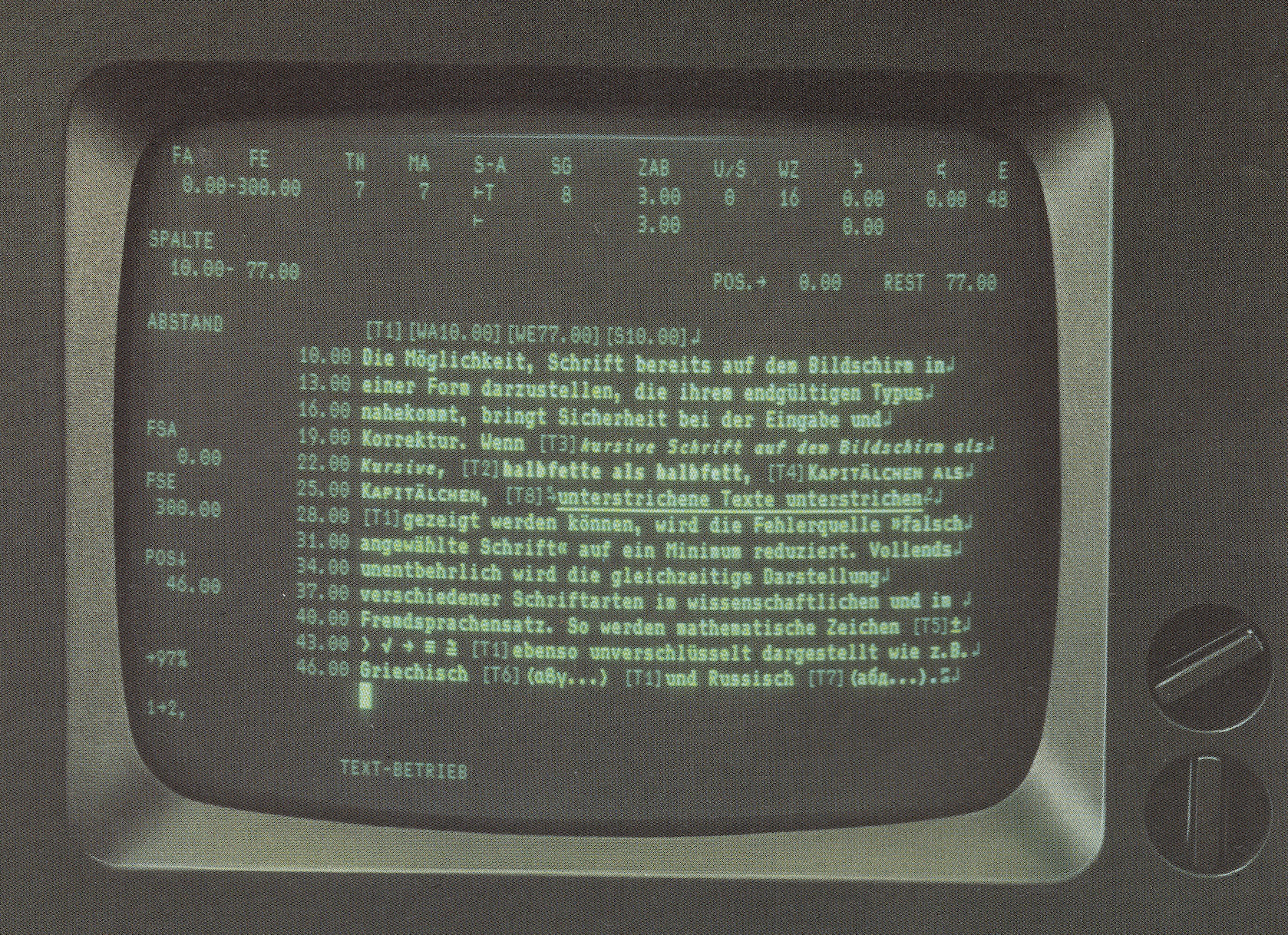
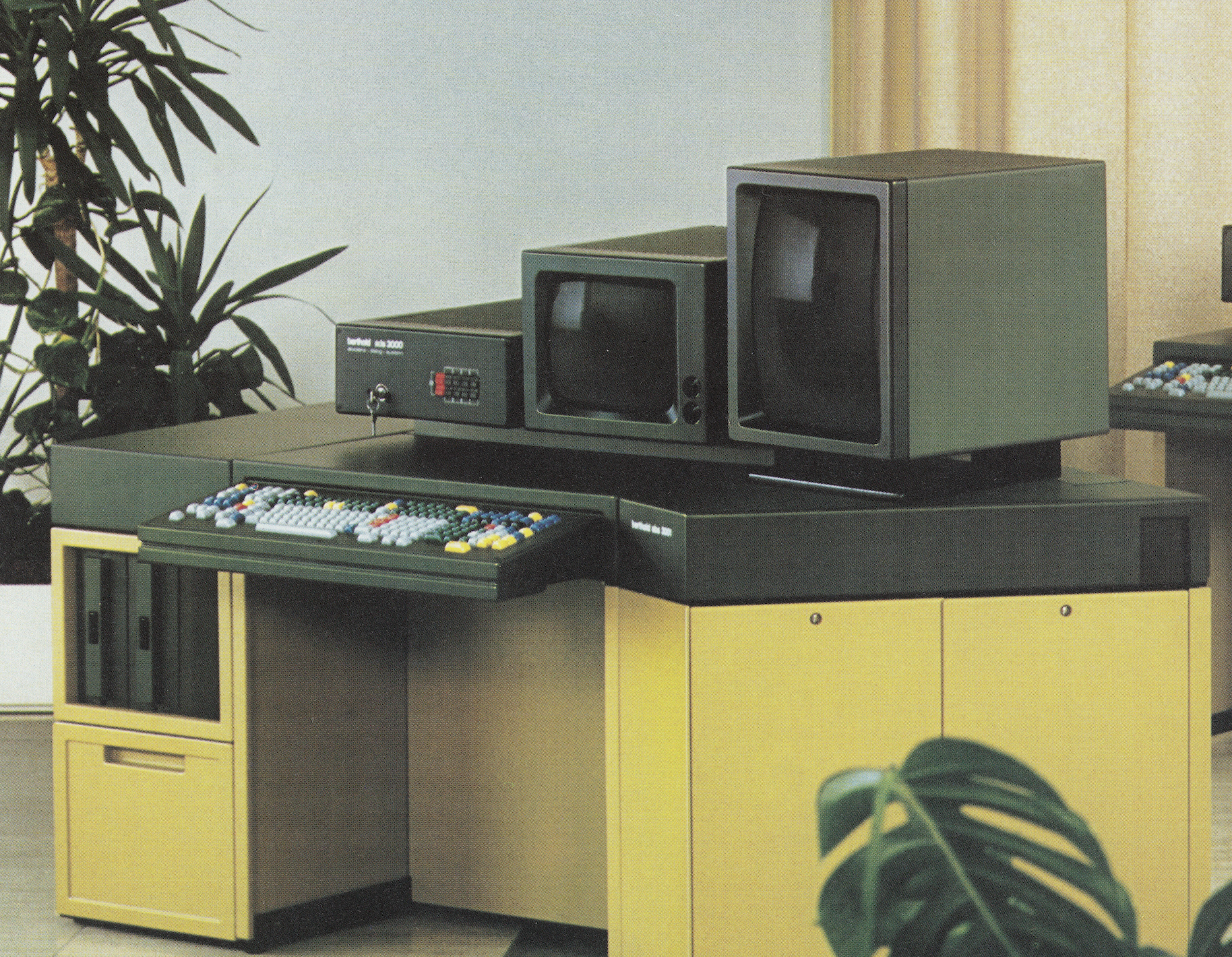
mwichary@mastodon.onlinePart of this kind of amazing-looking phototypesetting machine… but then again, all of them were amazing-looking.
 1
1
0
1
1
0
Marcin Wichary
mwichary@mastodon.onlineCase in point: Another phototypesetting machine, this time with my beloved braces.
 1
1
0
1
1
0
Marcin Wichary
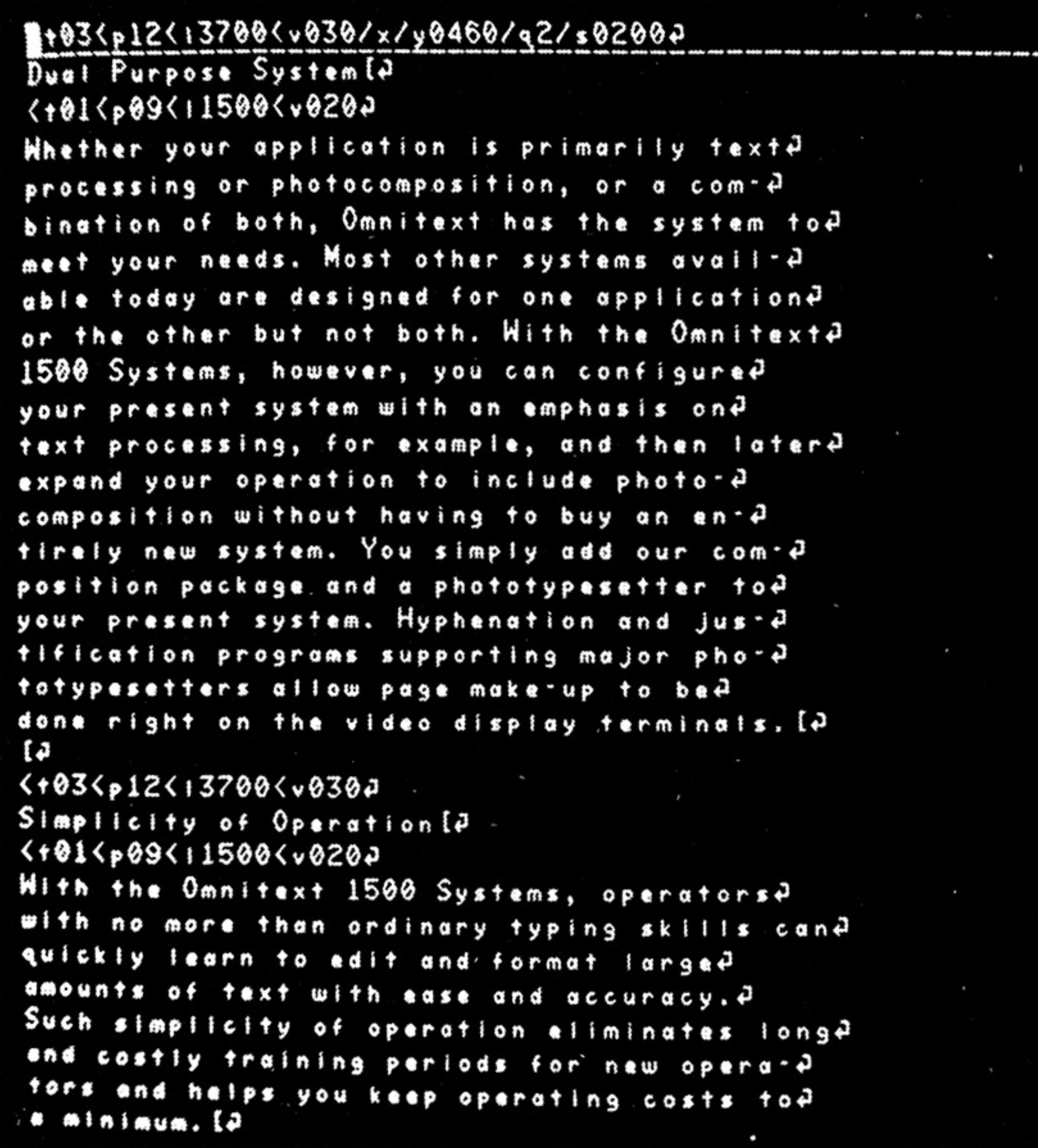
mwichary@mastodon.onlineYet another typesetting system (1971), this time with only opening angle brackets.
 5
0
0
5
0
0

cliffle
cliffle@hachyderm.io@mwichary when they finally get around to closing all those brackets it's going to be quite a surprise!
1
0
0
Marcin Wichary
mwichary@mastodon.online@cliffle My text editor (Nova) had/has a bug where it didn’t understand you don’t really need to close <li> and in its breadcrumb at the top I routinely see/saw ul > li > li > li > li > li > li > li > li > li > li > li when I was inside a list.
0
0
0
Jeremy Keith
adactio@mastodon.social@mwichary I’m enjoying your sleuthing so much—it’s like a continual Knives Out mystery for nerds!
1
0
0
Marcin Wichary
mwichary@mastodon.online@adactio Thanks! I hope it makes for a fun interactive essay even if there is no clear answer.
0
0
0
Marcin Wichary
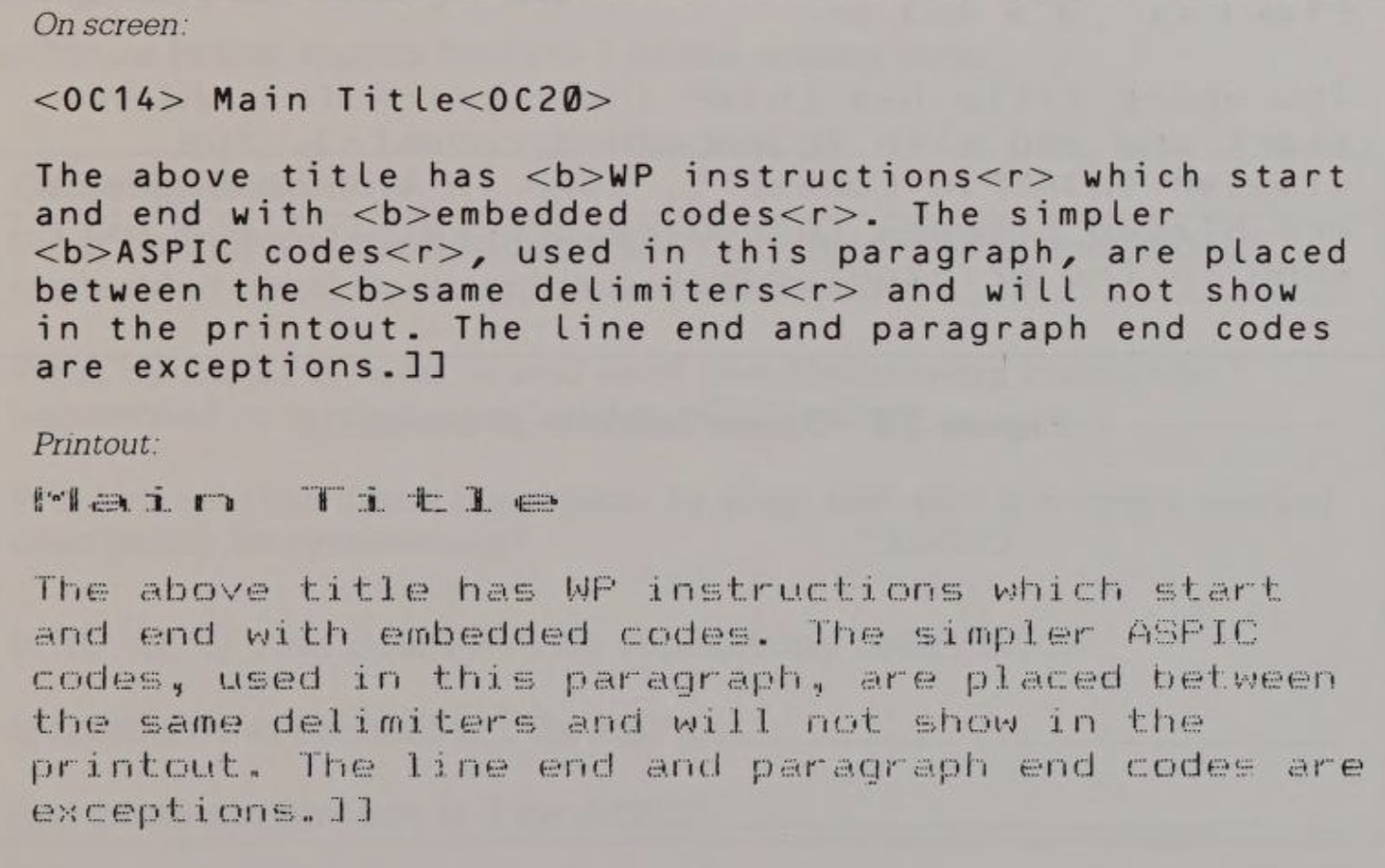
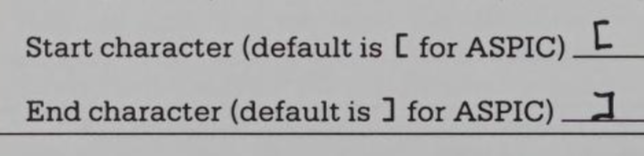
mwichary@mastodon.onlineVery close (<b>!), but the tags are ongoing, rather than opening and closing.
This is microcomputers, and called ASPIC? Never heard of it before.
 2
0
0
2
0
0
Marcin Wichary
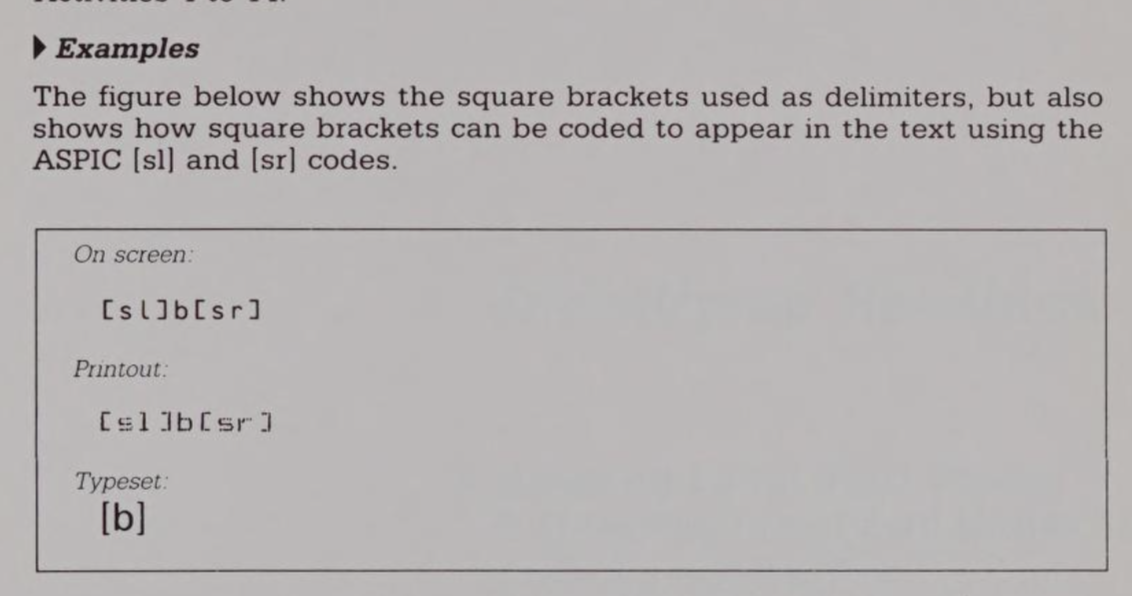
mwichary@mastodon.onlineI am vibing with ASPIC! But it’s also kind of strange from the perspective of HTML that escaped delimiters are also regular tags.
 2
0
0
2
0
0

4am ❧
a2_4am@mastodon.social@mwichary I am legitimately looking forward the inevitable sequel to "Shift Happens" called "Full Metal Bracket"
1
1
0
Marcin Wichary
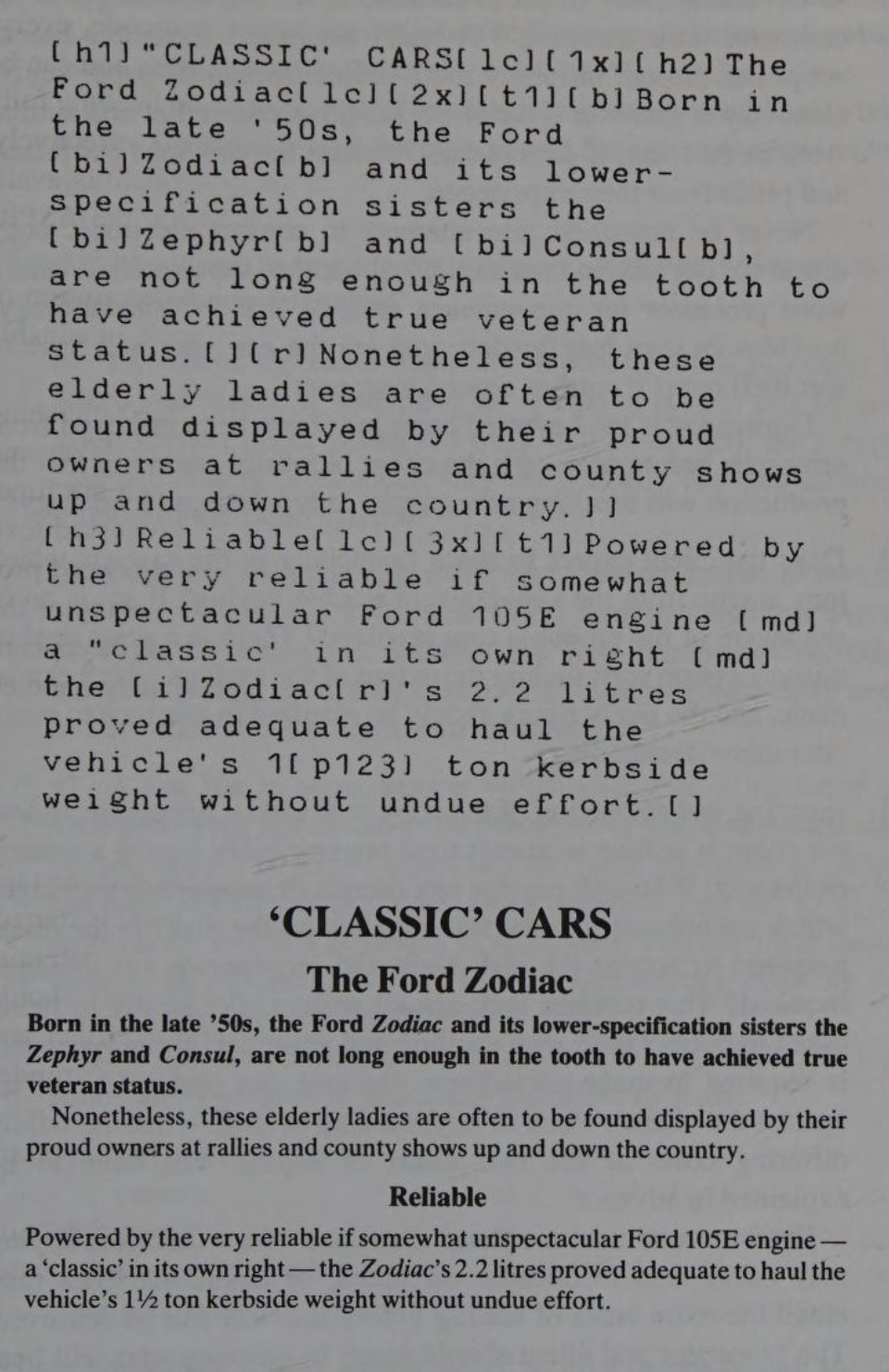
mwichary@mastodon.onlineAh, it seems ASPIC stands for Authors’ Symbolic Prepress Interfacing Codes or Authors’ Standard Prepress Interfacing Code, and was specifically made and popular in the U.K.
Loving the [] for new line/paragraph.
 4
0
0
4
0
0
@mwichary The tags look similar to xywrite formatting commands.
1
0
0
Marcin Wichary
mwichary@mastodon.online@apples_and_pears Oh, cool. Do you remember how those guillemets were entered? They’re not on the keyboard. The information about XyWrite seems somewhat sparse on the internet.
1
0
0
ranjit
ranjit@friend.camp@mwichary i'm intrigued by the use of double quote to represent open single quote.
1
0
0
Marcin Wichary
mwichary@mastodon.online@ranjit Yes! Interesting. Might be a fun hack.
I’ve seen double quotes in typesetting being represented by doubling a single quote, so that might free up that key.
0
0
0
Marcin Wichary
mwichary@mastodon.onlineThank you to @apples_and_pears for letting me know about XyWrite, a word processor that used guillemets! Because why not.
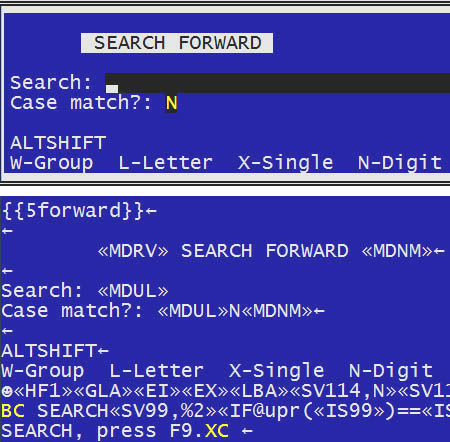
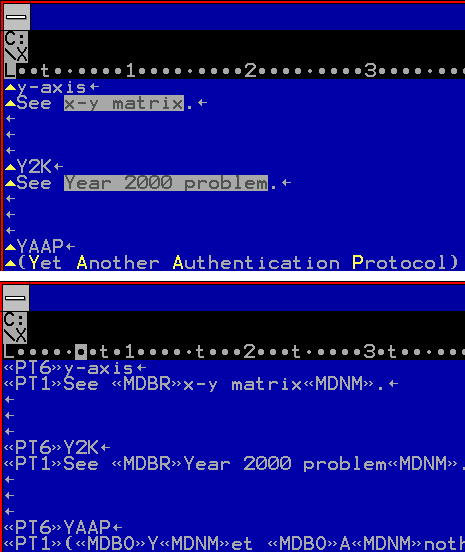
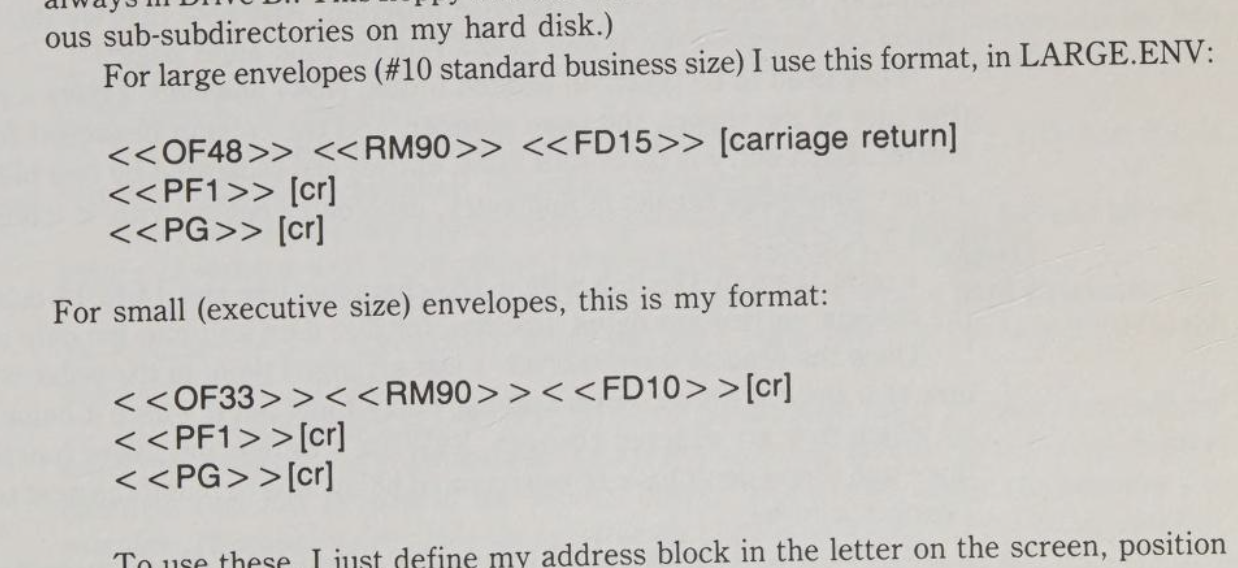 3
0
0
3
0
0
@mwichary If memory serves, they were added automatically as part of the command when selecting the command.
XyWrite III Plus (DOS) was still available a couple of years ago and is probably still available. DisplayWrite 4 (XyWrite III Plus replacement) may still be available.
1
0
0
@mwichary Seems to me there were drivers for about 200 different printers. That was one of the things the Dev found annoying. He would write a driver for whatever printer the customer had without charge. I've never heard of that happening since then.
1
0
0
Marcin Wichary
mwichary@mastodon.online@apples_and_pears I think it was the same in the land of videogames with graphic and sound cards.
0
0
0

Tormod
airwhale@beige.partySimplicity of operations and reduced operating costs are STILL the two main things being pushed by IT vendors of all kinds.
I'm starting to think they're lying because it's never that simple and we'll never see the day where a cost level is low enough.
0
0
0
europlus 
europlus@europlus.zone
@mwichary re: edit…
I mean, fair enough, what would *you* know about varieties of keyboards?! 🤣
1
0
0
Marcin Wichary
mwichary@mastodon.online@europlus It’s not even that. It’s just how social networks bring the worst out of us, where immediately we want to shut a stranger down by pointing out some small flaw. I don’t like. And I probably do that, too.
0
0
0
Stewart Russell
scruss@xoxo.zone@mwichary that was, I think, the format the the Collins English Dictionary was held in. Never knew it was a formal markup standard, just thought it was something Marlborough House cooked up.
1
0
0
Marcin Wichary
mwichary@mastodon.online@scruss Good question of what makes a standard a standard, though!
0
0
0

Wolfgang Stief
stiefkind@mastodon.social@mwichary Due to personal interest, I own a few (German) books on foto typesetting. One of them shows an example on formula typesetting with a Linotype CRTronic 100. The book is from 1989, CRTronic 100 most probably is a bit older. They're using angle brackets as well, but “the other way round”. I posted a photo of this example quite a while ago: https://mastodon.social/@stiefkind/114132118895249052
1
0
0
Marcin Wichary
mwichary@mastodon.online@stiefkind Thanks for sharing! Here’s another CRTronic machine doing the same: https://mastodon.online/@mwichary/115767227014828568. Interesting to also reverse them visually!
0
0
0

Michael B. Johnson
Drwave@mastodon.social@mwichary it makes sense, from a culinary point of view, that someone in the UK thought aspic was a positive reference for an acronym…
1
0
0
Marcin Wichary
mwichary@mastodon.online@Drwave Ha. It existed in my childhood, too! I remember that you had to drench it in vinegar.
0
0
0
Andrew Dalke
dalke@toots.nu@mwichary I found Peter N. van den Bosch's 1974 MSc thesis at https://open.library.ubc.ca/soa/cIRcle/collections/ubctheses/831/items/1.0051838 (and https://web.archive.org/web/20200211014206/https://open.library.ubc.ca/media/download/pdf/831/1.0051838/1). He uses < and > for Texture & Eureka.
Commands "are enclosed in parentheses — in this case … < and >."
Examples: "<P> New paragraph", "Every word between a <U> and the next <NOTU> will be underlined."
The Eureka language output for <EQ,5,<ADD,2,3>,YES,NO> is "YES".
He cites Harris Composition System (1970) as recognizing the need for matching command delimiters, using [ and ].
1
0
0
Marcin Wichary
mwichary@mastodon.online@dalke Thanks so much for this!!! Will review later today!
1
0
0
Marcin Wichary
mwichary@mastodon.online@dalke This is such a great paper/thesis. Thanks so much for surfacing this.
1
0
0
Marcin Wichary
mwichary@mastodon.onlineIf not guillemets, then maybe slashes will be to your liking.
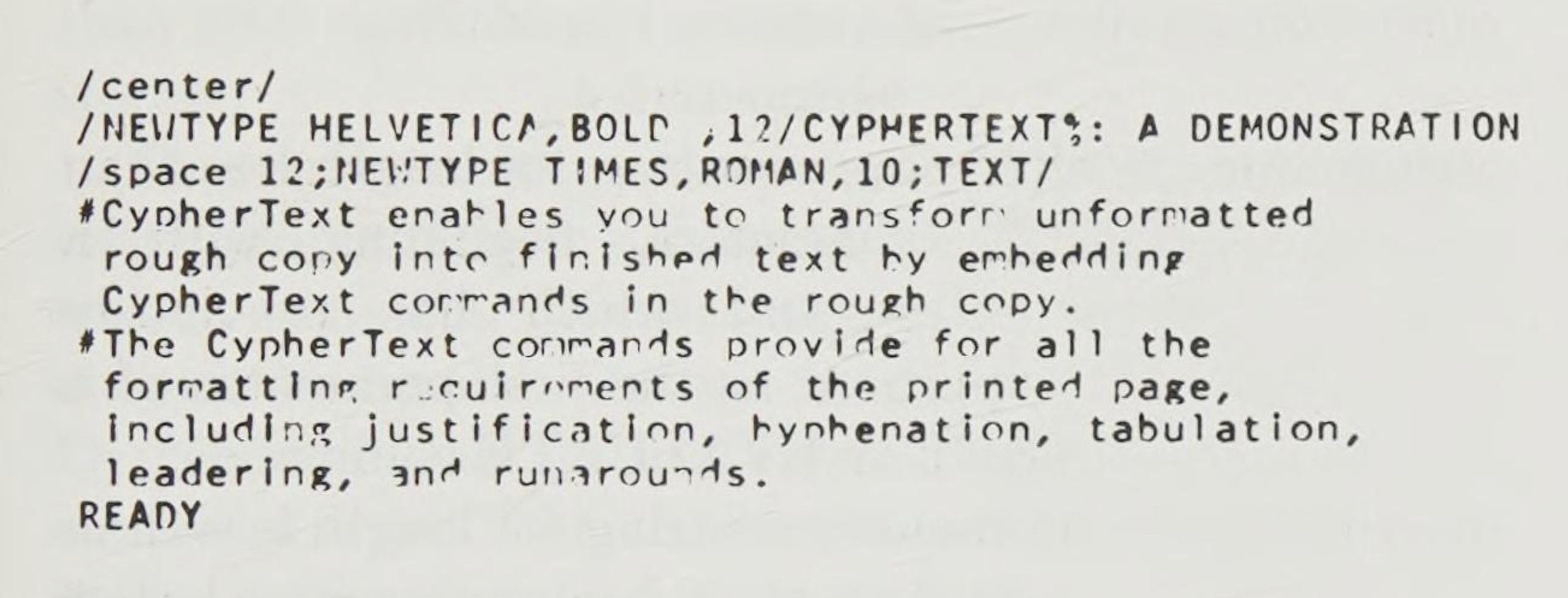 2
0
0
2
0
0
Glenn Fleishman
glennf@zeppelin.flights@mwichary @apples_and_pears That last example looks like << and >> because the font the manual was set in wouldn’t do «»
1
0
0

aburka 🫣
aburka@hachyderm.io@mwichary it makes the whole thing feel slanted to one side. Can we compromise?
/center\/h1\How about this
1
0
0
Marcin Wichary
mwichary@mastodon.online@aburka I think boats would look nicer than houses. Like the words are on a journey.
1
0
0
Marcin Wichary
mwichary@mastodon.onlineOr if you don’t like slashes, there might be ways around that, too (h/t @dalke).
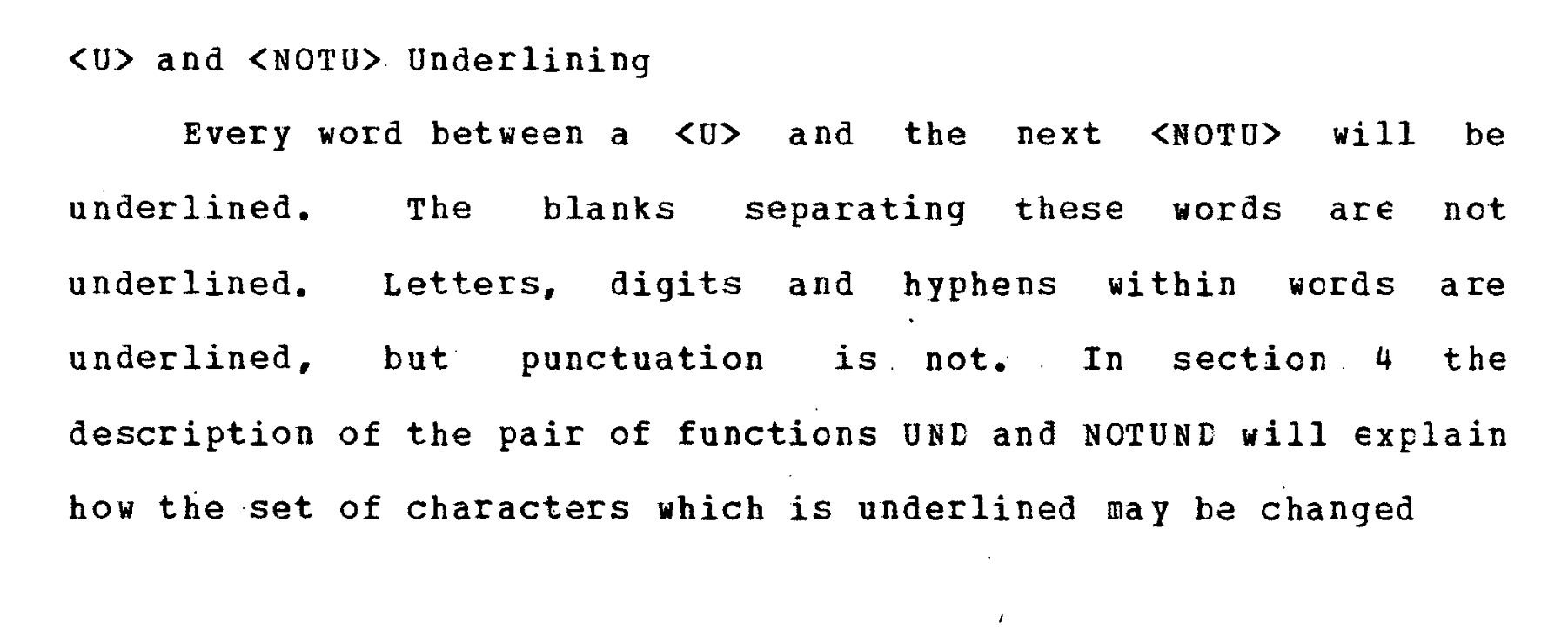 2
0
0
2
0
0
Marcin Wichary
mwichary@mastodon.onlinePS if anyone is curious about the current tally, the earliest appearance of angle brackets for markup I can see was is 1965, with the British COCOA. But not sure if it influenced anything that came after. I’m trying to find out more about it.
https://www.chilton-computing.org.uk/acl/applications/cocoa/p001.htm
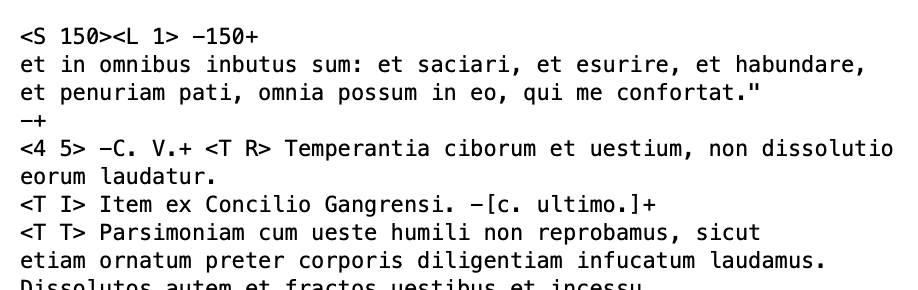 1
1
0
1
1
0
Marcin Wichary
mwichary@mastodon.online@aburka Pipes for delimiters would be interesting, actually. They’re not super well designed in many fonts, but that could change.
1
0
0
aburka 🫣
aburka@hachyderm.io@mwichary they're not polarized though, so miss one and the rest of the document is inside out...
1
0
0
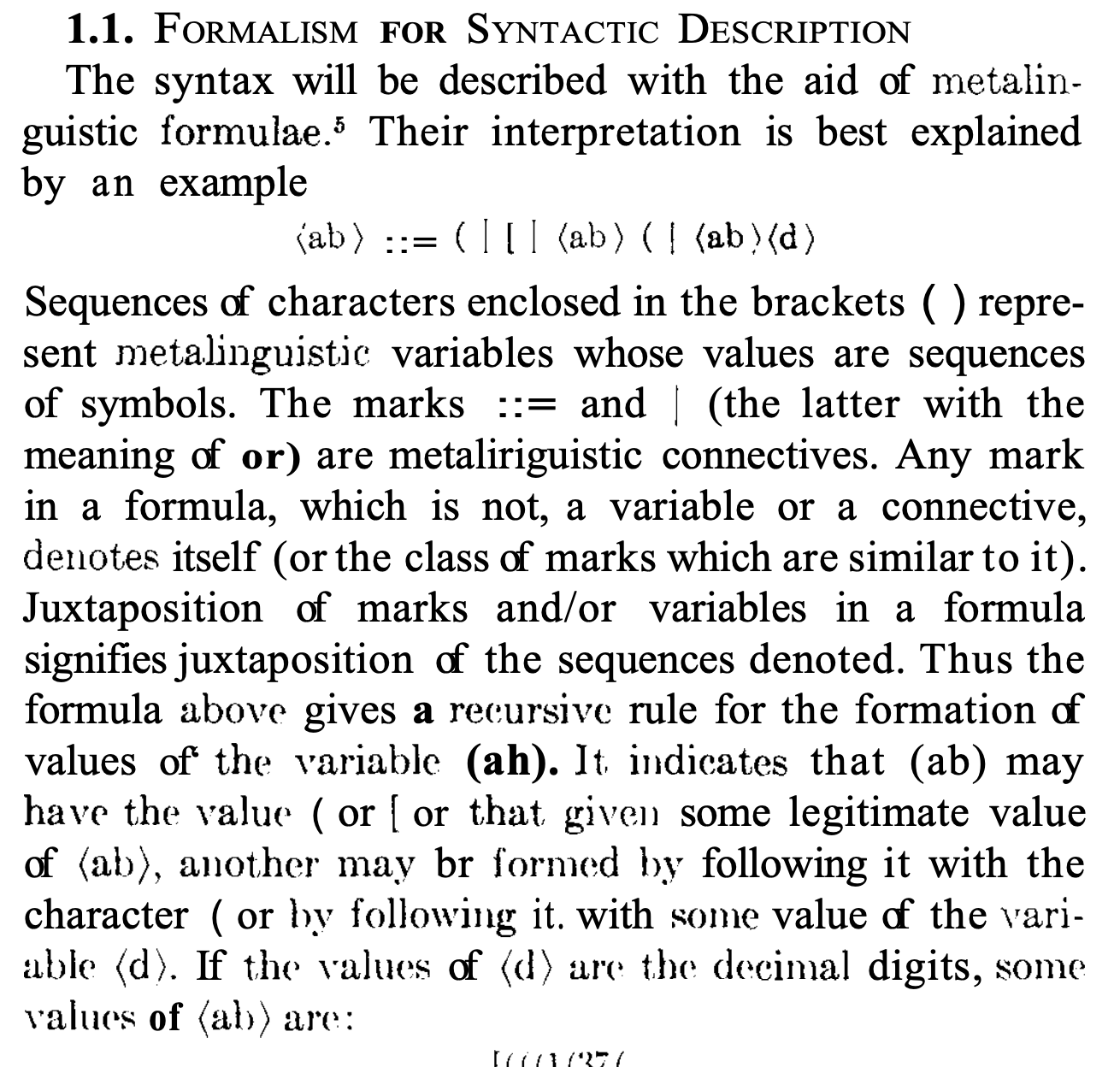
Marcin Wichary
mwichary@mastodon.online
1
0
0

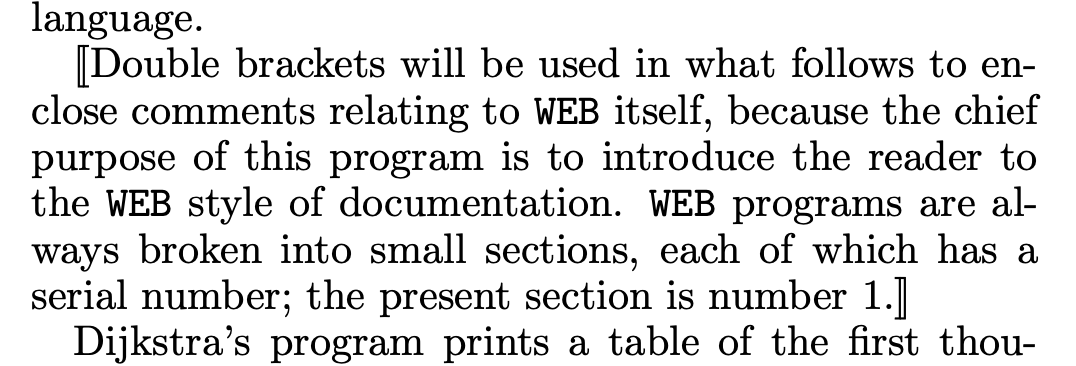
Greg Whitehead
grwster@mastodon.social@mwichary Ooh, just thought to look at Knuth's literate programming and he was using angle bracket delimiters in WEB in the early 80s http://www.literateprogramming.com/knuthweb.pdf
Also, I love this "I chose the name WEB partly because it was one of the few three-letter words of English that hadn’t already been applied to computers."
1
0
0
Marcin Wichary
mwichary@mastodon.online@grwster Oh, thanks! Those are not necessarily the angle brackets, but the math angle brackets like the BNF notation – this whole thing seems very math-y.
Also yeah, huh.
1
0
0
Marcin Wichary
mwichary@mastodon.online@grwster Sucked this into my library under “BNF-like,” haha. Knuth is already there for TeX, of course.
1
0
0
Marcin Wichary
mwichary@mastodon.online@grwster He’s using some truly uncharted brackets, too. I guess he wrote himself software so he could do that kinda stuff.
 1
0
0
1
0
0
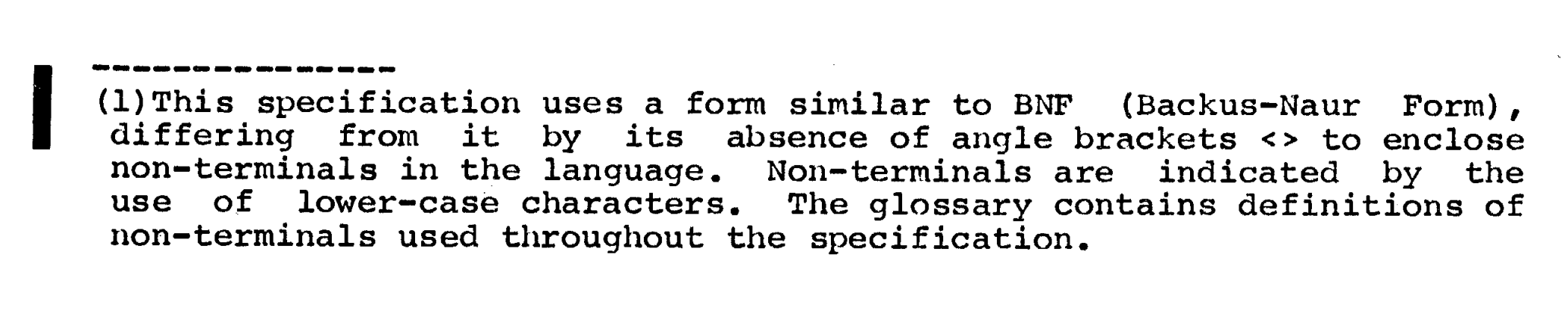

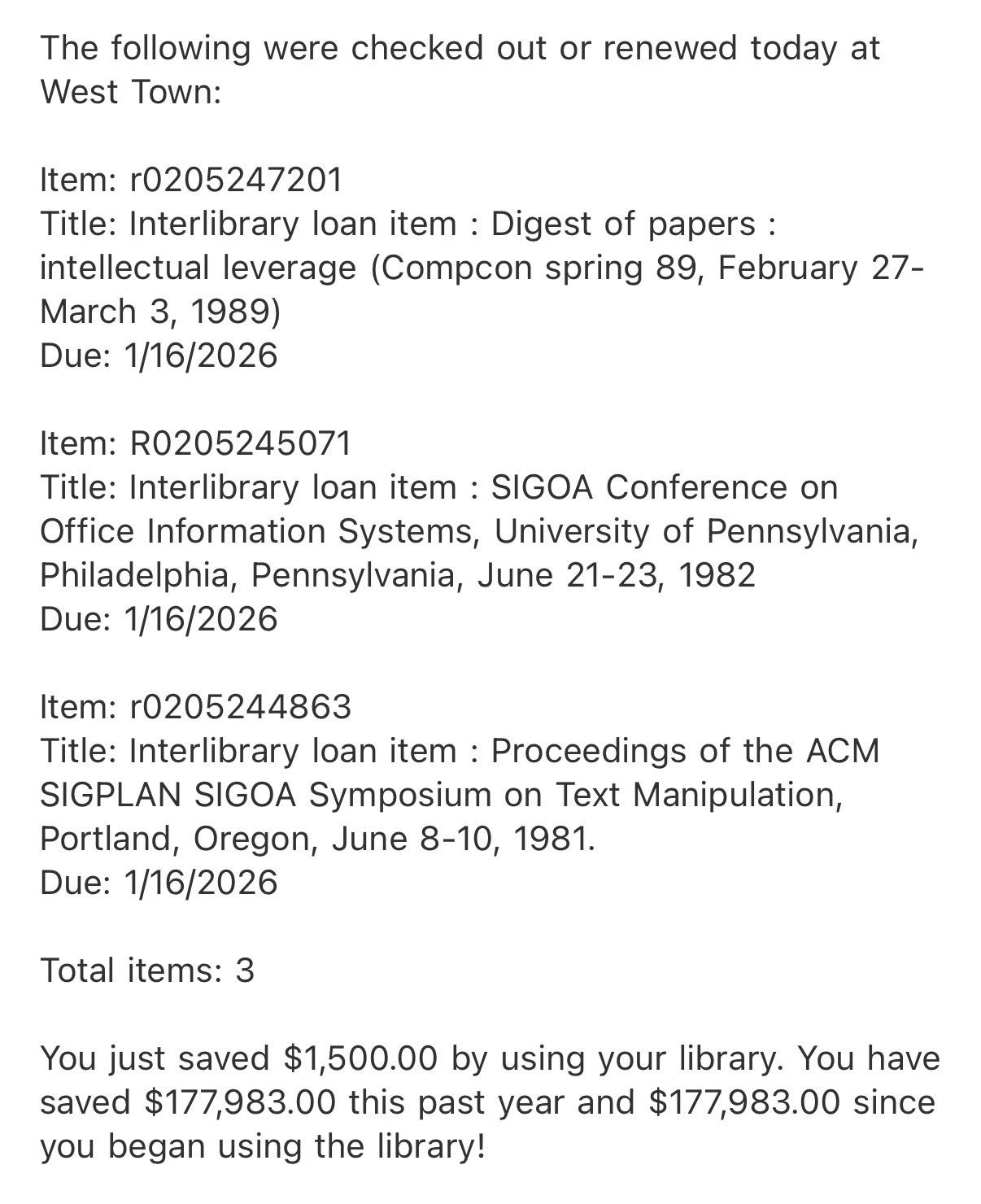
Marcin Wichary
mwichary@mastodon.onlineIt’s funny, seeing some computer at the library tabulating numbers that don’t really make sense. (I’m guessing one of the books I interlibraried had some exorbitant value on some used-books site?)
 2
0
0
2
0
0
@mwichary Maybe it's the price the library pays rather than the price any other bookstore customer would pay.
1
0
0
Marcin Wichary
mwichary@mastodon.online@apples_and_pears Interesting! But it’s still sort of like these software piracy or streaming media calculations that assume I would have actually forked out that number if the other way didn’t exist.
0
0
0
Marcin Wichary
mwichary@mastodon.online1972 and a new form of escaping. This is a system called RCA Page-1, and if I understand it correctly, it implies =(alpha)= for characters unavailable on the computer keyboard, but available.
In a deliciously meta way, they also talk about how they needed angle brackets to be different to less-than/greater-than – perhaps similar to the mathematical ⟨⟩ angle brackets?
Source: https://dl.acm.org/doi/epdf/10.1145/362248.362279

 1
0
0
1
0
0
Marcin Wichary
mwichary@mastodon.onlineThis is interesting because of all the brackets I have seen systems shy away from () for obvious reasons. This is the first approaching it, but carefully and surrounded by = presumably as this makes the combination unlikely to appear in source text.
1
0
0


Marcin Wichary
mwichary@mastodon.onlineSame paper, and here are angle brackets put to use to indicate upper- and lowercase, presumably on a machine like a teletype that supports only uppercase.
 2
0
0
2
0
0
Marcin Wichary
mwichary@mastodon.onlineHonestly, I feel like I still have months of interlibrary requests until I follow all the citations and nooks and crannies here. But at this point I’m really starting to dig into the (photo)typesetting parts and that’s really fun and all foreign to me.
1
0
0
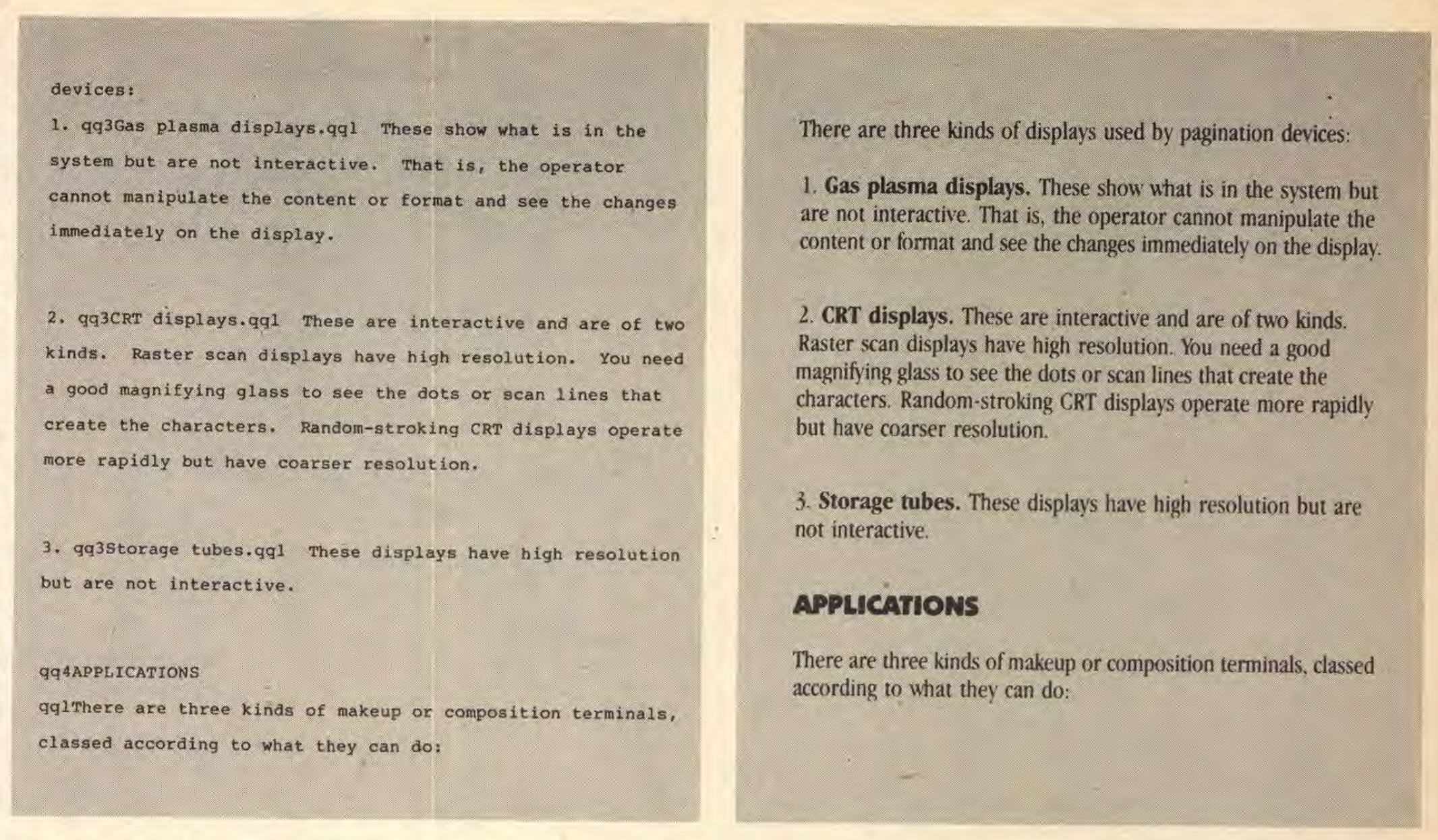
Axel Hartmann
axel_hartmann@digitalcourage.social@mwichary - were capitalized words at the beginning of sentences implied, or how did it know to capitalize "These" and "In"?
1
0
0
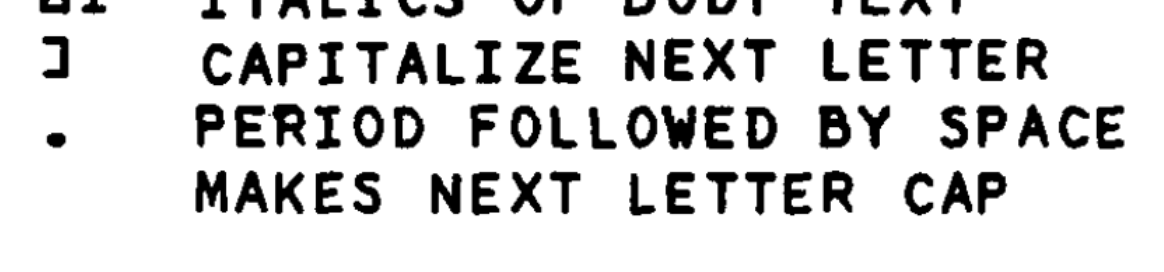
Axel Hartmann
axel_hartmann@digitalcourage.social@mwichary - oh gosh. I guess "shift happens". And I'm the one always complaining about people who don't read to the end.
1
0
0
Marcin Wichary
mwichary@mastodon.online@axel_hartmann The auto period capitalization is what BlackBerry and then smartphones did, too, during typing!
1
0
0
Axel Hartmann
axel_hartmann@digitalcourage.social@mwichary - I hate that. I know which keys I'm pressing, and that happens to coincide with what I intend to type. I can't stand any logic interfering with that. Unluckily - for me -my employer insists on keeping auto-correct forced on in our MS Office setups. The only time any "logic" worked for me was with the Palm Pilot Graffiti input :-)
1
0
0
Marcin Wichary
mwichary@mastodon.online@axel_hartmann Yeah, I can’t do that on desktop keyboards for the same reason. Okay with it on smartphones, though.
0
0
0
cliffle
cliffle@hachyderm.io@mwichary those specific glyphs suggest that the scheme was designed for MICR-style magnetic ink scanning, or maybe very early optical (that typeface looks like OCR-A)
1
0
0
Marcin Wichary
mwichary@mastodon.online@cliffle Yes! I think this must be Farrington Selfchek, which was an OCR-A alternative lost in the sands of time.
0
0
0
Andrew Dalke
dalke@toots.nu@mwichary You're welcome!
I found it because I read "A Hypertext Editing System for the /360" chapter in "Pertinent concepts in computer graphics" (by Steven Carmody, Walter Gross, Theodor H. Nelson, David Rice, and Andries van Dam) at https://archive.org/details/pertinentconcept0000univ/page/290/mode/2up?q=hypertext . It mentioned TEXT360 as the underlying document processing system used when generating paper output. While trying to learn more about TEXT360 I came across that excellent thesis.
1
0
0

Marcin Wichary
mwichary@mastodon.onlineThis is an interesting way. Instead of delimiters using punctuation, a combination of regular in-band letters (qq) is used that is just not meant to appear in real text.
 1
0
0
1
0
0
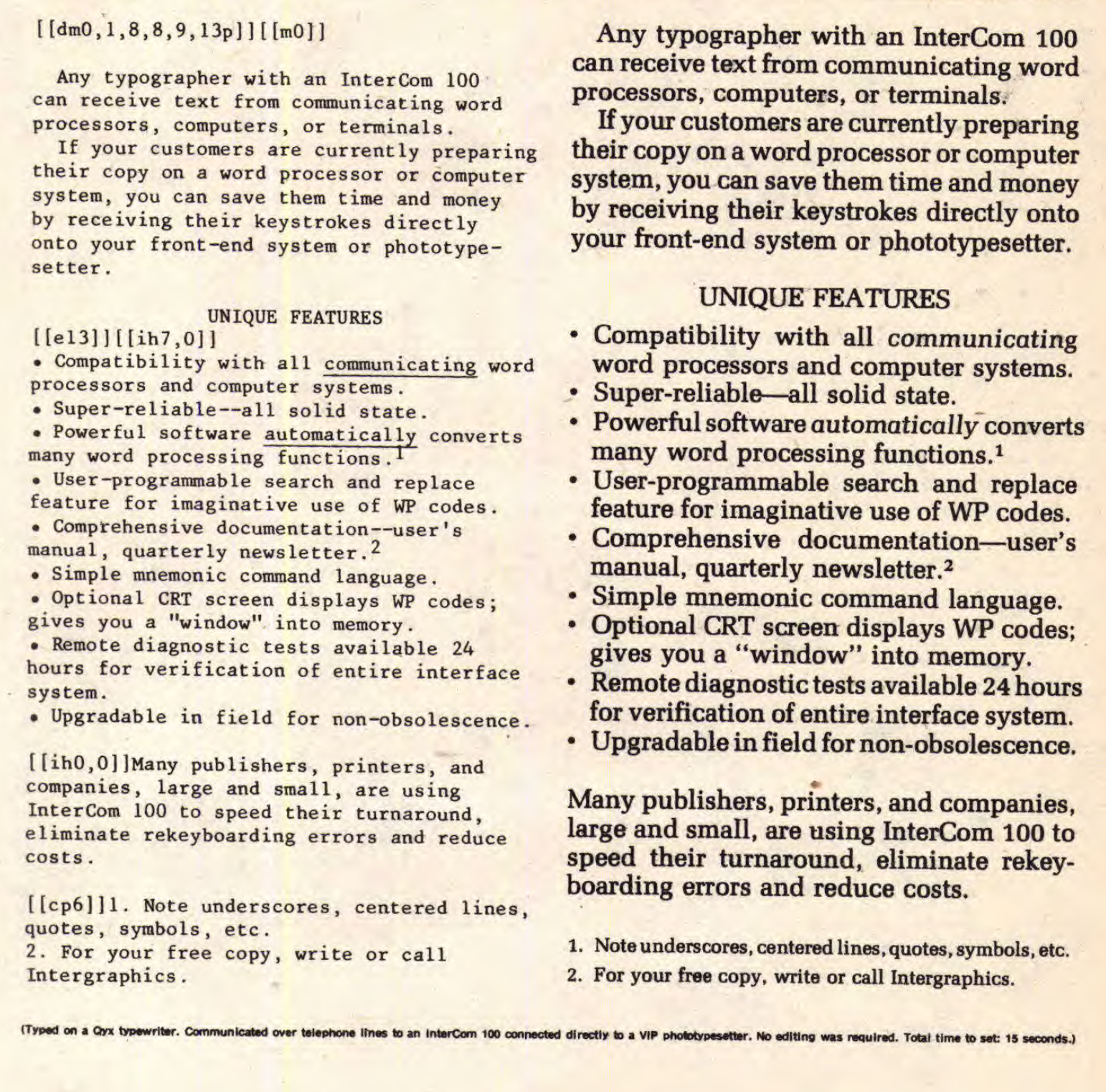
Marcin Wichary
mwichary@mastodon.onlineAnd this one has double braces, which presumably avoids the need to escape single braces if the appear in text.
 1
0
0
1
0
0

Damien Guard
damieng@mastodon.social@mwichary Lol, people telling you about keyboards like you didn't write the definitive volume on the subject.
1
0
0
Marcin Wichary
mwichary@mastodon.online@damieng It’s not even that, it’s just this frustrating “I need to find a little flaw in your ad hoc post” posture that annoys me on Mastodon specifically.
It’s also a strange argument. It’s like keyboard NIMBY-ism. “Hey, it works for me. Don’t you dare change it. But I’ll cloak my argument as «you’re not emphatic enough toward my needs».”
0
0
0
Marcin Wichary
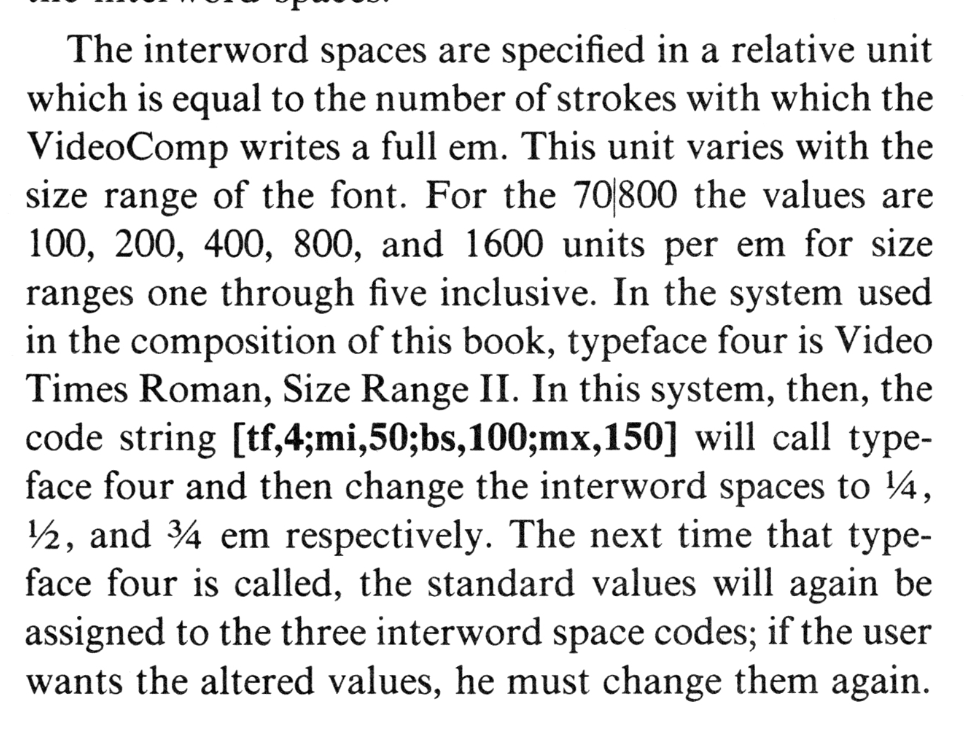
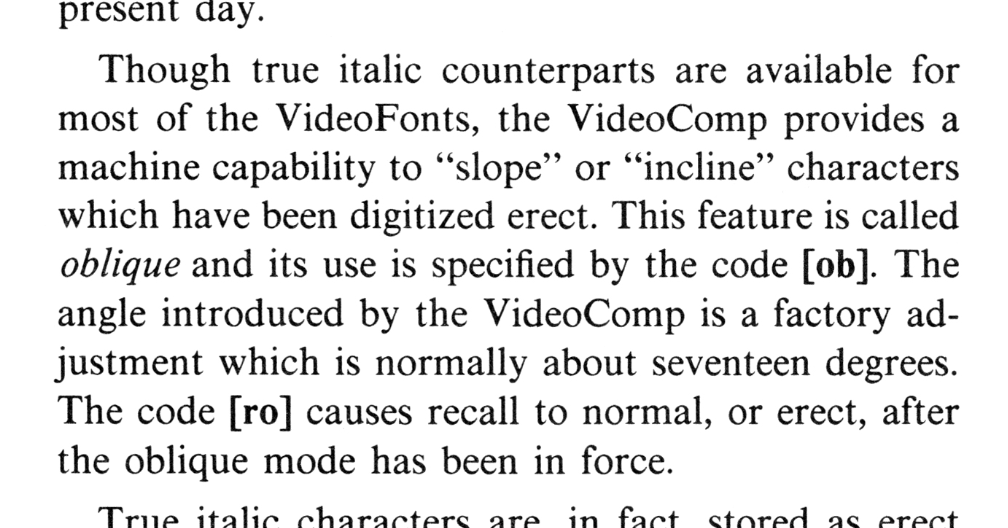
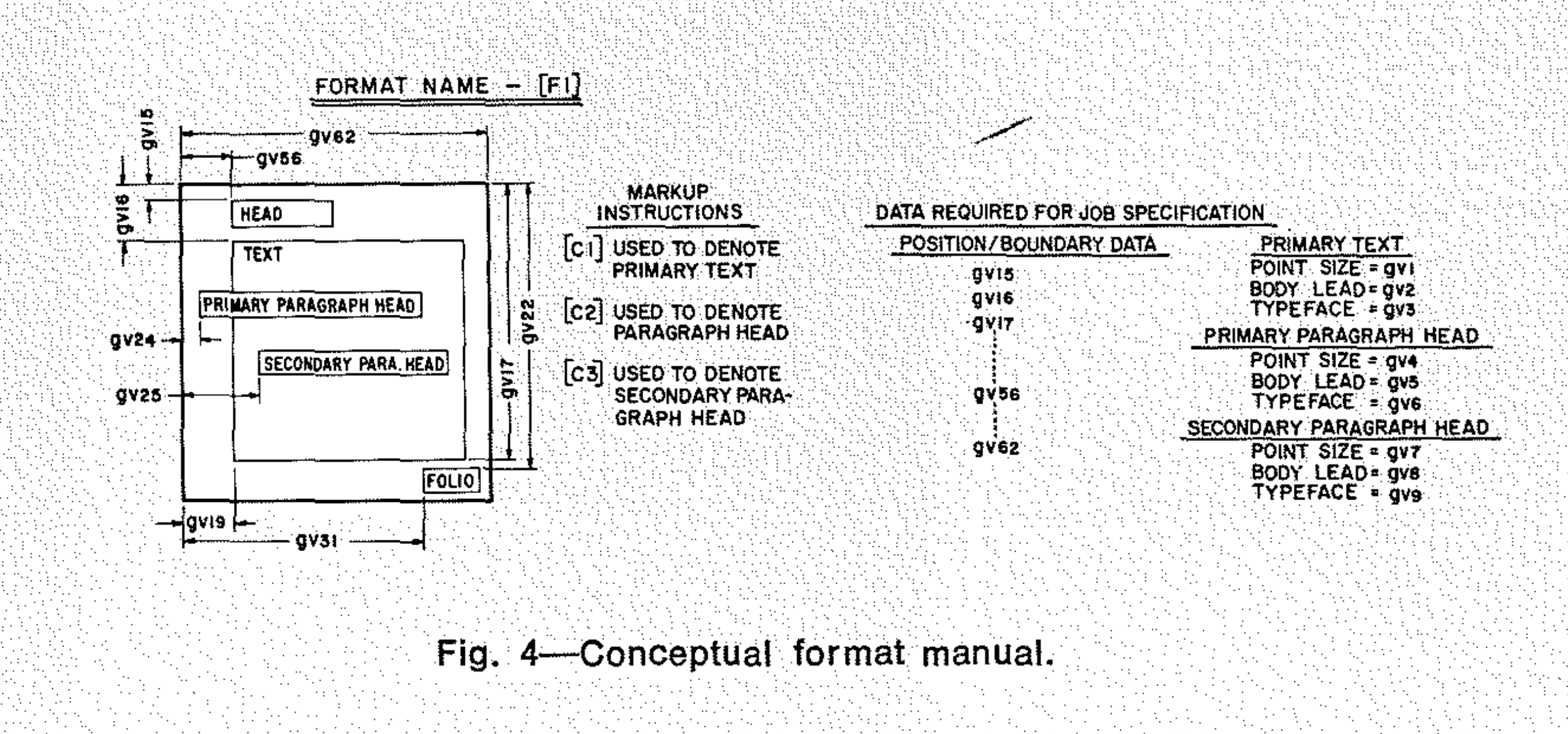
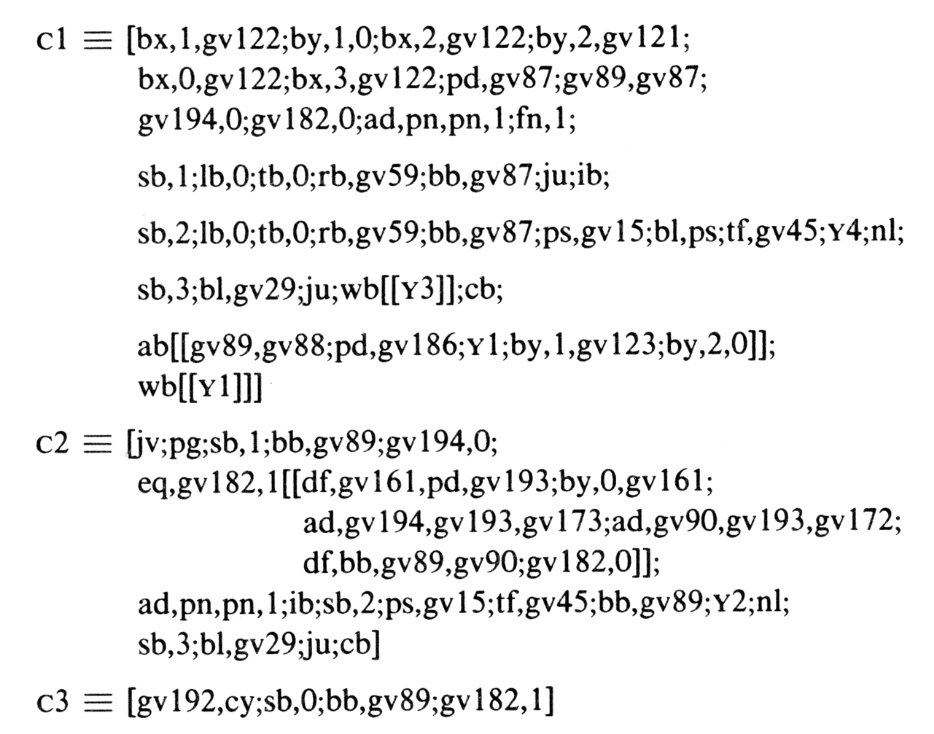
mwichary@mastodon.onlineOh, wow. Got a book about RCA PAGE-1, a typesetting system which came out in 1967.
In it, they talk about typical stuff like [tf,4;mi,50;bs,100;mx,150] for changing fonts, and [ob] for italics/oblique and [ro] to go back to Roman…
…but the also have a concept of [c1] and [c2] and [c3] that are actually starting to feel kind of semantic! They still are more for macrodefinitions/expansion – kind of like the “Lucy” of this space – but that’s much earlier than I expected.
Also: braces. 😍
 1
1
0
1
1
0
Marcin Wichary
mwichary@mastodon.onlineScanned the book here if you are interested! https://archive.org/details/computer-composition-using-page-1
And more information about RCA PAGE-1 (VideoComp) is here: https://www.worldradiohistory.com/ARCHIVE-RCA/RCA-Engineer/1968-04-05.pdf
1
0
0
Marcin Wichary
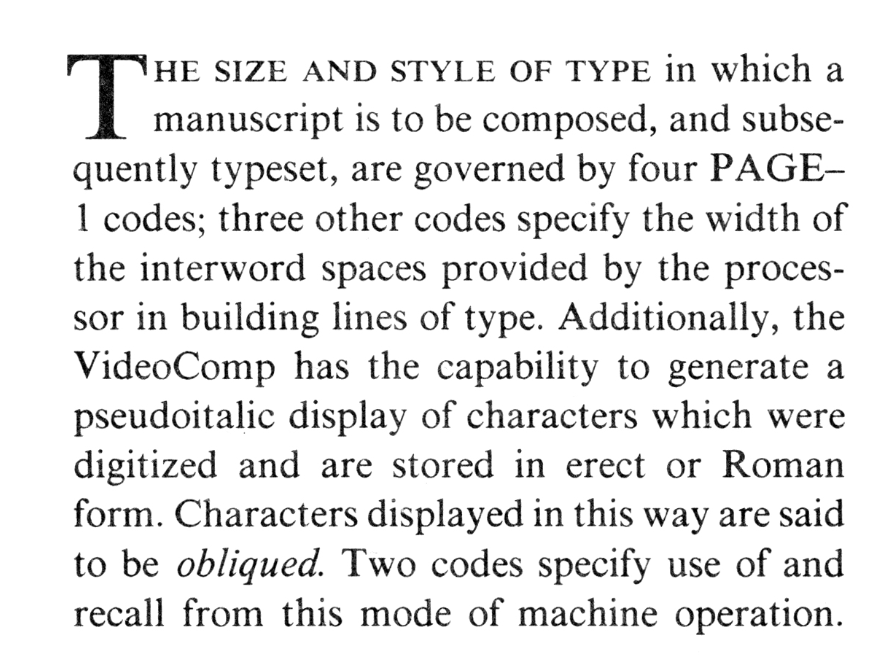
mwichary@mastodon.onlineBy the way, I have never heard of a roman (non italic/non oblique) style being referred to as “erect.”
2
0
0

Scott Jenson
scottjenson@social.coop@mwichary That's pretty interesting! Does that oblique angle imply it was changeable? (e.g 10° vs 18°?) That would imply a resolution/vectorization of the fonts that likely wasn't there as a capability?
What you're doing feels like "bibliographic archeology"! The Hunt of the Snark but for brackets
2
0
0
Marcin Wichary
mwichary@mastodon.online@scottjenson No sure what “factory adjustment” means. They definitely say you can faux oblique… It seems the fonts are pre-digitized/pixellated on a CRT, but the resolution is high. Tbh I don’t fully understand phototypesetting yet!
 0
0
0
0
0
0
Marcin Wichary
mwichary@mastodon.onlineI’m trying to figure out what were the keyboards that were used with RCA VideoComp (or Hell Digiset, which I understand is the alt/original name of the device). One of the arguments against braces and pro angle brackets is that the latter weren’t easily available – but at least here it seems this wasn’t a problem.
1
0
0

Irenes (many)
ireneista@irenes.space@scottjenson @mwichary for sure. we just want to say we've been following this thread off and on as you've made progress, and it's a fascinating topic.
1
0
0
Marcin Wichary
mwichary@mastodon.online@ireneista @scottjenson I’m going to try to write it up in a nice essay once I’m done! I hope it’s fun even if I never get to the answer for the specific question I am looking for.
0
0
0
Marcin Wichary
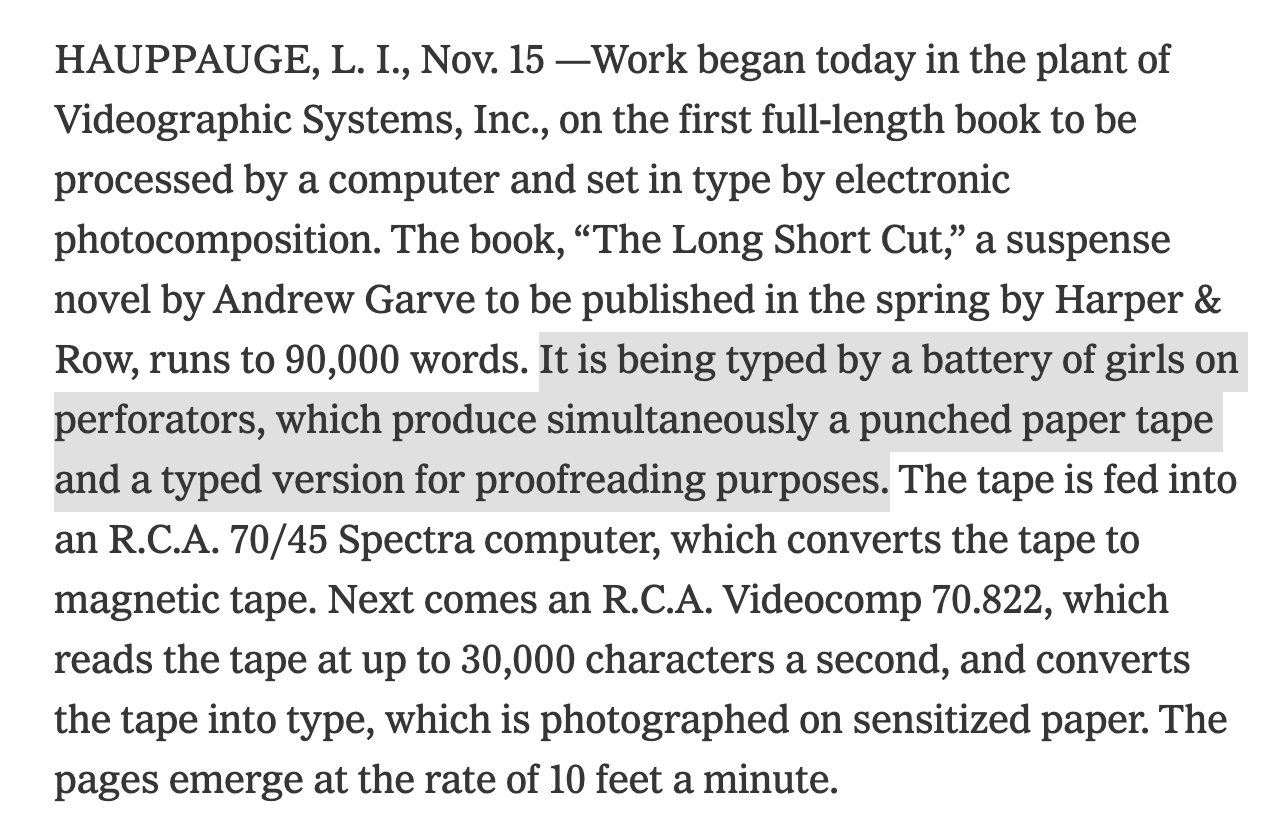
mwichary@mastodon.online“A battery of girls on perforators.” https://www.nytimes.com/1967/11/16/archives/processing-of-long-book-is-entirely-by-computer.html
I just ordered online on Biblio a copy of that book, just for fun. It’s not expensive.
 2
0
0
2
0
0
Marcin Wichary
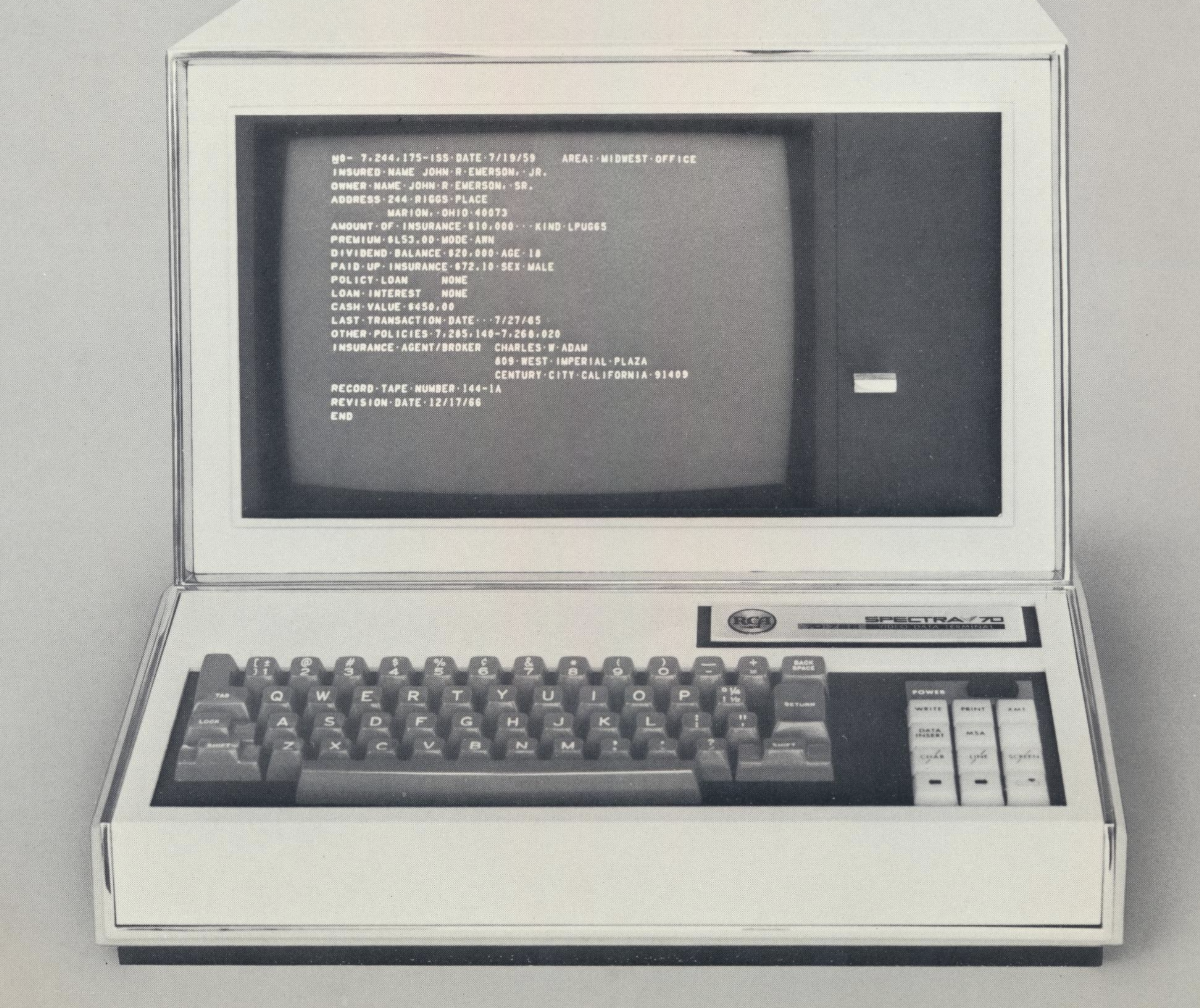
mwichary@mastodon.onlineI don’t know yet what layout perforators were used, but here’s the RCA Spectra terminal, using a pretty standard Selectric keyboard (and some other buttons – a pretty typical setup of the time).
What’s interesting is that <> are nowhere to be seen, but [] are there as alts on the 1 key.
https://archive.org/details/TNM_RCA_Spectra_70-752_video_data_terminal_20180205_0106
 1
1
0
1
1
0
Marcin Wichary
mwichary@mastodon.onlineWhere we would expect <> today are just , .
But they’re also available unshifted.
This was pretty typical for typewriters. Shifting was kind of heavy, and ,. punctuation very common… so often ,. were there both shifted and unshifted on those two keys.
1
0
0
Marcin Wichary
mwichary@mastodon.onlineElsewhere in RCA docs, ASCII is already being referred to, with <> listed, but [] or {} not available. Interesting!
And the teletype console seems to have only () and maybe <>? What a mess! I might not get anywhere here.
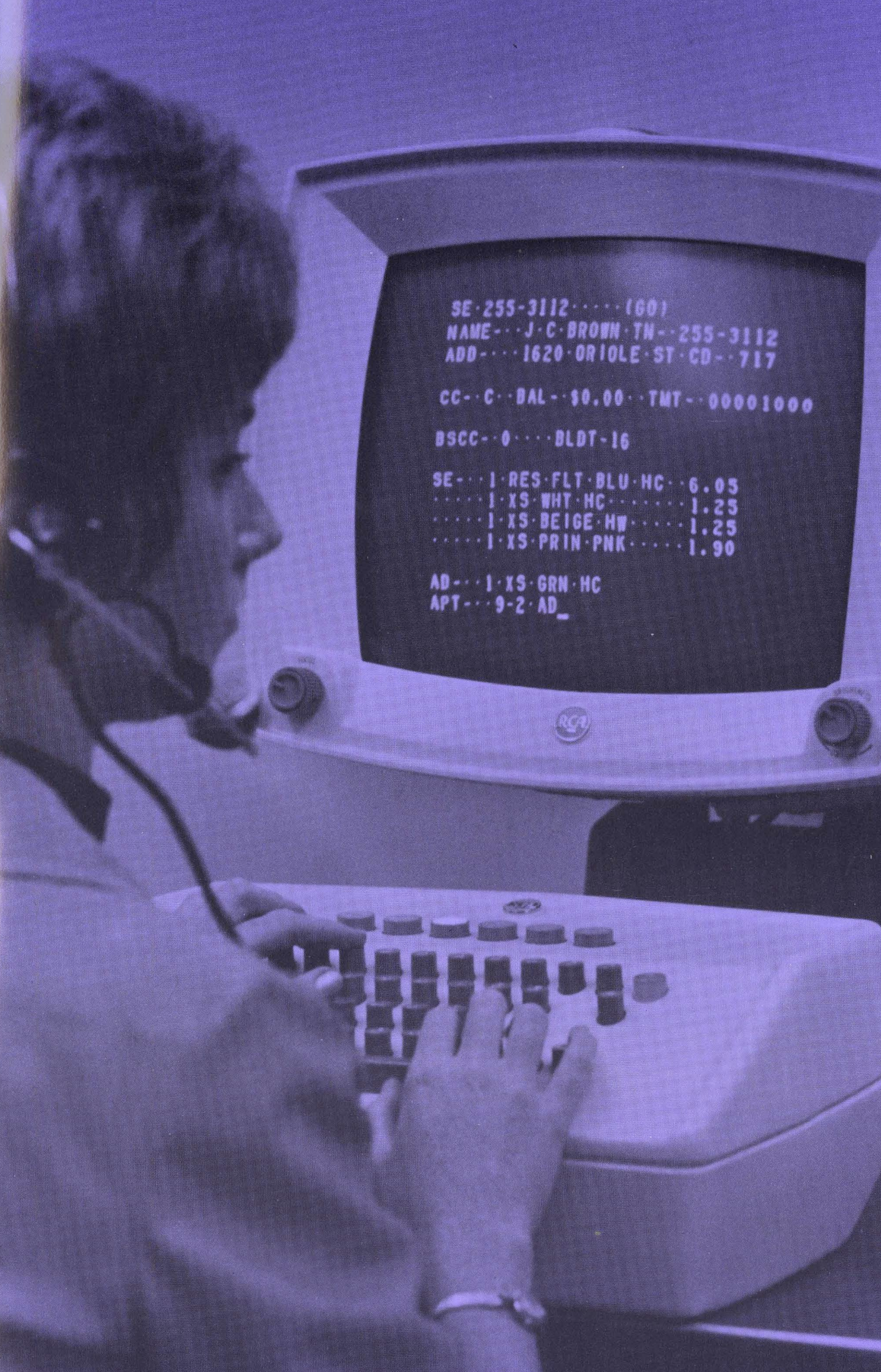
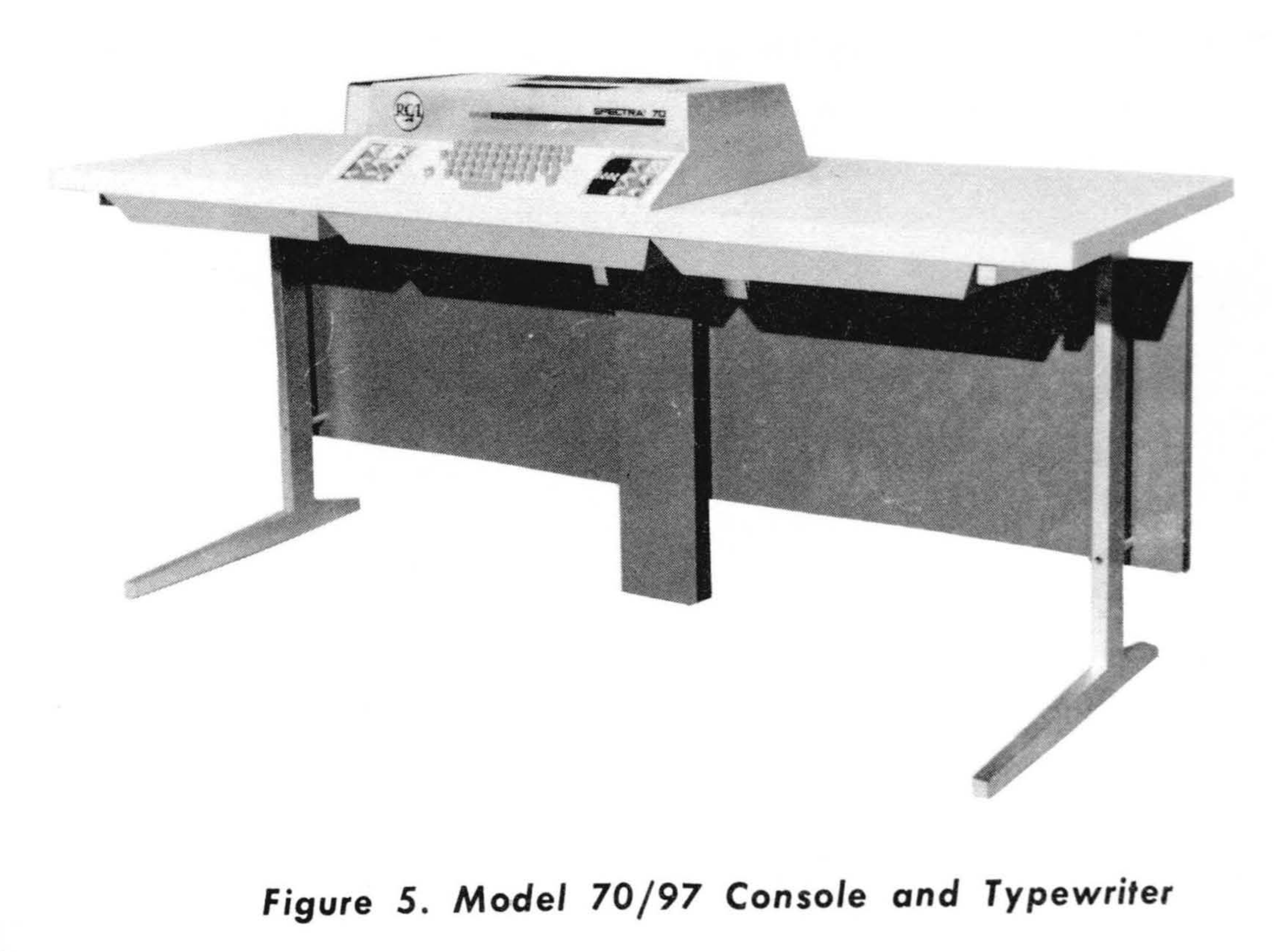
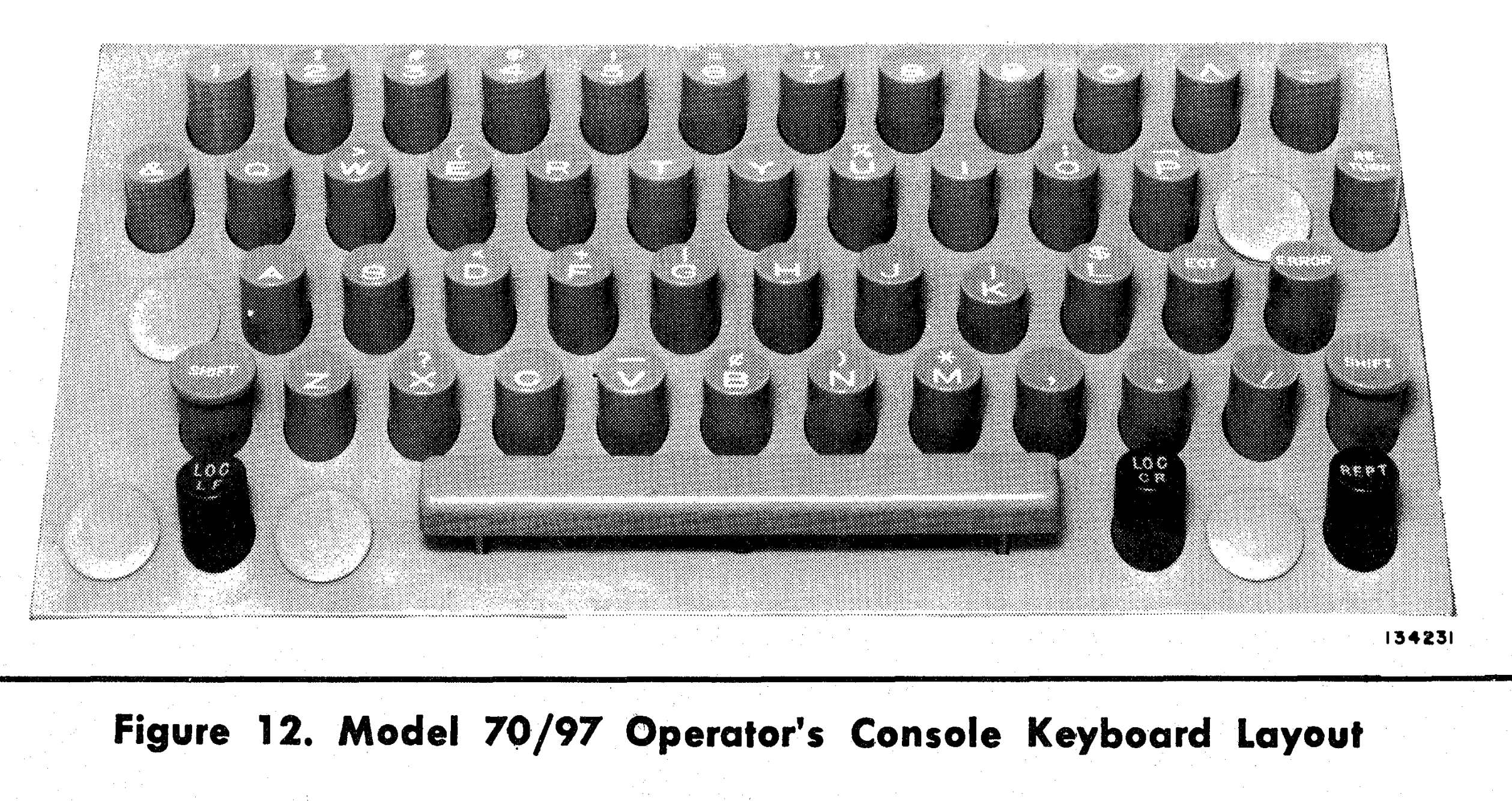 1
0
0
1
0
0

Doug Wilson
onpaperwings@typo.social@mwichary One side note: This being reported from Hauppauge, Long Island is interesting because by 1967, I believe Linotype had move out to there. I wonder if RCA and Linotype were working together?
1
0
0
Marcin Wichary
mwichary@mastodon.online@onpaperwings RCA was using Hell machines, although I *think* the PAGE-1 software was coming from the RCA side. I know Linotype and Hell got together at some point. Was it before 1967?
1
0
0
Doug Wilson
onpaperwings@typo.social@mwichary Ah, no. The merger to make Linotype-Hell wasn’t until much later, in 1990.
1
0
0
Doug Wilson
onpaperwings@typo.social@mwichary But: this does give additional color to the merger of Linotype and Hell!
My understanding was that Hell was purely into scanner technology and that is why they were merged together, but you just informed me that they were already into computer and typesetting tech much earlier. Which makes sense.
1
0
0
Marcin Wichary
mwichary@mastodon.online@onpaperwings Did you see this page? This + the menu on the left: https://hell-kiel.de/en/hell-development/191-typesetting-technology
0
0
0
Marcin Wichary
mwichary@mastodon.onlineI was so eager to scan this after it came because it was months before one appeared on eBay!
This is a manual for a popular Compugraphic typesetter, with a very different approach to markup that’s more similar to control characters in e.g. WordStar.
Everything is based on specialized keys, and displayed with special characters, shade, and underline.
Imagine a version of HTML where you’d need a keyboard with a key for each tag!
Check it out here: https://archive.org/details/compugraphic-edit-writer-family
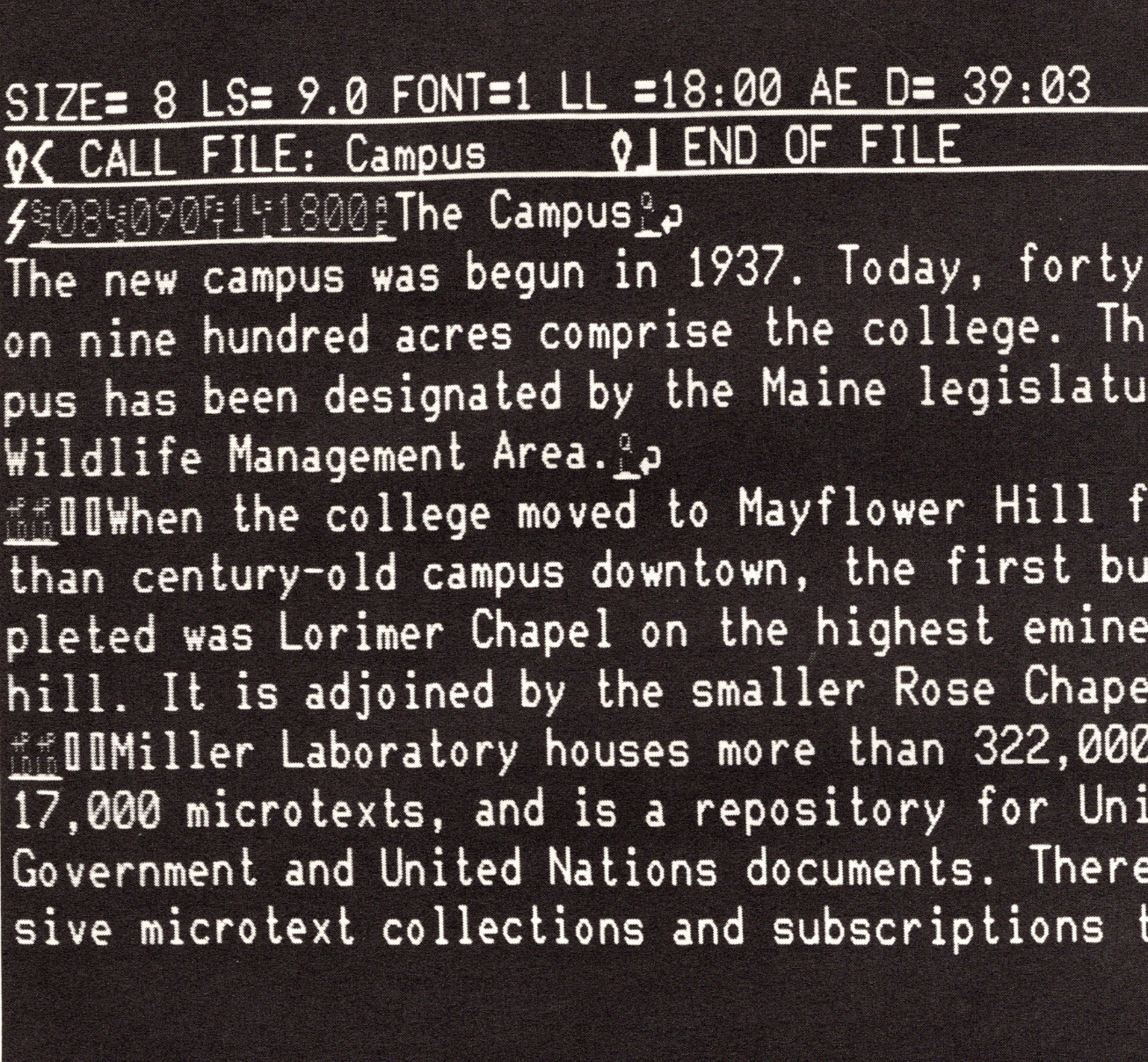
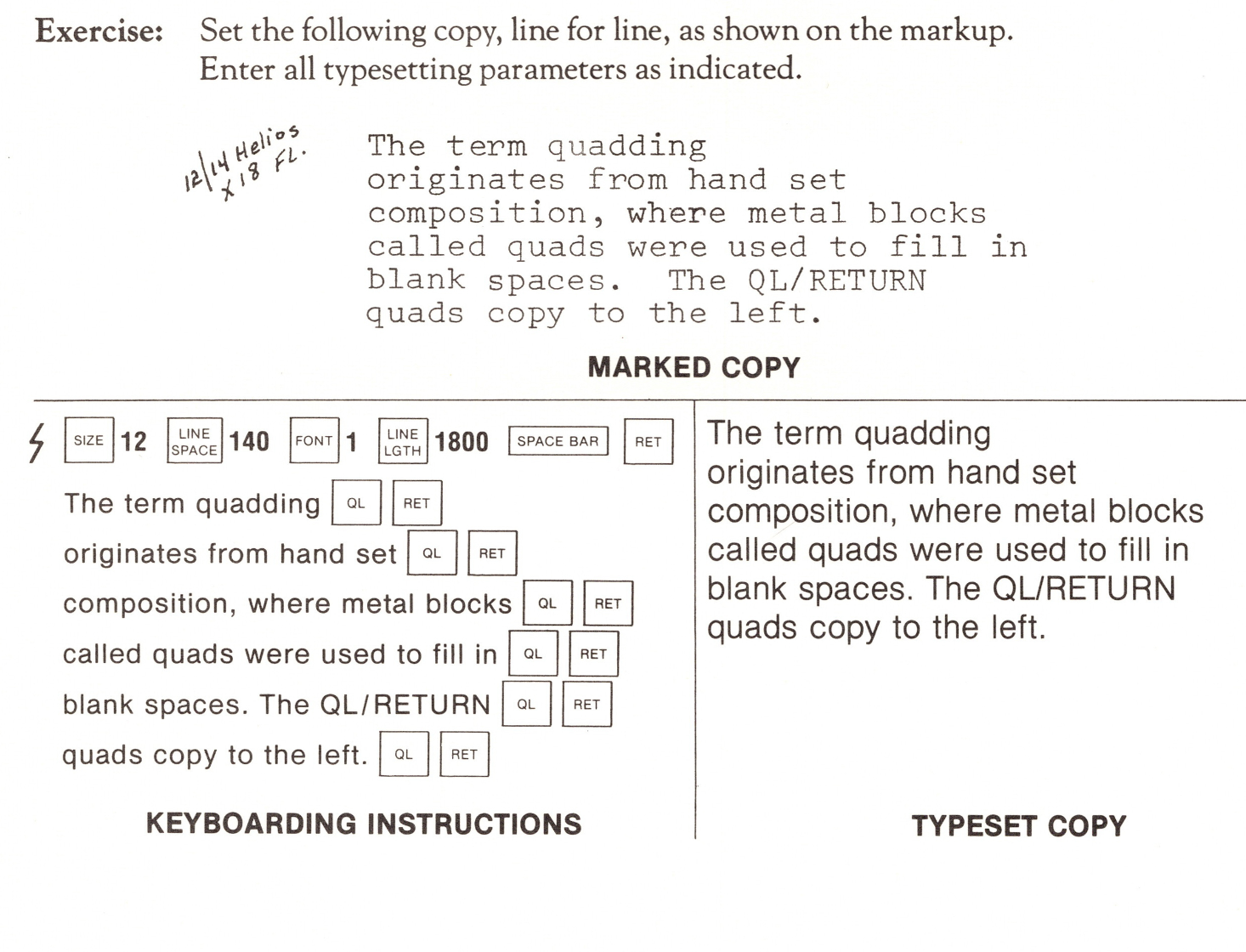
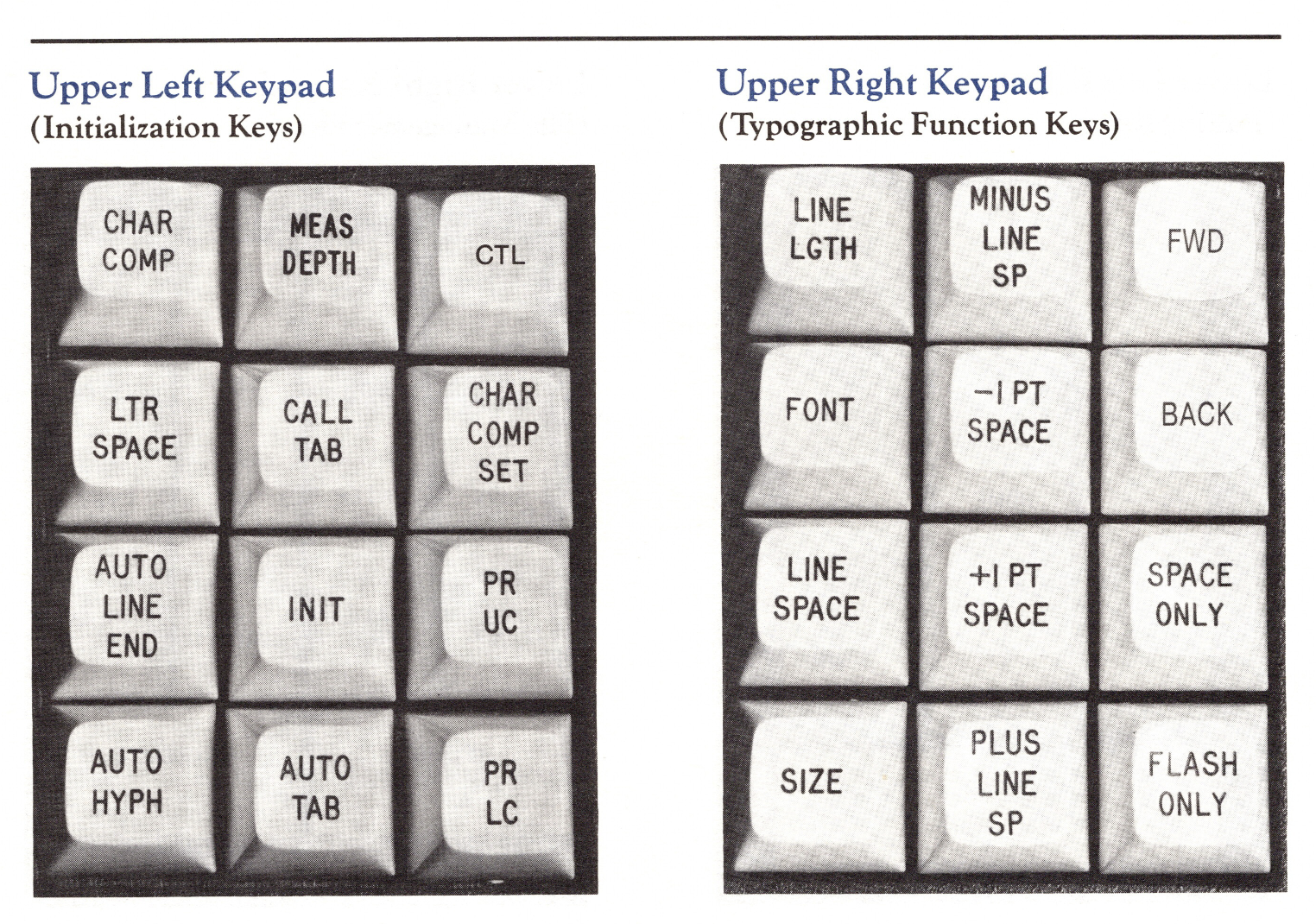 5
2
0
5
2
0

Robert Currie
rcurrie@mstdn.ca@mwichary Wow - I taught myself the basics of using a Compugraphic Editwriter back when I worked on a university newspaper in the 80s. For years later, I'd slip up and refer to typefaces by their CG knockoff name - Helios being one of them.
0
1
0
Marcin Wichary
mwichary@mastodon.online@u0421793 Yeah, a lot of those machines loved specialized keys! https://newsletter.shifthappens.site/archive/new-in-the-collection-pt-5-new-hermes-nhi-810/
0
0
0
bitsavers.org
bitsavers@oldbytes.spaceThis is the generation just before the MCS Modular Composition System that I've slowly been collecting all of the pieces for. You can see the MCS was a follow on system to the EditWriter, which itself was a CRT replacement for the Compuwriter.
1
0
0
Marcin Wichary
mwichary@mastodon.online@bitsavers What’s interesting is that perhaps this is part of the answer. It had to have this particular way to do “markup,” because more modern ways wouldn’t work as well without a screen.
0
0
0

stuart yeates
stuartyeates@cloudisland.nz
1
0
0
Marcin Wichary
mwichary@mastodon.online
1
0
0
stuart yeates
stuartyeates@cloudisland.nzI implore you to contribute info like this to either Wikipedia or to PRONOM (or both).
As much as I love mastodon, I'm pretty skeptical about the longevity of user feeds.
1
0
0
Marcin Wichary
mwichary@mastodon.online@stuartyeates My plan is to write an essay about it all once I’m done researching!
0
0
0

Mark Simonson
marksimonson@typo.social@mwichary OMG. I used this very system (Compugraphic EditWriter 7500) back in the late seventies. That screen shot and the photos of the special keys were very familiar to me for a few years. It was my first exposure to computers and file systems (on 8" floppies).
1
0
0
Marcin Wichary
mwichary@mastodon.online@marksimonson Thanks for sharing! I bet it’s too long ago to remember, but any interesting things or quirks that stood out?
1
0
0
Mark Simonson
marksimonson@typo.social@mwichary About the system? Built like a tank. It was very slow by modern standards. It set one character at a time like a typewriter, but with a strobe light and a spinning strip of film (containing four fonts) on a drum. You could hear it setting and it made a "clunk" when you changed sizes.
There were no key combos to remember. It had a dedicated key for every function or command.
The markup system was sophisticated enough to set in columns or tables with rules, with some patience.
Oh, and the CG maintenance/repair guy gave us a disk that had a couple of games on it. The one I remember was sort of like Space Invaders but much simpler, and used the built-in character set.
1
0
0
Marcin Wichary
mwichary@mastodon.online@marksimonson Wow! I had no idea this had games. I know one of the photosetting companies offered BASIC to turn their machine into a general-purpose computer.
1
0
0
Mark Simonson
marksimonson@typo.social@mwichary The games were not official. Just something that CG techs must have written and passed around.
1
0
0
Marcin Wichary
mwichary@mastodon.onlineA trip to Museum of Printing in Massachusetts booked for February!
2
0
0
Marcin Wichary
mwichary@mastodon.online1987!
I don’t fully understand what the carets (^) do.
https://archive.org/details/Beagle_Bros_TimeOut_SuperFonts_Manual/page/n27/mode/2up
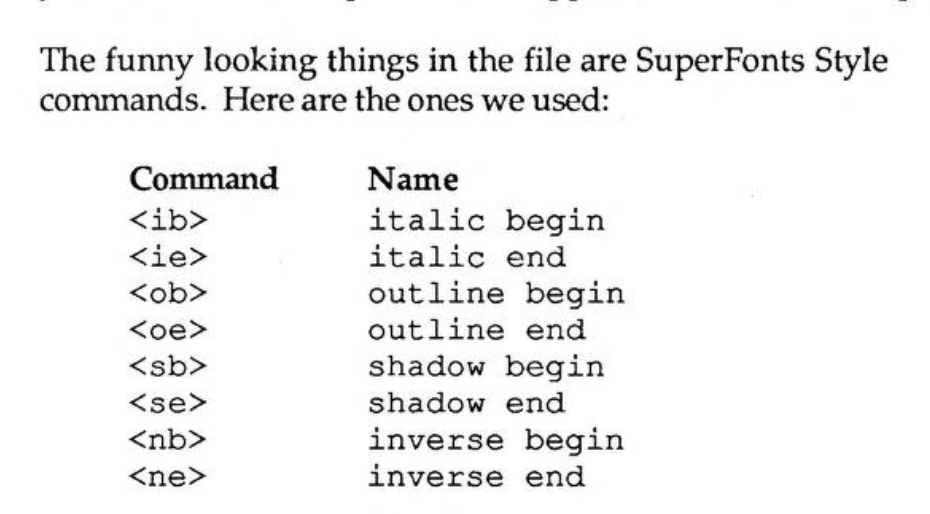
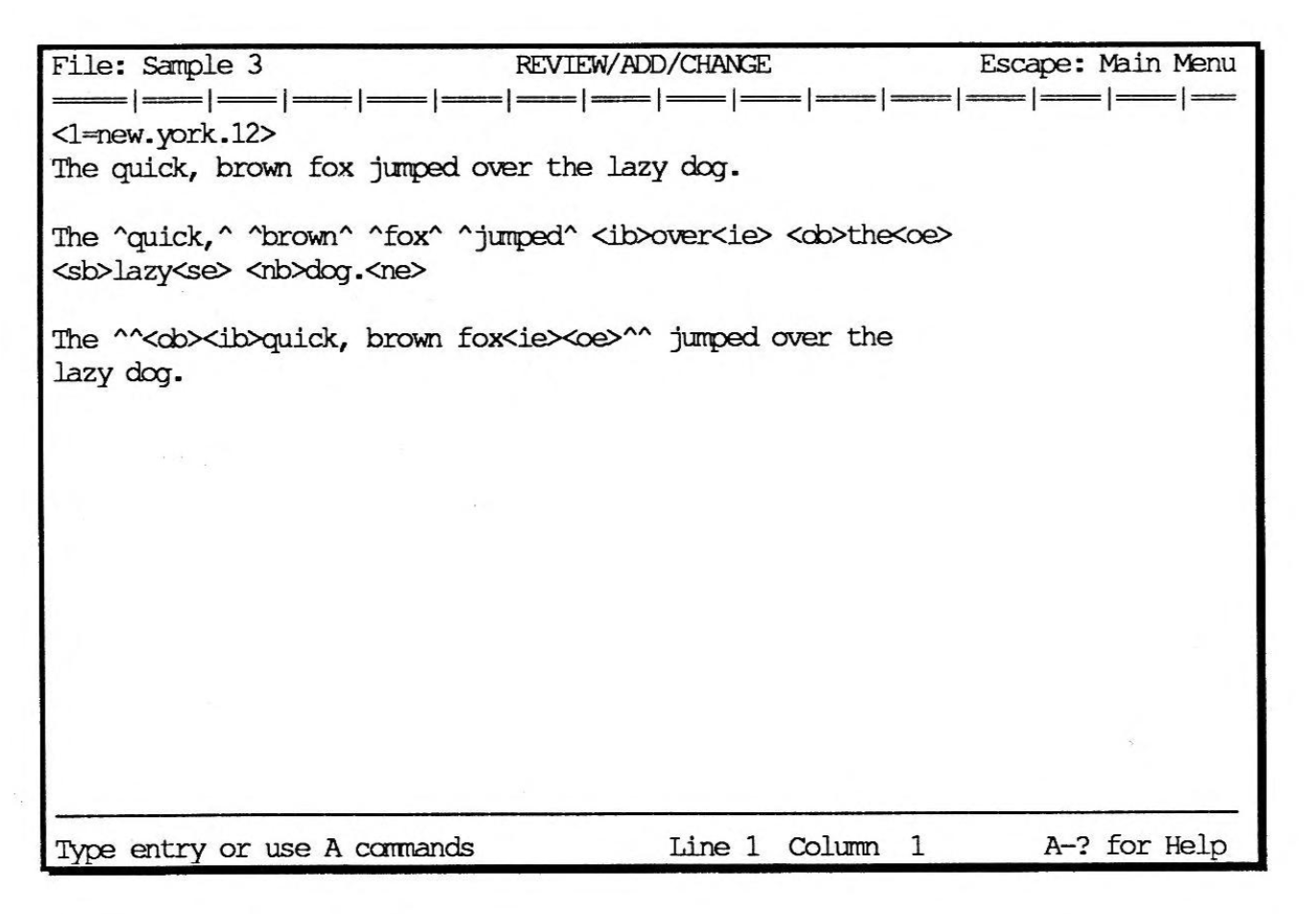
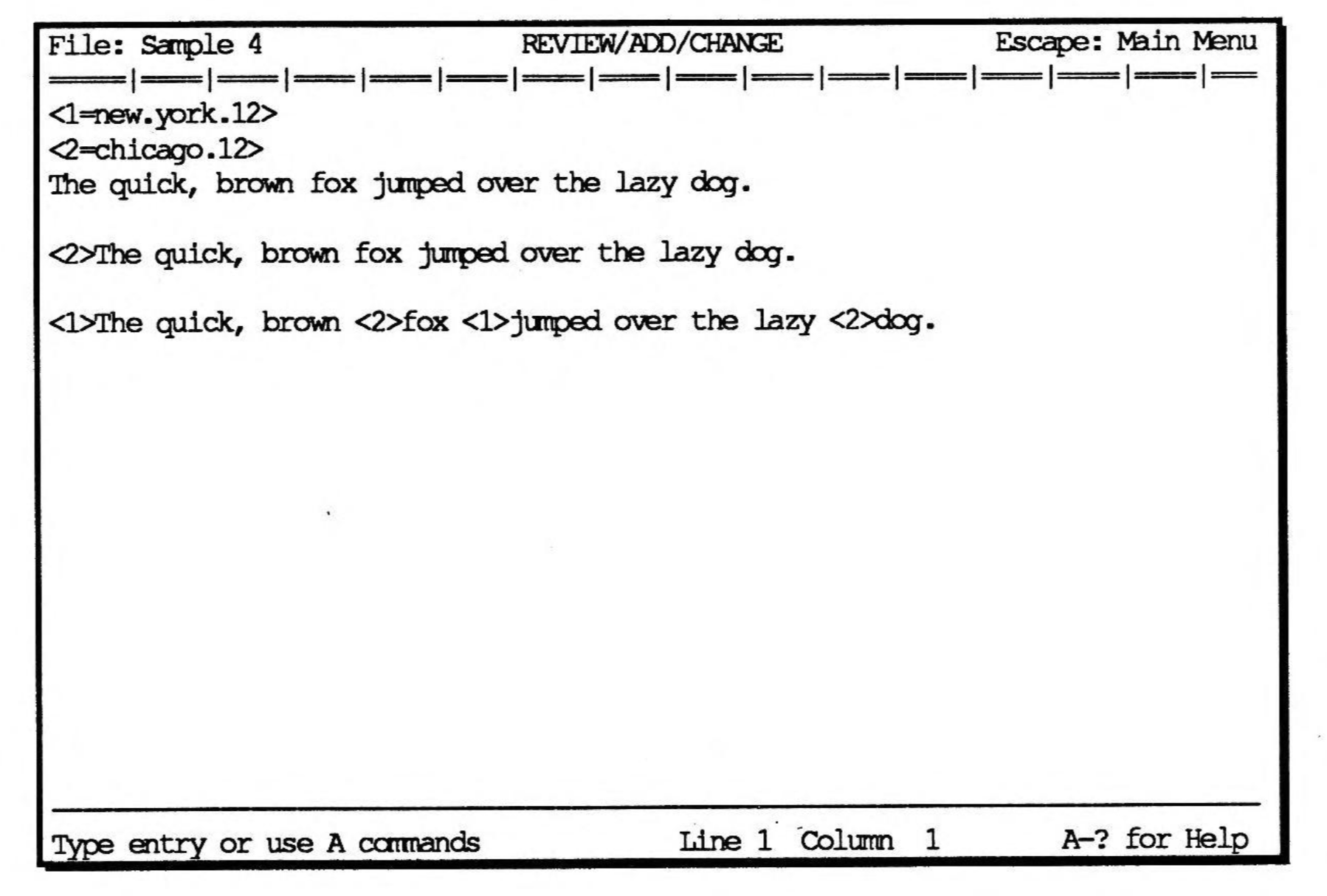 4
0
0
4
0
0

Chris Wenham
WenhamToo@mstdn.social@mwichary Maybe selects a level of superscript, like it does in Markdown.
1
0
0
Marcin Wichary
mwichary@mastodon.online@WenhamToo The examples of how it renders don’t fully make sense, but the whole manual seems to be a bit rushed.
0
0
0

Colin
colinstu@birdbutt.com@mwichary they’re not described anywhere, yet seem to do something, but don't appear very much else. Page 41 seems to suggest there's other two character codes to do the formatting they show.
1
0
0
Marcin Wichary
mwichary@mastodon.online@colinstu My hypothesis is that this is actually a bug in the manual.
1
0
0

Screwtapello
Screwtapello@teh.entar.net@mwichary "SuperFonts" was a tool for adding bitmap-style font rendering to AppleWorks, a program that generally printed in plain text, with whatever formatting the configured printer could provide.
Because AppleWorks was not a WYSIWYG word-processor, it used a caret to represent formatting commands embedded in the document.
Since SuperFonts was a third-party add-on to AppleWorks, and it wanted to add more different kinds of formatting than AppleWorks natively supported, it (apparently) added its own inline markup to support those extra styles.
https://archive.org/details/appleworkstutorial1986applecomputeraw2.0forappleiiocr/page/n65/mode/1up
1
0
0
Marcin Wichary
mwichary@mastodon.online@Screwtapello Ah! Thanks! So it’s just sort of a generic “something is happening here” symbol?
0
0
0
Colin
colinstu@birdbutt.com@mwichary yeah I wonder if it's a placeholder or something. (and was missed being replaced w/correct letters/codes)
1
0
0
Marcin Wichary
mwichary@mastodon.online@colinstu It is and it isn’t! https://teh.entar.net/@Screwtapello/116004324961903286
0
0
0
Marcin Wichary
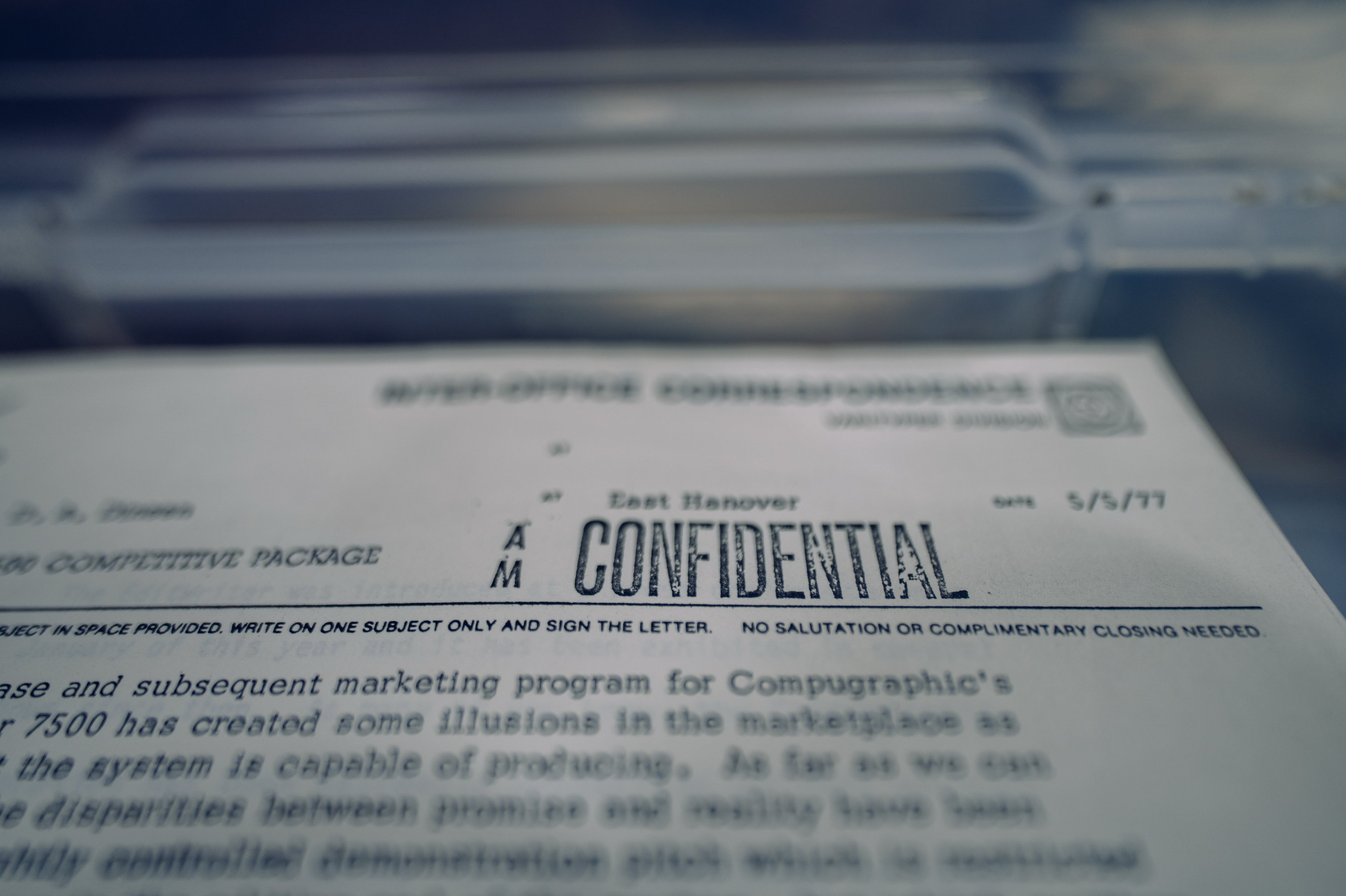
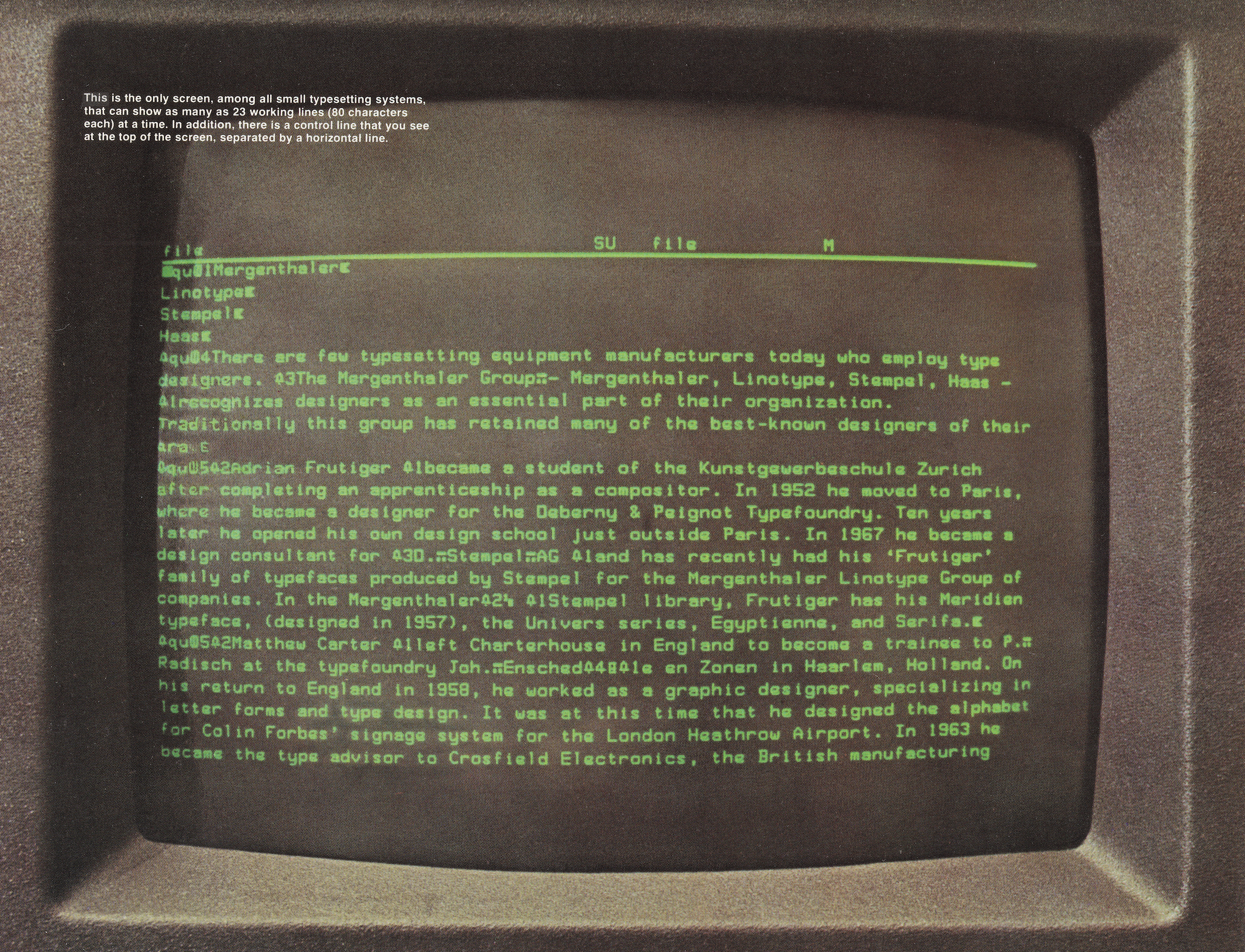
mwichary@mastodon.onlineI’m at the Museum of Printing this weekend! So far I’ve scanned 750+ pages. I wonder if I’ll learn anything new, or will it be mostly color, but either way it’s been interesting.
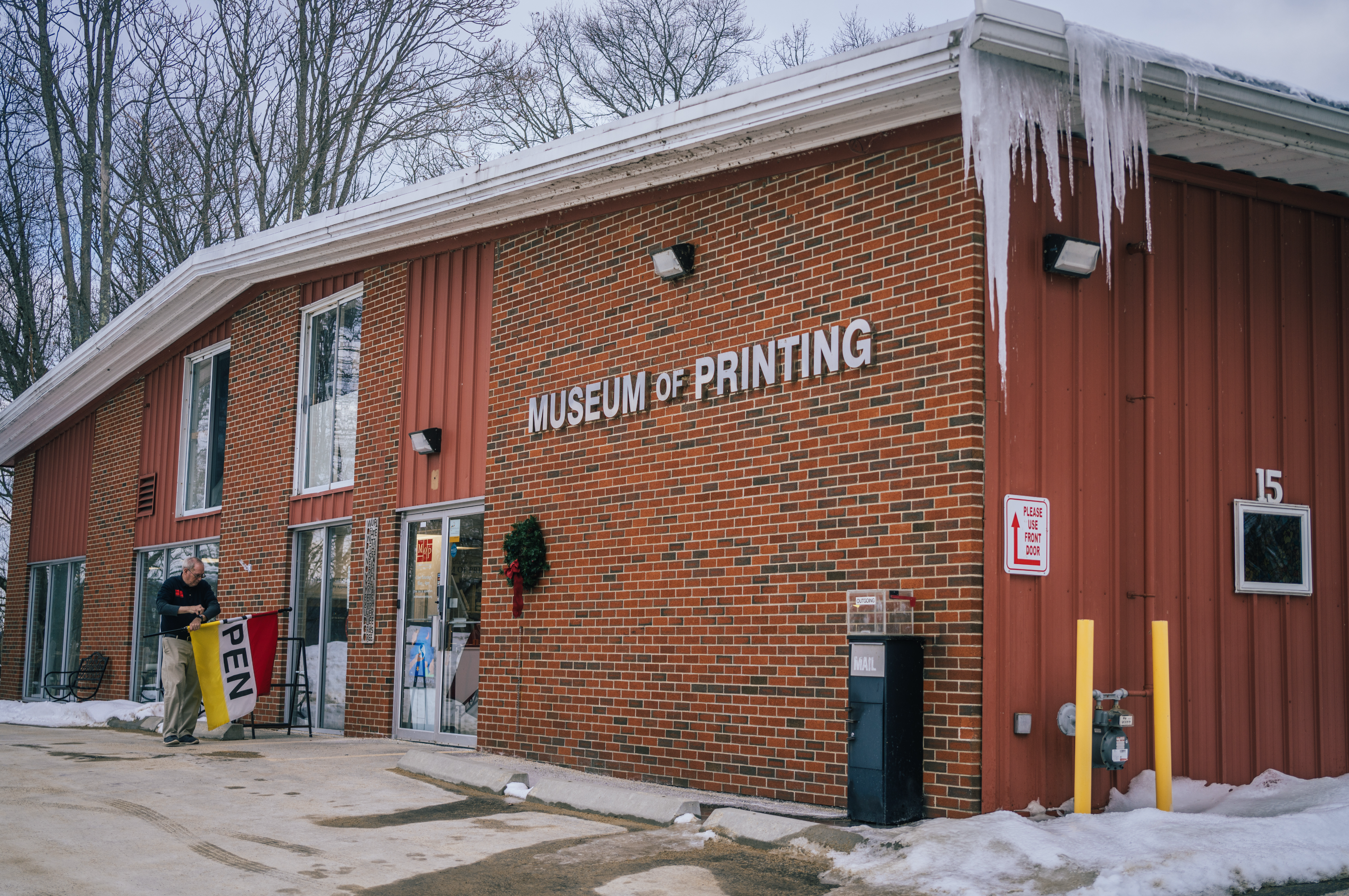
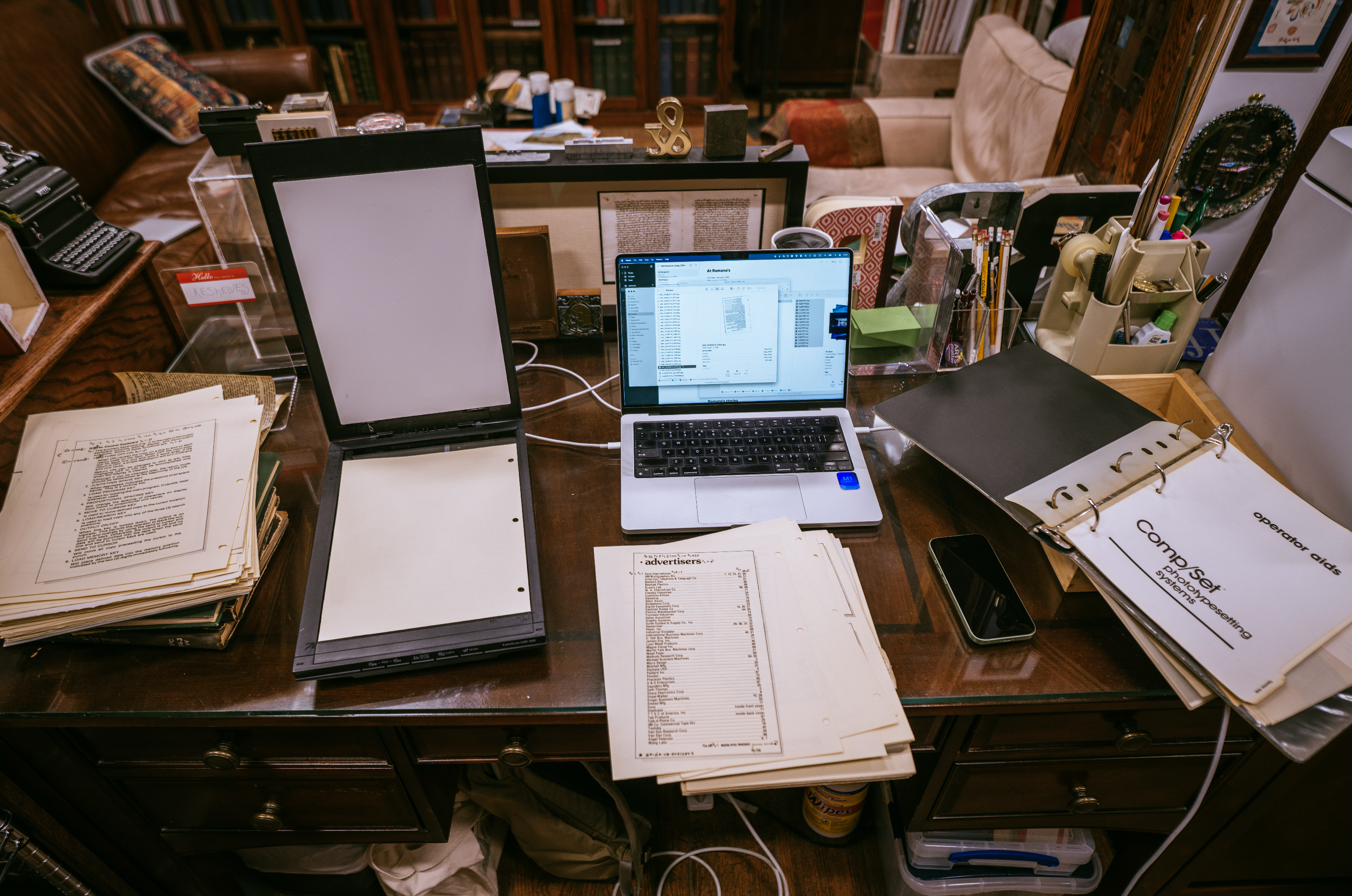
 1
0
0
1
0
0

Dr. Juande Santander-Vela
juandesant@mathstodon.xyz@mwichary @apples_and_pears ooohhh, XyWrite, I had it for my AMSTRAD PC1512, loved how well the mark up worked compared to WordPerfect’s code view! And it was pretty responsive, too!
0
0
0

diffie :3 (bindiff)
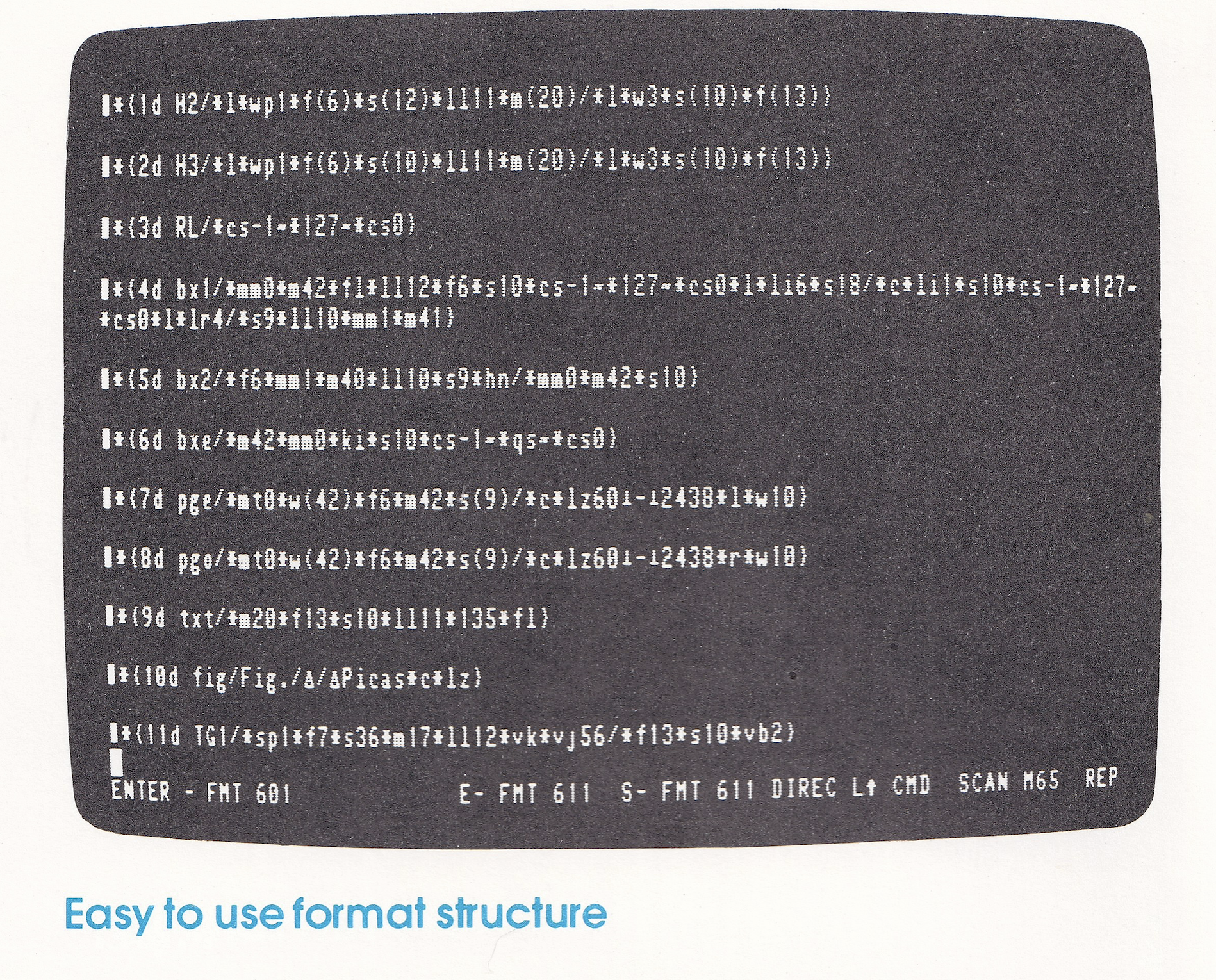
jwo@mastodonczech.cz@mwichary Looks a little bit like printf format string in C.
1
0
0
Dr. Juande Santander-Vela
juandesant@mathstodon.xyz
1
0
0
Marcin Wichary
mwichary@mastodon.online@juandesant @jwo That’s a great observation. I think RTF serves a very similar purpose.
1
0
0
Dr. Juande Santander-Vela
juandesant@mathstodon.xyz@mwichary @jwo here’s a good cookbook of RTF. The codes are similar to this markup, but the way to express them in RTF uses the backlash (\). The curly braces are for defining scope.
https://metacpan.org/release/SBURKE/RTF-Writer-1.11/view/lib/RTF/Cookbook.pod
0
0
0
Marcin Wichary
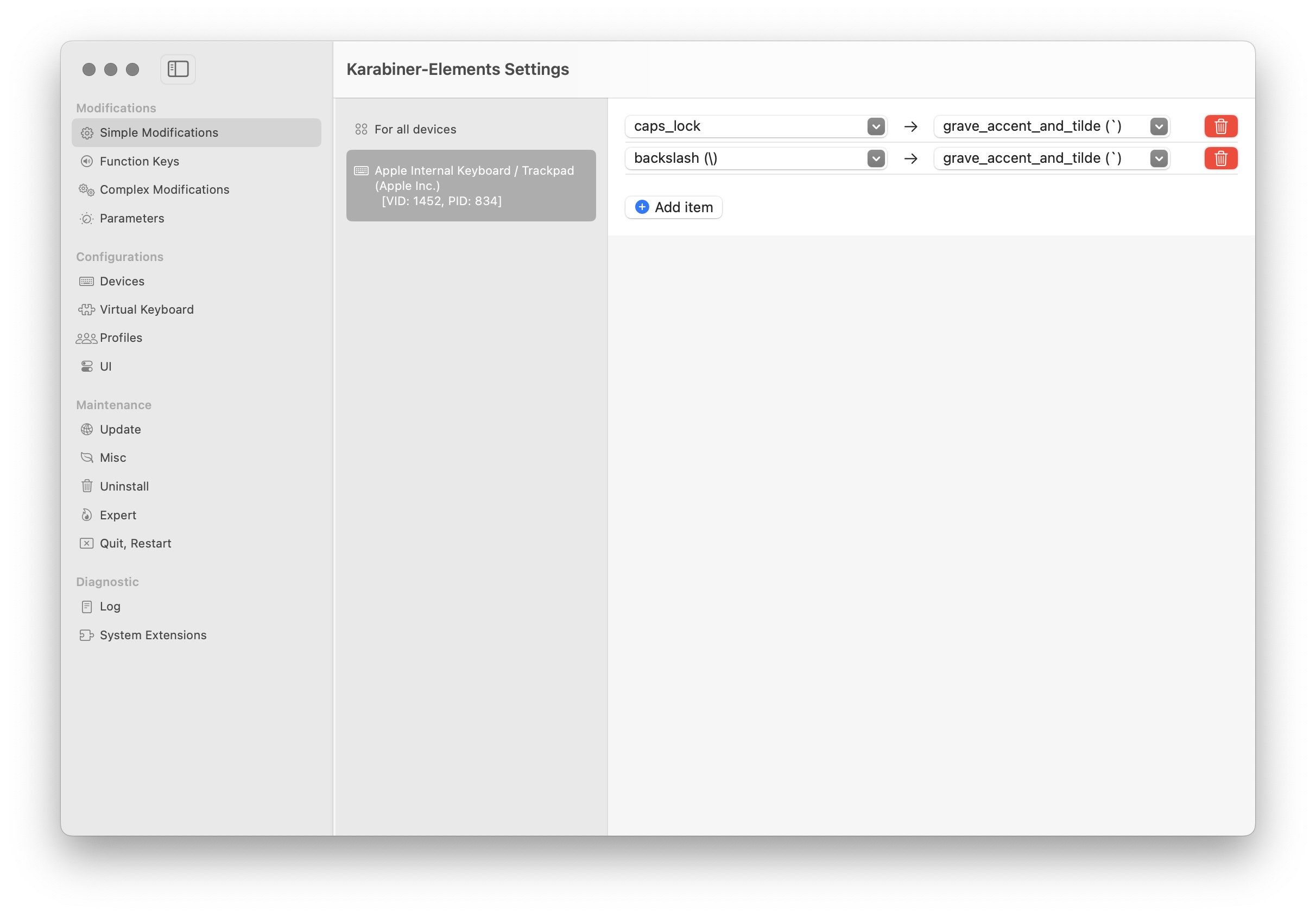
mwichary@mastodon.onlinePretty happy with my setup – I can just press tilde or backslash or Caps Lock (those are easy to slam quickly from afar) and it scans the next page no matter which app I am in, and then puts me back where I was.
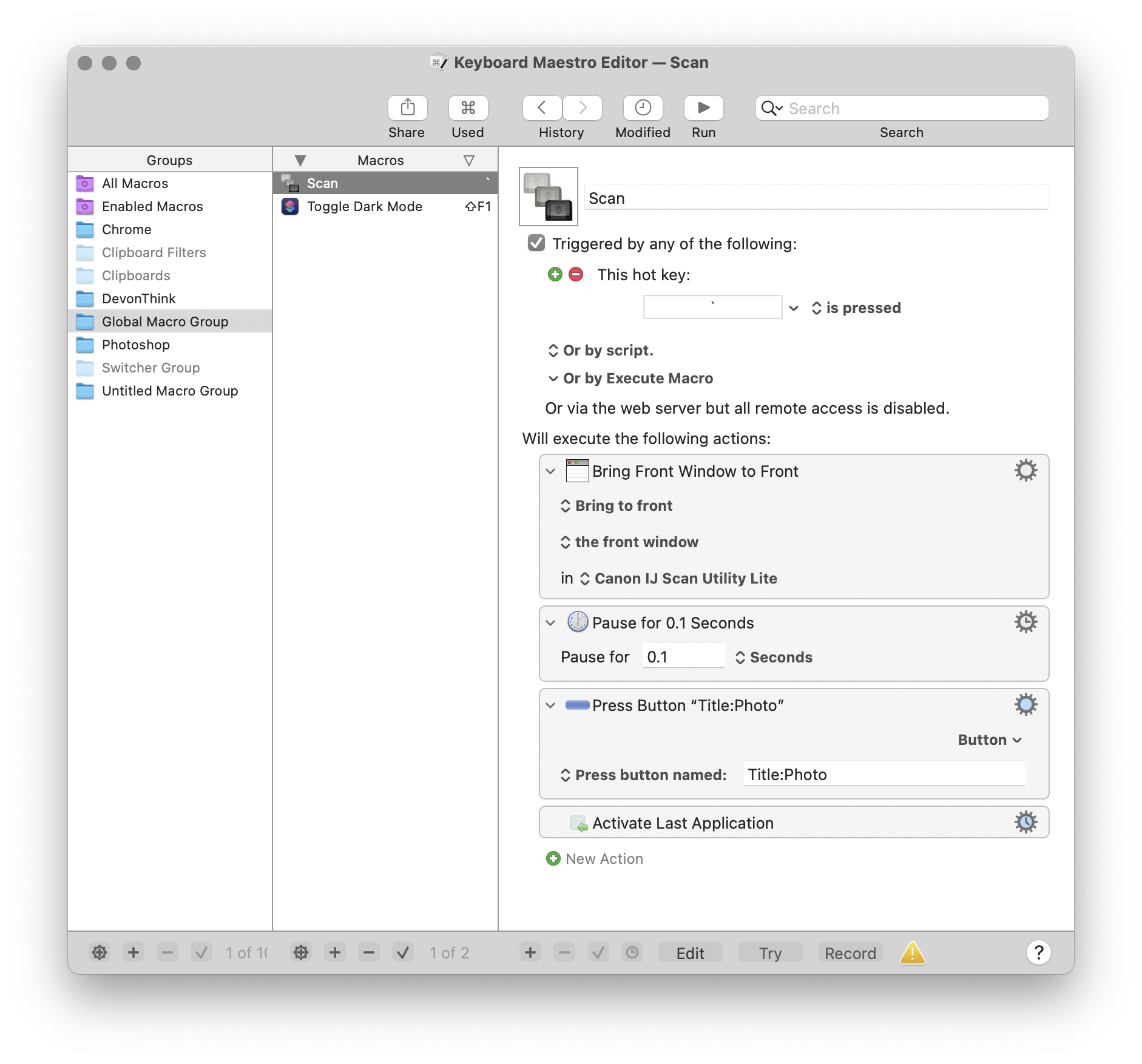 1
0
0
1
0
0
Marcin Wichary
mwichary@mastodon.onlineIn the last days, I spent 27.5 hours scanning, and scanned 3,288 pages in total.
By my math, this means 120 pages per hour. (This checks out. Faster for regular docs. Slower for lavish photos and PR materials.)
Thank you to the Museum of Printing in Haverhill (and Frank Romano specifically) for their generosity. It will take me weeks to process it all!
2
0
0
Marcin Wichary
mwichary@mastodon.online@glennf 12 uploaded, 170+ to go: https://archive.org/details/wicharytypewriter?sort=-publicdate
2
1
0
Marcin Wichary
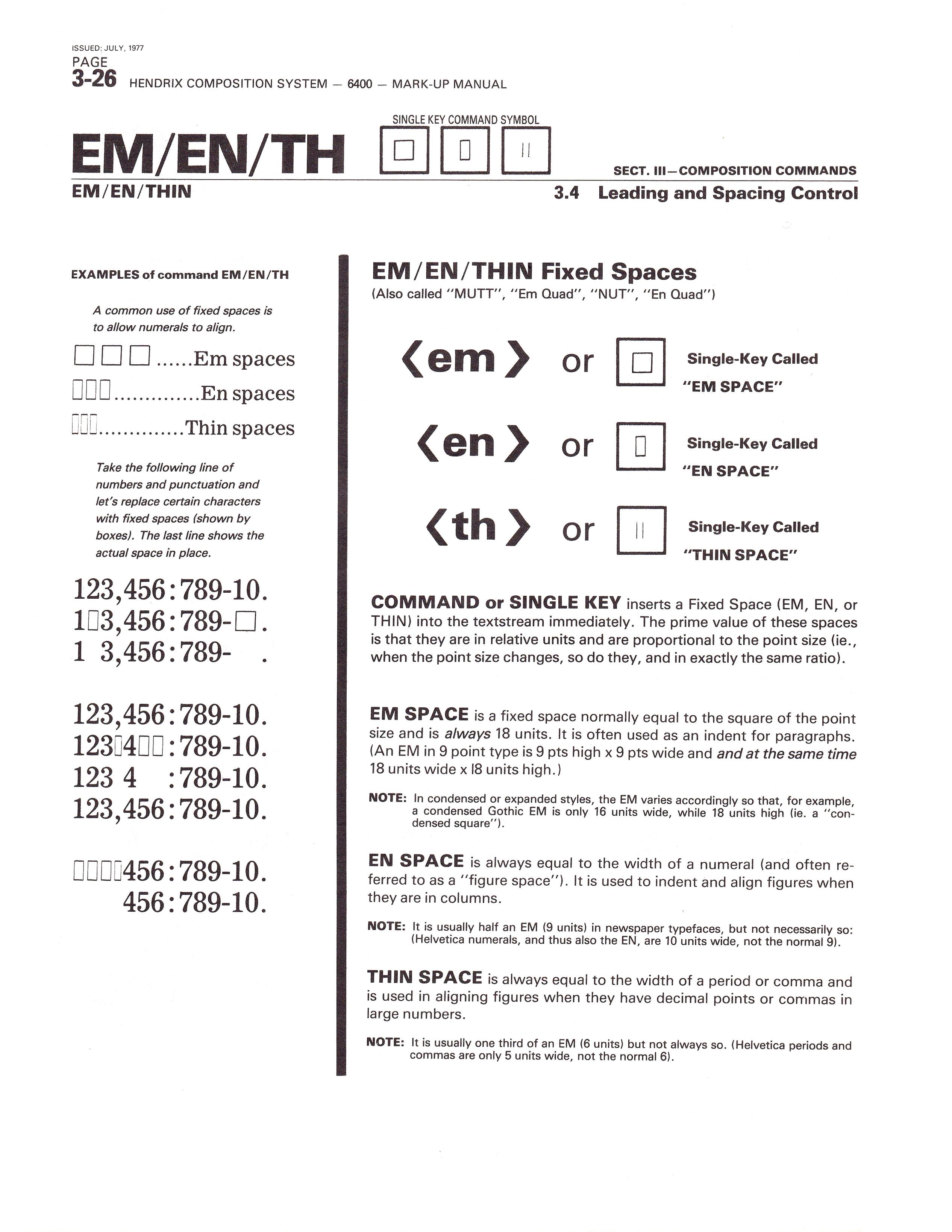
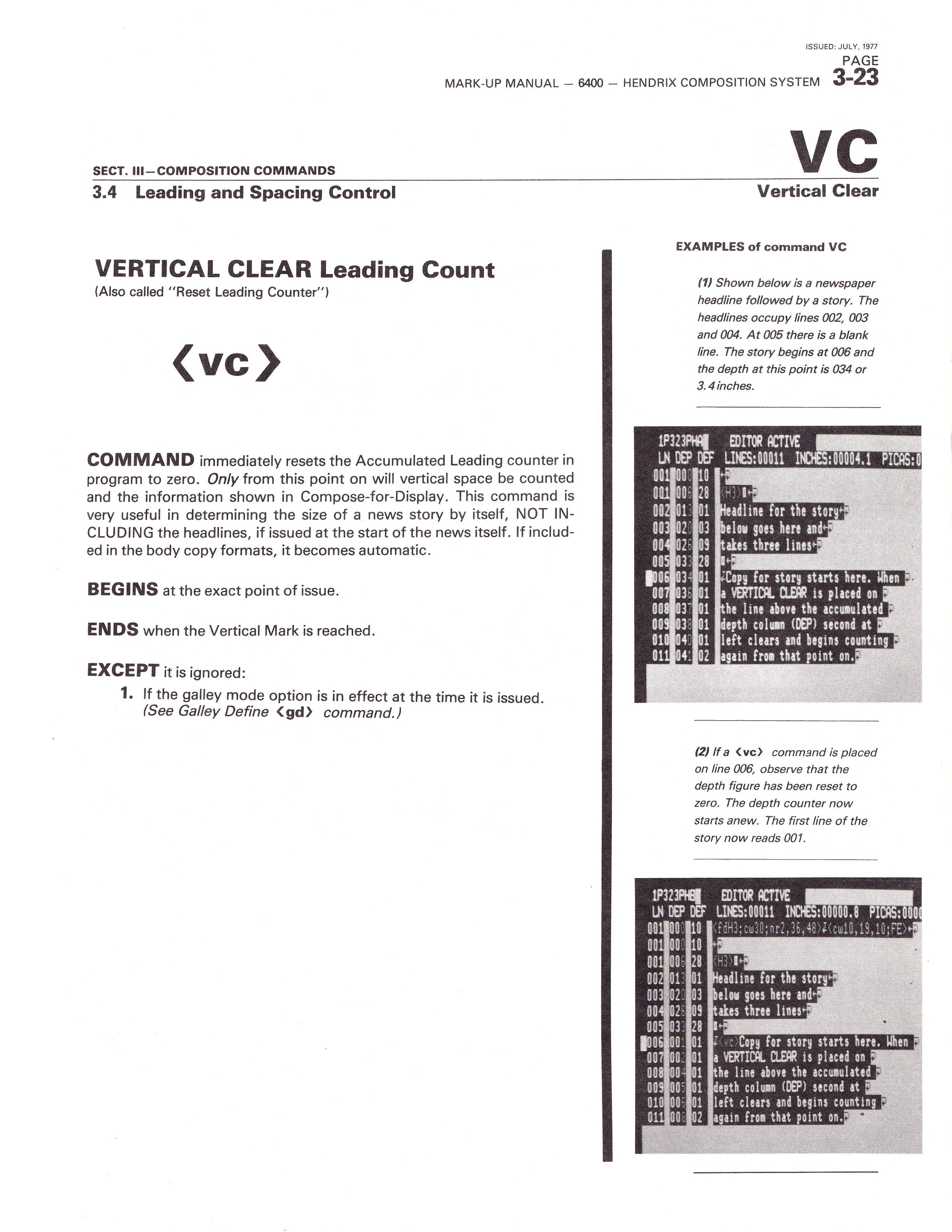
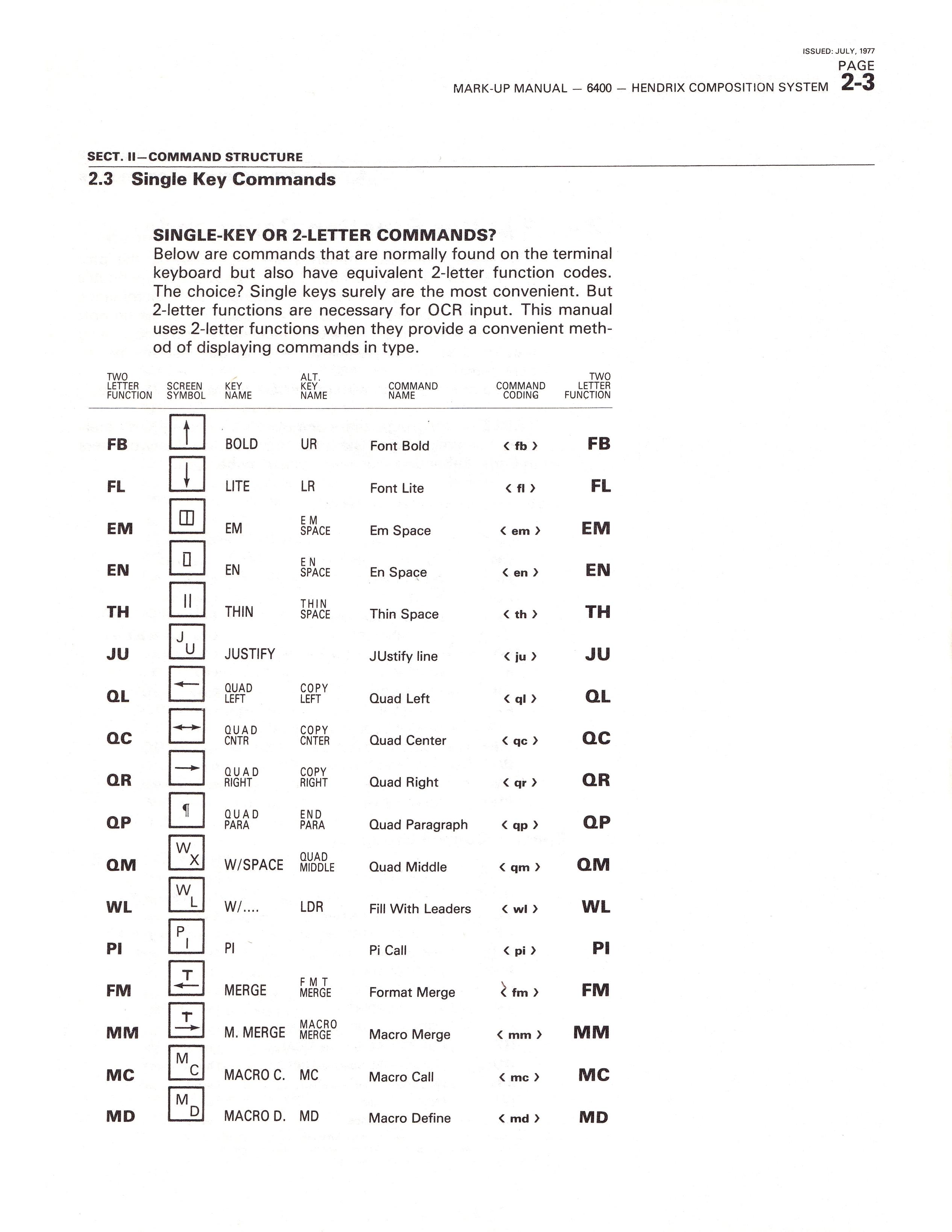
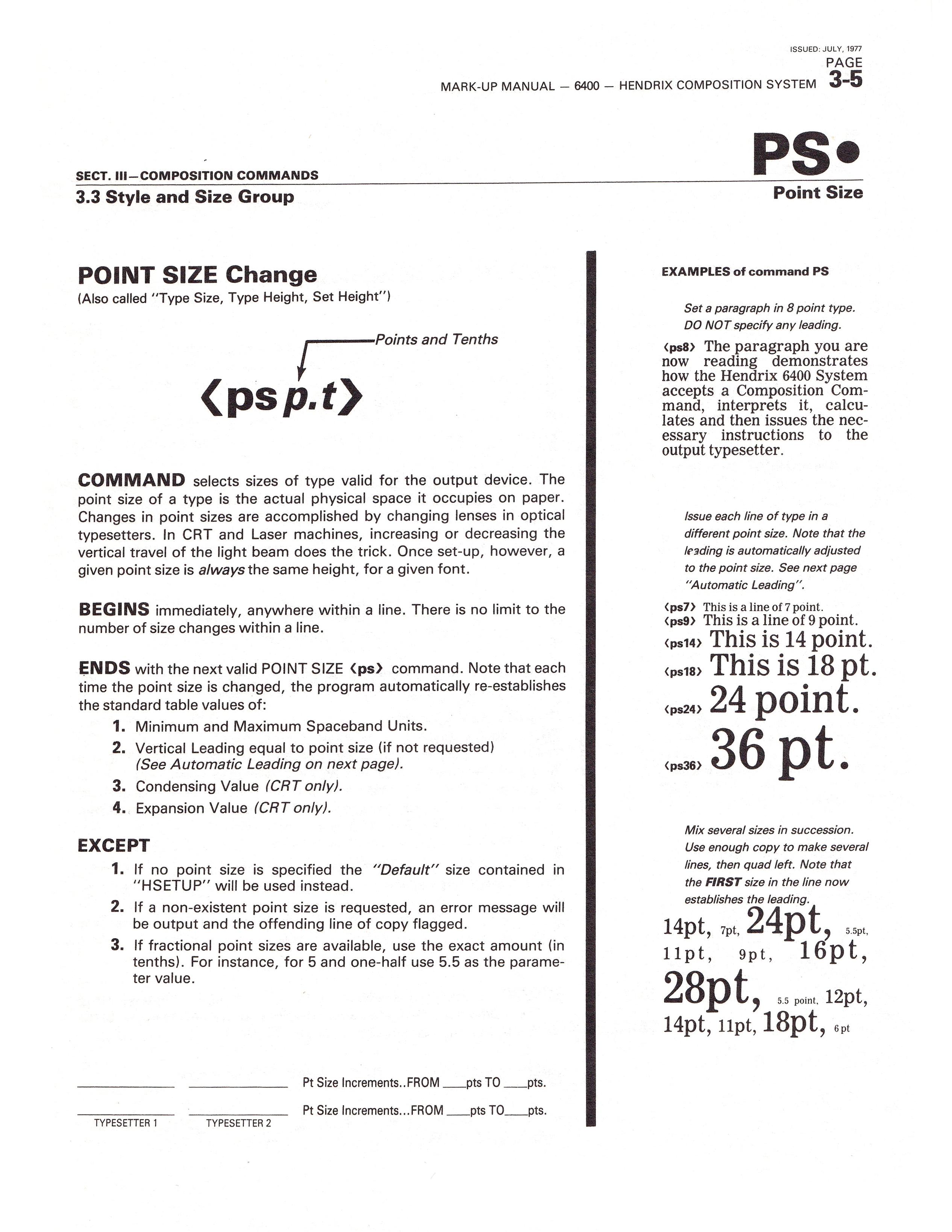
mwichary@mastodon.onlineFrom that trip: Scanned a very interesting markup system from 1977.
https://archive.org/details/hendrix-6400-composition-mark-up-manual
 0
0
0
0
0
0

Grant Hutchinson
splorp@mastodon.social@mwichary What is your scan and upload process? I’m extremely curious, as I have a huge backlog of documents to get into the archive.
1
0
0
Marcin Wichary
mwichary@mastodon.online@splorp @armstrong You both asked, but I am a bit stressed out trying to answer since it’s a decades-old process involving Photoshop, DevonThink, and a lot of macros and even a macro keypad. So I feel it might scare people away more than encourage them.
Do you have any specific questions?
2
0
0

Marcin Wichary
mwichary@mastodon.online1. I scan to high quality JPEGs.
2. I make a little action to crop all and increase brightness/contrast in Photoshop. (Could be done via command line, I imagine.)
3. Then, I go through them one by one and straighten if too crooked (didn’t find automatic process here) and clean up the edges. I have a bunch of small actions and special keys for this.
4. I make them into a PDF using DevonThink.
5. I typically upload by hand to IA one by one. I only uploaded in bulk once in IA.
1
0
0
Chris Armstrong
armstrong@mastodon.design@mwichary interesting, do you have any particular techniques for increasing the turnover time between scans?
1
0
0
Chris Armstrong
armstrong@mastodon.design@mwichary hmm maybe this is less of an issue with books/magazines. I'm mostly scanning old photos, and find it very fidgety laying them out between scans, avoiding dust, etc. Feel like there's probably a better method than could increase my scans-per-minute
1
0
0
Marcin Wichary
mwichary@mastodon.online@armstrong I don’t have any great tricks here – I just assume it will take some time. I use a camera sensor blower once in a while.
1
0
0
Chris Armstrong
armstrong@mastodon.design@mwichary Makes sense. Have you ever had to do any large format?
1
0
0
Marcin Wichary
mwichary@mastodon.online@armstrong I have an A3 scanner as a backup, but it’s really noisy. Previously I’d combine in Photoshop, but it’s never too much fun.
0
0
0
Grant Hutchinson
splorp@mastodon.social@mwichary @armstrong Ok, I was curious about whether you uploaded individual scans and had the archive put things together or built PDFs.
I was also curious about how you format your metadata.
2
0
0
Marcin Wichary
mwichary@mastodon.online@splorp Sorry, once again I’m not sure I understand the question…
1
0
0
Marcin Wichary
mwichary@mastodon.online@splorp I do let IA OCR because I am not sure DevonThink’s OCR is good.
0
0
0
Grant Hutchinson
splorp@mastodon.social@mwichary And I’m sorry for not being very clear …
I always thought that document pages should get uploaded as individual scans. Now I understand that you upload them as a paginated PDF.
As for the metadata question, I guess I just wanted to see an example of what you include when you upload something.
1
0
0
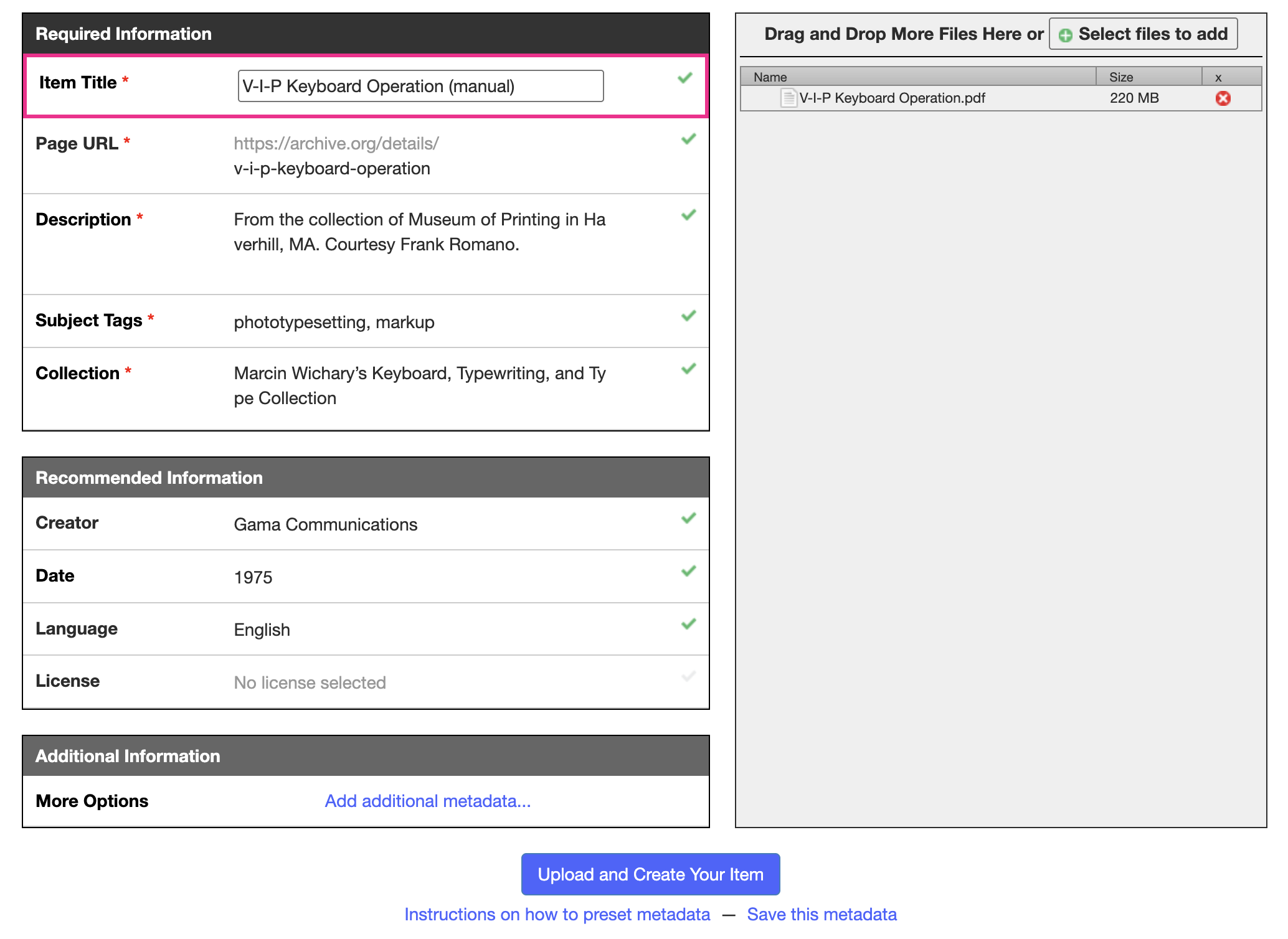
Marcin Wichary
mwichary@mastodon.online@glennf …aaaand they’re all there now: https://archive.org/details/wicharytypewriter?sort=-addeddate
1
0
0